

The best church visitor follow-up is fast, personal and low-pressure: a real thank-you inside 24 hours, a warm invitation before the next Sunday, and a simple next step after the second visit. Most churches fail at speed, not sincerity. Guests give you their information, then hear nothing for days or weeks.
This guide gives you the timeline, the wording and the 30-day rhythm. It also shows how to keep it going when your volunteers are busy and your Monday is already full. That is where an approval-based AI assistant like Signal Engine takes the repetitive work off your plate while you keep the personal touch.
TL;DR
- Speed decides it. Research cited by the Lewis Center puts the return likelihood at 85% for follow-up within 24 hours and 15% after 72 hours.
- Ask for less. A name and one preferred contact method is enough on a connection card.
- Plan three touches in week one: a thank-you, a personal call or note, and a Saturday invitation to come back.
- Match the method to the guest. Some want a text, some an email, some a handwritten note. Let them choose.
- Automate the drafting, not the relationship. Queue messages for a human to approve before anything goes out.
Table of Contents
- Why the first 72 hours decide whether guests return
- Collect contact information on the guest's terms
- The week-one timeline
- What to say: scripts that sound like a person
- After the second visit: the 30-day rhythm
- Where manual follow-up breaks down
- How Signal Engine fits into a visitor follow-up routine
- Our perspective
- Put your follow-up on a schedule
- How to tell whether your follow-up is working
- FAQ
- Sources
- Ready to Stop the Revenue Leak?
Why the first 72 hours decide whether guests return
The Lewis Center for Church Leadership cites Bill Easum's 2007 research on timing. Guests contacted within 24 hours are about 85% likely to return. Between 24 and 72 hours, that falls to 60%. After 72 hours, it drops to 15%.

That is a steep curve, and it points to a simple rule: your follow-up system should treat Sunday afternoon and Monday as the busiest part of your week.
Most churches are not close to this standard. A 2016 Faith Perceptions survey of 1,341 U.S. adults who attended worship, reported by Outreach Magazine, found that 504 had left their contact information. Only 119 of them, 24%, received any follow-up within 30 days. Most of those who left details were unchurched or dechurched, meaning they were exactly the people a church hopes to reach.
The gap is not about caring. It is about process. A church with a clear owner for each step, a short list of templates and a reminder that fires on Monday morning will out-follow a bigger church that relies on memory.
Collect contact information on the guest's terms
Follow-up starts before the guest leaves the building. If you do not have a way to reach them, nothing else in this guide works. But how you ask matters.
The Lewis Center also notes that 63% of guests prefer to wait until they have visited a few times before letting anyone know they are there. Good follow-up lets them stay low-key during the visit, then shows afterward that they were noticed.
Lifeway Research recommends offering several low-pressure options:
- A physical card in seatback pockets or offering plates.
- A welcome station that you announce each week, paired with a small gift.
- A text-in keyword, promoted on slides and with a QR code.
Keep the card short. Ask for a name and a preferred contact method, email or phone, and ask only for what you have a clear plan to use. Lifeway's Danny Franks frames it as collecting information for the guest, not for the church: you are offering a helpful next step, not building a mailing list.
One practical test: if nobody on your team will act on a field, remove it from the card.
The week-one timeline
Here is a simple sequence that fits most small and mid-sized churches. It blends the within-24-hours standard from a Metro DC ELCA sample follow-up plan with the three-contact guidance from Lifeway Research, which recommends a general email, a call from a pastor and an email from a pastor in the week after a first visit.
| When | Touch | Who sends it | Notes |
|---|---|---|---|
| Sunday, within hours | Thank-you text or email | Hospitality volunteer | Use the guest's name. Keep it to two or three sentences. |
| Monday to Tuesday | Short call or personal email | Pastor or a lay leader | Listen more than you talk. Ask if there is anything you can pray about. |
| Midweek | Handwritten note or newsletter signup | Hospitality team | Optional, but memorable. |
| Saturday | "Hope to see you tomorrow" message | Anyone on the team | One line, with service times and parking details. |
The Metro DC plan is a useful model because it matches the action to the guest's preference. Depending on what the guest indicated, it offers a pastor's email inviting them for coffee, a working-hours call or text for younger adults with cell numbers, or a brief visit from two members with a small gift and a conversation of no more than two minutes. During the week, the guest joins the newsletter and the pastor greets them by name the following Sunday.
The name greeting is not a small detail. A United Methodist Church of Greater New Jersey post reports that people are twice as likely to keep coming back if someone remembers their name at the next visit.
Who should make the contact
Split the load. The pastor does not need to send every message. A short thank-you from a hospitality volunteer on Sunday and a personal note or call from the pastor early in the week covers both warmth and authority. If your team is tiny, give each role one job and one deadline. One owner per step means nothing falls between people.
What to say: scripts that sound like a person
The tone rule is simple. Treat follow-up as service, not sales. Sam Rainer of Church Answers puts it bluntly: you are not closing a deal. His guidance for guest calls is to identify yourself and the church, ask how you can serve, ask for prayer requests or questions about the church, and keep it brief. Skip personal questions, pressure and jokes.
The Lewis Center sums up good follow-up as prompt, personal and pleasant, and notes that guests come back because of how a church makes them feel, not because of what it does.
Sunday thank-you text
Hi Maria, this is Dana from Grace Community. Thanks so much for worshipping with us today. It was great to meet you. We would love to see you again anytime.
Monday email from the pastor
Follow the structure of the pastor email that Fishhook shared: a personal introduction, a reference to the season of the visit, an invitation to return with service times listed, and a sincere offer to serve.
Hi Maria, I am Pastor James. I was glad to see you with us on the first Sunday of Advent. If you would like to come back, we meet at 9 and 11 a.m. Is there anything I can pray about with you this week? I would be glad to help however I can.
Saturday invitation
Hi Maria, we are meeting at 10 a.m. tomorrow and would love to see you. Say hi to me at the welcome table if you come.
Notice what these messages leave out: no committee asks, no giving appeals, no multi-step forms. The aim of week one is one more visit, not membership.
Handwritten notes
The UMC post suggests hospitality volunteers write short personal thank-you notes of two or three sentences, which also forms new relationships between guests and volunteers. If you have a team that enjoys it, a note is a strong midweek touch.

After the second visit: the 30-day rhythm
The first visit gets you the second one. The second visit is where guests decide whether this is a place to settle. The UMC workflow gives you a clear structure to follow:
- Within 48 hours of the first visit: a thank-you message.
- The Saturday before the next service: a "join us for worship" message.
- After the second visit: a small-group invitation by email or text.
- At one month: a check-in asking about questions or whether they would like to meet with a pastor.
- After three visits: a call from a group leader, an updated profile and an invitation to a membership class.
Lifeway adds that churches should offer a regular next-step event, such as a newcomers' lunch or class, at least once every other month, so there is always a clear door to walk through.
Two cautions keep this from feeling like a funnel. First, do not stack asks. One next step per message is plenty. Second, know when to ease off. If a guest has not responded to a thank-you, an invitation and a one-month check-in, a final friendly note that the door is always open is enough. Keep them on the general newsletter if they signed up for it, and let them reach out when they are ready.
Where manual follow-up breaks down
Every plan above is simple on paper. In a real church, these are the points where it breaks:
- The Monday gap. The card sits in a pile until Wednesday, and the 24-hour window is gone.
- One person holds everything. The administrator is out sick, and nobody else knows who visited.
- Messages get written from scratch every time. That is slow, so it gets skipped.
- Nobody sees who went quiet. A guest who came twice and vanished looks the same as one who was never there.
- Calls go unanswered. A guest who calls the office midweek and reaches voicemail may not try again. A tool for answering incoming calls instantly can help your office stay reachable between services.
The fix is not more volunteer hours. It is a system that does the preparation and leaves the human part to humans.
How Signal Engine fits into a visitor follow-up routine
Signal Engine is an AI revenue intelligence platform for small service businesses, and it includes a dedicated Church/Ministry mode. It scores people on buy-readiness, flags who is about to drift away before it is too late, and drafts the next action. Everything is held for one-click approval before anything reaches a real person.
For a visitor follow-up routine, that approval step is the point. Your pastor or administrator reviews the drafted message, edits it so it sounds like you, and approves it. The speed comes from the drafting and reminders. The warmth stays yours.
The platform also drafts email and SMS campaigns, recovers missed calls and connects with CRMs and communication tools. If you want to see how this applies to churches in particular, start with Signal Engine for Churches. For what happens after the visitor becomes a regular, our guide to stopping new member drift covers the first 6 to 12 months. To set realistic goals for return rates, see church attendance benchmarks.
If your team already writes short follow-up texts, the same principles apply to any appointment-style outreach. Our missed appointment text templates show how brief, human wording gets replies.
Our perspective
Most visitor follow-up problems are timing problems wearing a people costume. Churches are full of warm, caring volunteers. What they lack is a Monday morning list that tells them who came, who needs what, and what to say.
That is why we built Signal Engine to draft and queue the next action, then wait for a human to approve it. A church should never send a message that sounds like a machine wrote it, and it should never miss a guest because a card got lost.
Our Church Mode is built for this world: small teams, limited time, and relationships that matter more than metrics. We want pastors and administrators to spend their energy on the call, the coffee and the conversation, and let the platform handle the preparation.
Bernard
Put your follow-up on a schedule
If you want to see how a queue of drafted, ready-to-approve messages could work for your church, Signal Engine has a Free plan to start with, and Growth and Scale plans for larger teams. Growth is $149 per month and Scale is $297 per month. You can compare them on the pricing page or look at the platform in the live demo.
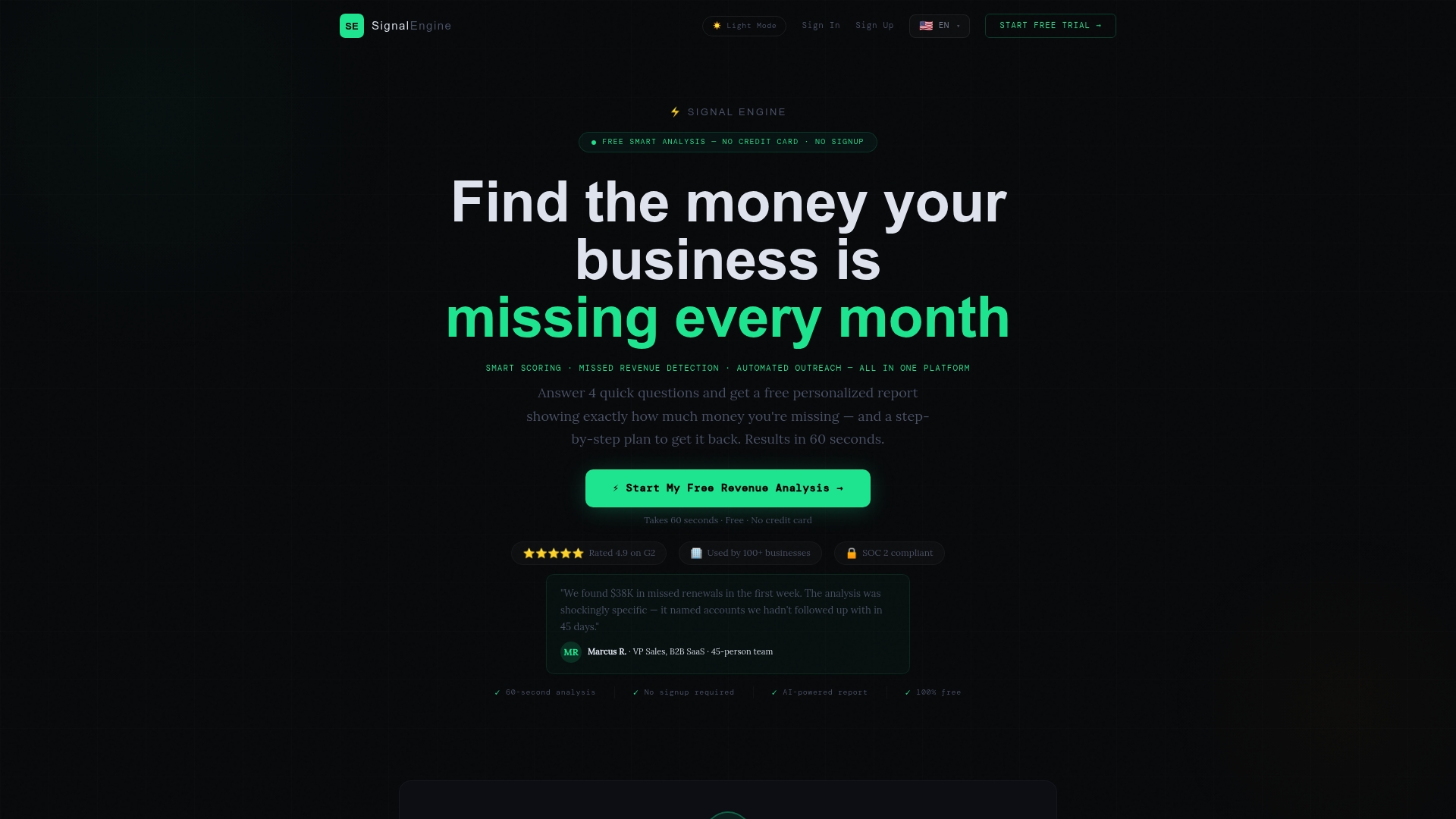
Because there is no per-seat pricing, the pastor, the administrator and the hospitality lead can all use the same dashboard.
How to tell whether your follow-up is working
You do not need a complex dashboard. Track four numbers every month:
- Contact rate: the share of guests who left information and received a message within 24 hours. Aim to move far beyond the 24% within-30-days figure from the Faith Perceptions survey.
- Response rate: the share of guests who replied to a call, text or email.
- Second-visit rate: the share of first-time guests who come back within 30 days.
- Third-visit rate: the share who reach the point where a group-leader call and a membership-class invitation make sense.
Compare against your own trend, not someone else's average. Your size, community and service times will all shape the numbers. If your second-visit rate rises after you tighten the first-24-hours step, you have your answer about where to keep investing.
For seasonal spikes such as Easter or Christmas, plan your volunteer capacity before the service, not after. The UMC post makes the same point: be prepared for the follow-up before the crowd arrives. Draft your templates, assign callers and set the Monday reminder in advance.
FAQ
How soon should a church follow up with a first-time visitor?
Within 24 hours is the target. Research cited by the Lewis Center shows return likelihood falling from about 85% within a day to about 15% after 72 hours. A short thank-you text or email on Sunday and a personal touch on Monday covers that window.
Should a church call, text or email visitors?
Use the method the guest prefers, which you can ask on your connection card. If they gave no preference, a short text or email for the first thank-you, then a personal call or note from the pastor or a lay leader, works well. Keep calls brief and focused on listening.
How many times should we contact a guest?
A good week-one pattern is three contacts: a thank-you, a personal call or email, and a Saturday invitation. After that, follow the visits: a small-group invitation after the second, a one-month check-in and a membership-class invitation after the third. If there is no response after those, send a final friendly note and stop.
What should we put on a visitor connection card?
Only what you will use. A name and a preferred contact method, email or phone, is enough. Lifeway Research recommends asking only for information the church has a clear plan to act on.
Sources
- 3 Key Components of Effective Visitor Follow-Up, Lewis Center for Church Leadership
- How to Best Connect with Church Guests (on Their Terms), Lifeway Research
- Following Up With Church Guests, Lifeway Research
- Most Churches Neglect This Vital Outreach Practice, Outreach Magazine
- Sample Plan for Follow up, Metro DC Synod ELCA
- As Easter Approaches, Be Prepared for the Follow Up, United Methodist Church of Greater New Jersey
- Follow-up Calls with Church Guests: What to Do and What Not to Do, Church Answers
- Thanks for visiting! How to follow-up with First-time Visitors, Fishhook
Ready to Stop the Revenue Leak?
Signal Engine gives small and local businesses 31 AI-powered tools to score leads by buying intent, predict churn before it happens, auto-generate email and SMS campaigns, and recover missed calls automatically — all in one dashboard starting at $49/month. Start your free 7-day trial — no credit card required. Setup takes 5 minutes.