

Recovering lost revenue reliably is a challenge when most revenue recovery software locks advanced features behind opaque pricing or requires complex, months-long implementations. Tools built for large enterprises often exclude small teams with per-seat fees and slow onboarding, while lighter offerings skip key AI-driven detection or churn prevention. This comparison covers pricing transparency, automation features, and team fit across five revenue recovery platforms so you can choose the one that actually closes your revenue gaps without hidden costs or admin headaches.
Table of Contents
- Signal Engine
- Outreach
- Ready to Stop the Revenue Leak?
- Gong Revenue AI OS
- Clari
- journy.io
- Ready to Stop the Revenue Leak?
- Comparative Analysis of Revenue Recovery Software
Signal Engine
At a Glance
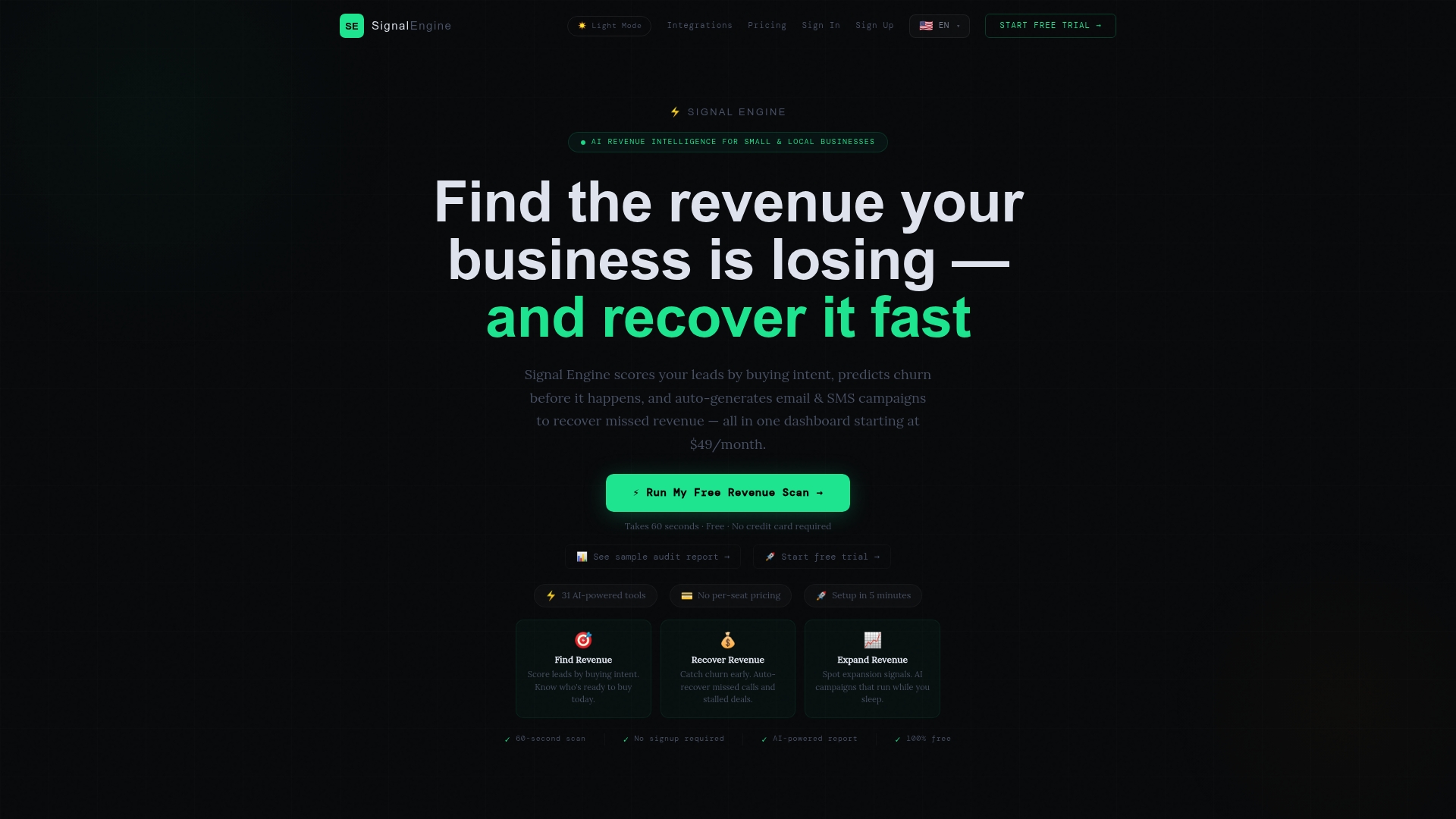
The vendor advertises an average recovery potential of $38K in the first month for new users. Signal Engine pairs real-time lead scoring, churn prediction, revenue leakage detection, and automated email and SMS outreach into a dashboard you can deploy in about five minutes.
Core Features
- AI-powered lead scoring and buying intent ranking with account history memory and behavioral signals.
- Churn prediction that provides early warning signals to trigger retention outreach.
- Revenue leakage detection across pipeline stages plus closed-loop attribution to track impact.
- Automated email and SMS campaigns, including auto-texts for missed calls and benchmark intelligence for performance comparison.
Key Differentiator
Flat, transparent pricing starting at $49 per month with no per-seat charges combined with a five-minute setup. That mix reduces procurement friction and lets small teams test revenue recovery without lengthy onboarding or seat negotiations.
Pros
- Instant setup in five minutes. You can run the free revenue audit and start a trial immediately rather than waiting weeks for onboarding.
- Flat pricing from $49/month removes per-seat cost calculus for small teams and local businesses.
- The platform bundles scoring, leakage detection, churn signals, and automated outreach in a single dashboard, reducing tool sprawl.
- Integrates with common stacks through Zapier, plus native hooks for CRMs and messaging platforms so you don’t rebuild workflows.
Cons
- Prediction accuracy can trail enterprise-grade conversation analytics and monitoring tools, so very large sales teams may prefer specialized vendors for deep call analysis.
Notable Integrations
- Stripe for payments
- SendGrid for transactional email
- HubSpot, Salesforce, Pipedrive via CRM sync
- Zapier for custom workflows
- Slack and SMS alerts
Who It's For
Small to mid-sized business owners, local service providers, SaaS startups, MSPs, and consultants that need a low-cost, low-friction way to find and recover lost revenue. Good fit when teams want revenue recovery without per-user billing or heavy implementation.
Unique Value Proposition
The free revenue audit paired with a 30-day recovery playbook turns initial setup into a rapid experiment. Instead of buying a long contract to test value, you get a concrete recovery plan and automated follow-ups that let you measure ROI in weeks.
Real World Use Case
A local digital marketing agency uses Signal Engine to score inbound prospects, automatically send targeted campaigns, and recover missed opportunities by routing missed-call texts and early churn alerts to account managers. Setup and trials complete in a single afternoon.
Pricing
Plans start at $49 per month with no per-seat fees. The vendor lists higher tiers up to $499 per month for larger teams and enterprise features.
Website: https://signalengine.solutions
Outreach
At a Glance
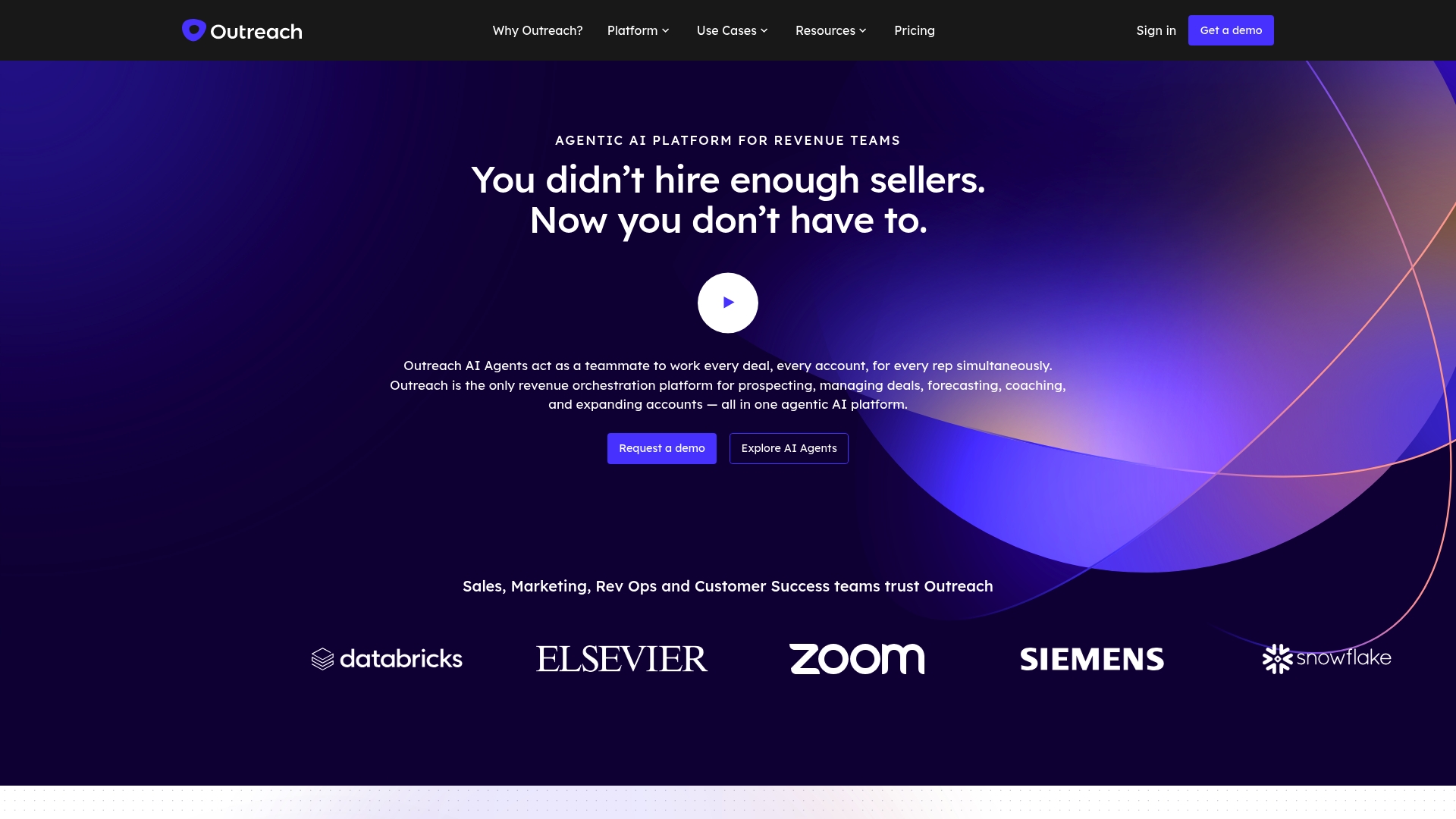
Outreach embeds AI agents that vendors describe as virtual teammates able to manage multiple deals and accounts at once. That agent-first design shifts workload from individual reps to orchestrated workflows, which changes how revenue teams assign daily priorities.
Core Features
- AI Agents for prospecting, deal handling, and forecasting.
- Pipeline management and sales forecasting tools to track deal stages and predict revenue.
- Conversation intelligence for real-time coaching and call analysis.
- Deal insights and mutual action plans to keep buyer and seller aligned.
- Account management features aimed at retention and expansion.
Key Differentiator
Outreach’s primary distinction is the integration of autonomous AI agents into sales workflows. These agents are meant to act across different motions simultaneously, handing repetitive outreach and surfacing high-value next steps so reps focus on closing rather than admin.
Pros
- Ease of getting started for common sales tasks; admins can enable basic automations quickly and get outbound cadence running without a long rollout.
- CRM integrations keep records synchronized with Salesforce or Microsoft Dynamics, which reduces duplicate entry and improves reporting accuracy.
- AI-powered tools help prioritize leads and follow-ups, cutting down busywork for quota-carrying reps.
- Strong support for collaborative account planning and deal orchestration means revenue ops and AEs can work from the same playbook.
- High configurability lets teams model complex sequences and handoffs when their sales motions require nuance.
Cons
- The interface grows noisy as automations and sequences multiply; the UI complexity can slow adoption for less technical users.
- The platform’s flexibility creates real risk of configuration sprawl without governance, which drives admin overhead.
- Mobile feature set is limited compared with desktop, so road warriors get a reduced experience.
- Analytics customization has friction; heavy reporting needs often require data exports or a BI layer.
When It May Not Fit
If your team lacks a dedicated admin or revenue operations lead, Outreach’s configurability becomes a burden rather than a benefit. Teams that prioritize a minimal, uncluttered UI or require advanced mobile-first tools will find gaps. Small sales teams with simple outbound needs may find lighter tools faster to maintain.
Notable Integrations
- CRM platforms such as Salesforce and Microsoft Dynamics for bidirectional data sync.
- Native CRM connectivity is the primary integration story; other connectors depend on your stack.
Who It's For
Outreach targets revenue teams in Sales, Marketing, and Customer Success that want AI-enabled workflow automation and deal orchestration. Best fit for organizations with a revenue ops function that can own governance and cadence strategy.
Real World Use Case
According to the vendor, Amplitude consolidated five platforms into Outreach and saved over $600K annually. That consolidation reportedly cut tool overlap and centralized forecasting, freeing headcount previously spent on integrations and manual reconciliation.
Pricing
Outreach requires you to request pricing; the vendor’s site shows a "View pricing info" prompt rather than public tiered rates. Expect enterprise licensing and seat-based quotes negotiated through sales.
Website: https://outreach.io
Ready to Stop the Revenue Leak?
Signal Engine gives small and local businesses 31 AI-powered tools to score leads by buying intent, predict churn before it happens, auto-generate email and SMS campaigns, and recover missed calls automatically — all in one dashboard starting at $49/month. Start your free 7-day trial — no credit card required. Setup takes 5 minutes.
Gong Revenue AI OS
At a Glance
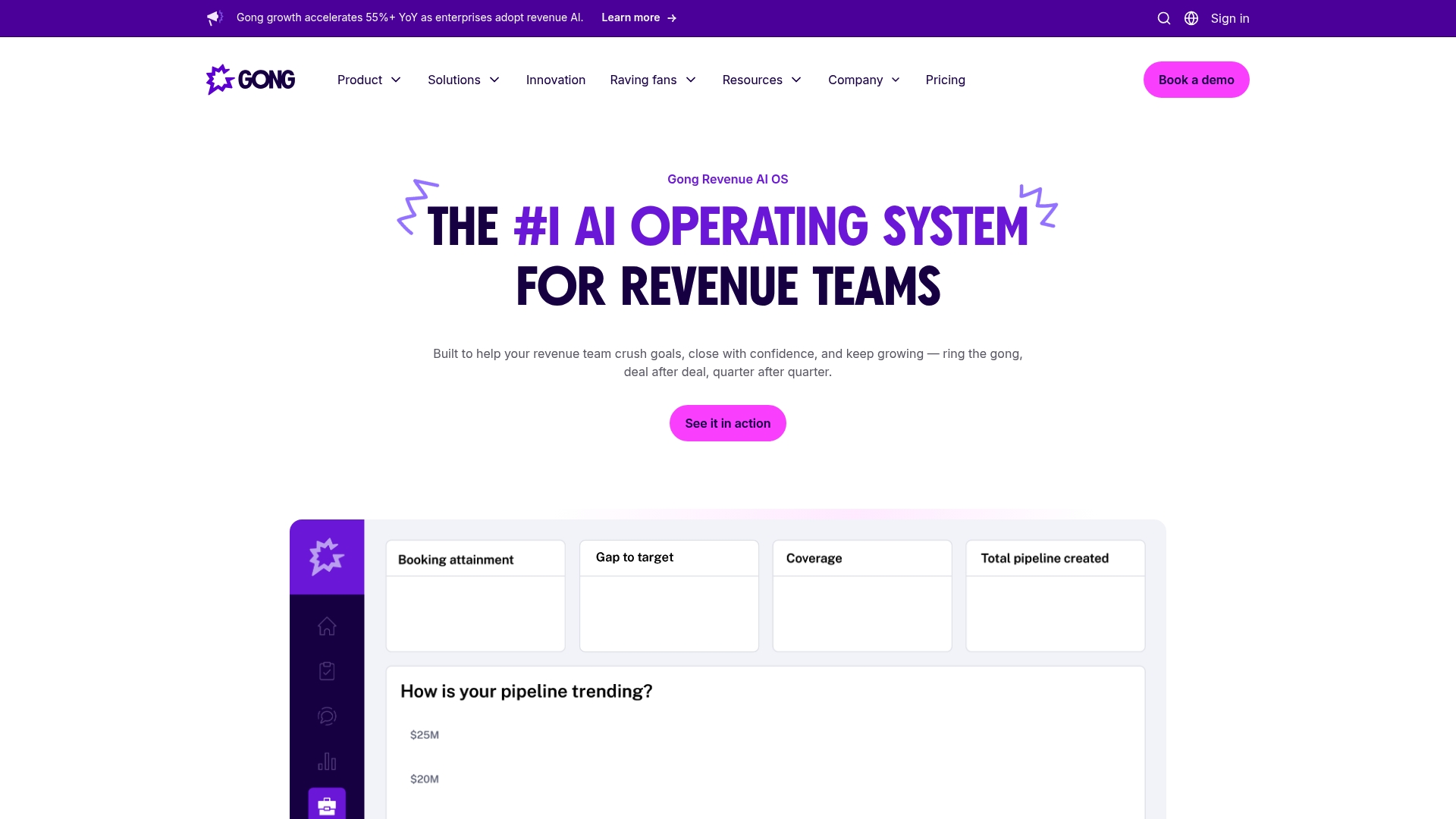
Gong's marketing materials state it is used by thousands of teams, and the platform organizes those signals into a single Revenue Operating System that links conversations, activity, and CRM records. That consolidation aims to make forecasting and coaching evidence driven.
Core Features
Gong centralizes customer context through the Gong Revenue Graph to connect calls, emails, and deal history. It applies advanced AI to surface patterns and suggested next steps from real interactions.
Gong also offers workflow automation and targeted engagement tools such as Gong Engage and forecasting capabilities via Gong Forecast. The stack includes AI Agents that automate follow-ups and pipeline updates.
Key Differentiator
Gong's defining feature is the platform-level merge of conversation data with operational workflows so signals travel with the deal instead of living in silos. The vendor frames this as a unified operating layer that both analyzes interactions and triggers workflow actions across systems.
That combination matters when coaching and forecasting must reference the same source of truth. It reduces manual reconciliation between recordings, CRM entries, and forecast spreadsheets.
Pros
- Designed to boost win rates and deal size by tying coaching directly to recorded customer interactions and measurable behavior changes.
- The product offers a large ecosystem of connectors and services that simplify pulling conversational signals into existing stacks.
- Strong analytics that convert meeting transcripts into searchable themes and risk flags, helping managers prioritize coaching time effectively.
- Customer stories in vendor materials describe measurable efficiency gains and revenue improvements after adoption.
- The company cites third-party recognition in the revenue intelligence category, which some buyers find helpful when shortlisting vendors.
Cons
- Public reviews show mixed sentiment about post-sale experience, with complaints about support responsiveness and onboarding follow-through.
- Pricing is not openly published, which can complicate budget planning and procurement timelines for some organizations.
- Several buyers report the sales process can feel heavy-handed or confusing relative to demo expectations.
When It May Not Fit
If you need a transparent, line-item price list to compare vendors quickly, Gong's approach to quoting may slow procurement. Teams with limited integration capacity or little RevOps support may struggle with initial adoption.
If your organization requires a light, out-of-the-box recorder without workflow automation, this system may be more infrastructure than you want.
Notable Integrations
- Salesforce
- HubSpot
- Slack
- Microsoft Teams
- Gainsight
- Vidyard
- ZoomInfo
- Zapier
Who It's For
Revenue leaders, RevOps, sales managers, and enablement teams that need conversation-level evidence to improve coaching and make forecasts more defensible. Best suited where a CRM-centric workflow already exists and an investments in adoption and integration are planned.
Real World Use Case
A sales organization records calls and meetings into Gong, then managers use the platform to tag objection patterns and run targeted coaching sessions. Ramp time shortens because new reps learn from actual, scored conversations rather than slide decks.
Pricing
Pricing is not publicly disclosed. The vendor says licensing is per user with platform fees that scale by the number of users and supported features. Expect to validate requirements during procurement to get a firm quote.
Website: https://gong.io
Clari
At a Glance
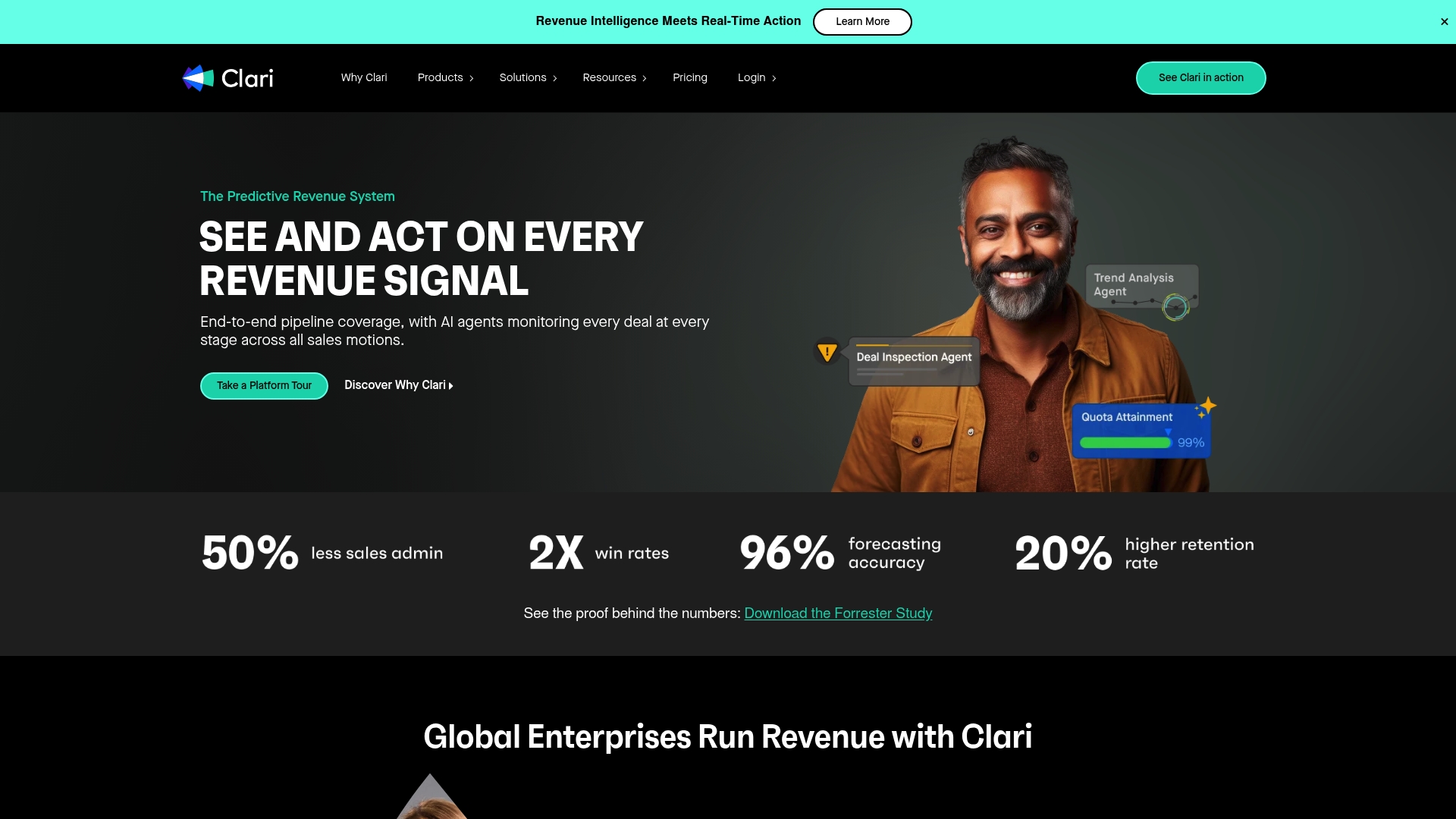
Clari's marketing materials state it is used by large enterprises managing trillions in revenue. The vendor advertises AI agents and a revenue database that tie signals from CRM and conversations into forecasting and deal inspection.
Core Features
- Revenue AI Agents for deal inspection, risk scoring, and forecasting automation.
- Data quality and autocapture that reduce manual CRM entry and improve signal reliability.
- Opportunity management and inspection tools that let teams flag at-risk deals and surface anomalies.
- Sales engagement workflows and buyer collaboration features including mutual action plan support.
- RevDB revenue database for centralizing CRM, engagement, and security signals into a single source.
Key Differentiator
Clari pairs its AI with a concept the vendor calls Revenue Context to unify data and orchestrate workflows in real time. That combination aims to move teams from reactive spreadsheet checks to event driven revenue actions tied directly to forecast outcomes.
Pros
- Automated note taking and real time transcription of sales conversations speeds postcall follow up and coaching.
- The platform significantly automates CRM updates, reducing time spent on data entry and keeping pipeline records fresher.
- Pipeline visibility and forecasting tools give revenue leaders clearer trend signals for weekly forecast calls.
- Minimal user training is commonly reported which helps adoption across distributed sales and customer success teams.
- Wide documentation and vendor support help implementation during the first 90 days.
Cons
- Customization for specific workflows and saved view flexibility is limited compared with highly configurable BI tools.
- Some customers report integration latency with Salesforce that introduces minute scale delays in synced signals.
- Complex view creation and personalization can be frustrating to power users who want deep custom filtering.
- The QBR dashboard can feel information dense which makes quick executive summaries harder to produce.
When It May Not Fit
If your team is a small sales group with simple CRM needs Clari's enterprise focus may be overkill and pricey. If you require highly tailored dashboards and full control over view logic a BI platform with more ad hoc reporting will fit better. Teams needing millisecond sync from Salesforce should plan for the minute scale latency noted above.
Notable Integrations
- Salesforce
- CRM platforms
- Sales engagement tools
- Data security systems
Who It's For
Large enterprise revenue teams that need unified AI driven revenue management, forecasting, and cross functional orchestration. Best suited to organizations with formal forecasting cadences and multiple revenue systems to consolidate.
Real World Use Case
The vendor describes a Fortune 500 customer using Clari to automate forecasting, inspect deals, and improve sales collaboration which led to tighter predictability and faster forecast cycles. That case illustrates the platform in large scale revenue operations.
Pricing
Clari does not publish list pricing. Interested teams are asked to request a quote which typically reflects deployment scope, integrations, and seat count. Expect enterprise licensing discussions rather than fixed self serve tiers.
Website: https://clari.com
journy.io
At a Glance
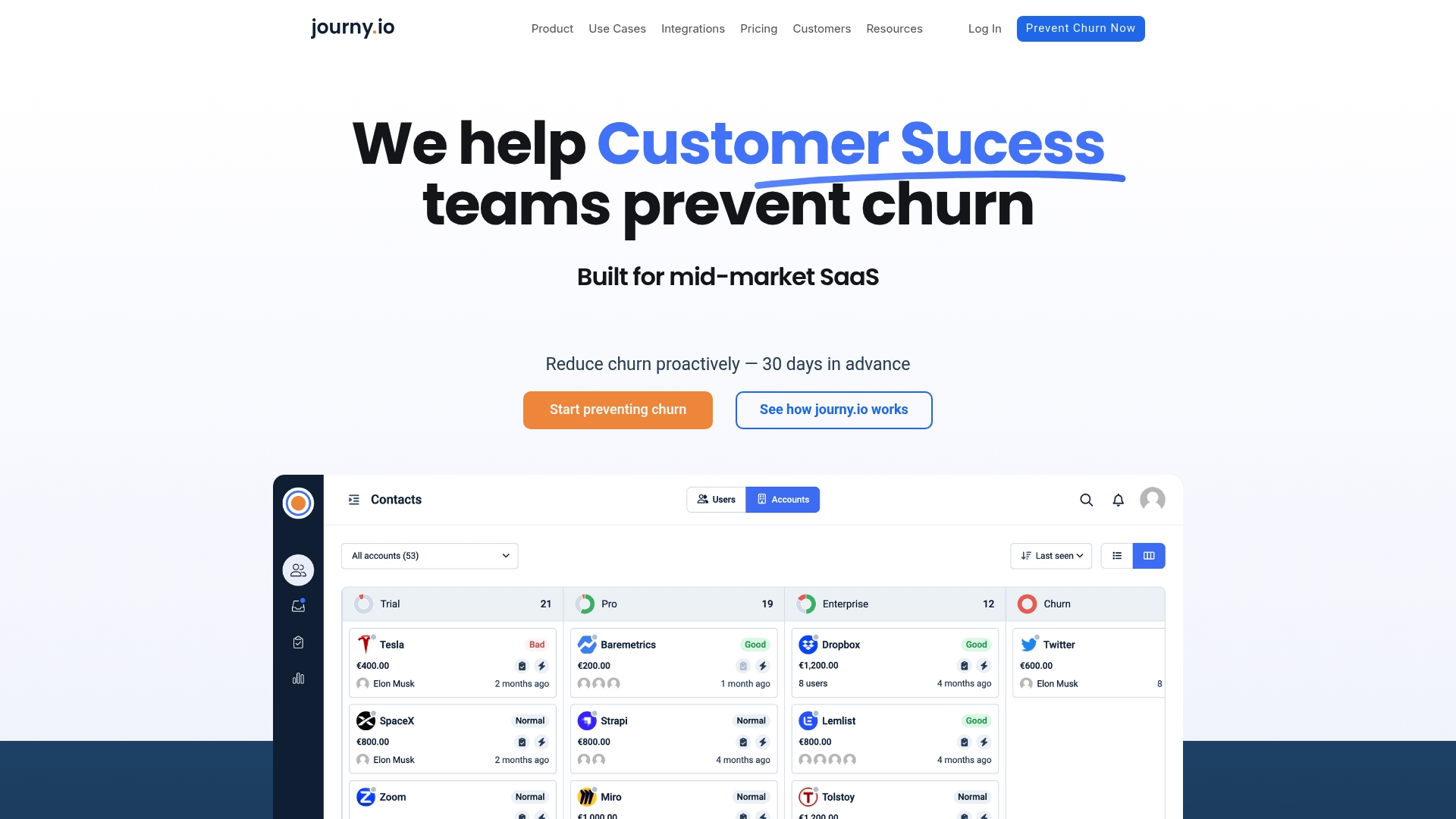
The vendor advertises identifying at-risk customers 30 days before they churn and claims set up without coding in about an hour. journy.io focuses on bringing product, subscription, and support signals into a single view for mid-market SaaS Customer Success teams.
Core Features
- Unified customer data collection and analysis across CRM, billing, and product events to remove manual joins.
- Churn risk prediction using machine learning that flags accounts for review based on behavioral signals and subscription health.
- Automated retention playbooks and workflows that trigger emails, tasks, or alerts when risk thresholds are crossed.
- Real-time integrations and account segmentation for targeted engagement and monitoring.
Key Differentiator
Built specifically for mid-market SaaS, journy.io emphasizes playbooks that work for product-led and hybrid go-to-market models. That focus shifts it away from broad enterprise suites and toward teams that need quick, data-driven retention actions rather than months of configuration.
Pros
- Simplifies customer data without engineering work. The no-code setup claim above lets CSMs map signals and start playbooks faster than tools that need engineering sprint time.
- Supports proactive churn prevention. The prediction and playbook combo gives teams a repeatable sequence for outreach before accounts degrade.
- Integrates with existing stacks in real time. That keeps alerts and segments current without batch exports.
- Designed around mid-market workflows. Pricing and feature scope are pitched at teams that need predictable outcomes rather than enterprise customization.
- Automates engagement based on live signals, so manual triage falls and prioritization becomes data driven.
Cons
- Third-party reviews note limits in deep customization, so complex multi-touch journeys may need workarounds.
- Buyer scenarios needing very advanced enterprise features or large-scale customization may find the platform constrained.
- The provided content leaves pricing tiers and scalability details vague, which makes cost forecasting harder for growing teams.
When It May Not Fit
If your company runs thousands of custom integration points or requires specialized regulatory controls, journy.io may not meet those needs. Very large enterprises that depend on on-premise connectors or heavy governance will likely find the platform narrow compared with enterprise CDPs.
Who It's For
Customer Success teams at medium-sized SaaS businesses pursuing PLG or hybrid growth. Best for teams that want fast time to value, predictable retention playbooks, and minimal engineering lift when wiring customer signals into workflows.
Real World Use Case
A mid-market SaaS company connects CRM, billing, and product telemetry to journy.io. Using the platform, the CSM team spots accounts showing declining usage and triggers a personalized retention playbook 30 days before the predicted churn window, routing high-risk accounts to a senior rep and automating low-touch outreach.
Website: https://journy.io
Ready to Stop the Revenue Leak?
Signal Engine gives small and local businesses 31 AI-powered tools to score leads by buying intent, predict churn before it happens, auto-generate email and SMS campaigns, and recover missed calls automatically — all in one dashboard starting at $49/month. Start your free 7-day trial — no credit card required. Setup takes 5 minutes.
Comparative Analysis of Revenue Recovery Software
For businesses aiming to enhance revenue capture while minimizing inefficiencies, selecting the right revenue recovery software is crucial. Here, we examine Signal Engine, Outreach, Gong, Clari, and journy.io to provide insights into which platform best aligns with various organizational needs.
Pricing Structures and Affordability
Signal Engine offers a standout advantage with its transparent and competitive flat-rate pricing model, beginning at $49 per month with no per-user fees. In contrast, both Outreach and Gong require enterprise-level negotiations to determine subscription costs, which might not be ideal for smaller teams or businesses with tighter budget constraints. Furthermore, Clari similarly follows a case-by-case pricing approach, which might delay adoption for organizations prioritizing upfront cost visibility. For businesses with limited resources aiming to quickly trial a solution, Signal Engine is particularly advantageous due to its free 7-day trial and clear, low-cost entry-level pricing.
Scalability and Advanced Features
When it comes to supporting complex and large-scale sales operations, Gong and Clari stand out with their integration ecosystems and enterprise-focused features. Gong’s advanced conversation analytics and forecasting capabilities, combined with its Revenue Graph insights, make it a preferred choice for enhancing team coaching and decision-making. Meanwhile, Clari’s Revenue Context functionality and centralized database are beneficial for enterprise teams requiring detailed revenue insights and synchronized operations. In contrast, journy.io focuses on mid-sized SaaS businesses, offering churn prediction and proactive playbooks that address retention challenges effectively.
Fit to Organizational Needs
- Signal Engine: Best suited for small to mid-sized businesses and local providers requiring rapid setup and minimal operating costs while effectively managing lead recovery and churn.
- Outreach: An excellent option for larger sales teams with a dedicated administrative function seeking advanced AI-driven workflows and deal orchestration.
- Gong: Ideal for organizations that prioritize deep conversational analytics and data-driven coaching methods to boost revenue team effectiveness.
- Clari: Designed for enterprises managing extensive pipelines and requiring forecasting and real-time deal inspection.
- journy.io: Fits well for mid-market SaaS companies prioritizing customer retention and needing efficient churn prediction.
Our Pick
While each platform has its merits, Signal Engine emerges as the most suitable choice for businesses desiring rapid deployment with minimal complexity. Offering transparent pricing and bundling powerful recovery tools into one platform, Signal Engine simplifies revenue management for small and mid-sized operations effectively. However, organizations with highly specialized tasks or requiring advanced AI-driven capabilities might find Outreach or Gong better aligning with their operational demands.
Revenue Recovery Software Comparison
Consider these revenue recovery solutions based on features, pricing, integrations, and fit for your business needs.
| Product Name | Key Features | Best For | Pricing | Notable Limitation |
|---|---|---|---|---|
| Signalengine | Lead scoring, churn prediction, automated outreach | Small to mid-sized businesses | Starting at $49/month | Prediction accuracy for large-scale analysis |
| Outreach | AI agents, pipeline management, account planning | Large revenue teams | Not disclosed | Configuration sprawl and UI complexity |
| Gong Revenue AI OS | Conversation-based coaching, forecasting, AI signals | Sales enablement and revenue ops | Not disclosed | Heavy-handed sales process and onboarding |
| Clari | Revenue AI agents, forecasting, opportunity management | Large enterprises | Not disclosed | Limited customization flexibility |
| journy.io | Customer retention playbooks, churn prediction, no-code setup | Mid-market SaaS teams | Not disclosed | Unable to manage large-scale enterprise needs |
Discover a Smarter Marketsizer.io Alternative for Revenue Recovery
Choosing the right tool to uncover hidden revenue can be challenging. If you are exploring marketsizer.io alternatives, consider Signalengine—a powerful solution designed to detect revenue leakage and recover lost income fast. Unlike platforms focused only on acquisition, Signalengine helps SaaS companies and agencies predict churn, score leads by buying intent, and automate personalized outreach—all through one easy dashboard.
Signalengine delivers an average recovery of $38K in the first month with instant setup and no complicated onboarding. Empower your business with targeted insights and a 30-day recovery plan to stop lost revenue now.
Start your free 7-day trial and put your recovery playbook into action today. See how quick setup and AI-driven lead scoring can revive missed opportunities.
Ready to Stop the Revenue Leak?
Signal Engine gives small and local businesses 31 AI-powered tools to score leads by buying intent, predict churn before it happens, auto-generate email and SMS campaigns, and recover missed calls automatically — all in one dashboard starting at $49/month. Start your free 7-day trial — no credit card required. Setup takes 5 minutes.
Frequently Asked Questions
What makes Signal Engine a suitable choice for small businesses?
Signal Engine offers a flat, transparent pricing starting at $49 per month with no per-seat charges. This allows small teams to test revenue recovery without lengthy onboarding, making it ideal for small and local businesses. You can start a free trial to see how it addresses your revenue needs immediately.
How does Signal Engine compare to Outreach in managing sales workflows?
Outreach excels with its integration of AI agents that manage multiple deals and accounts simultaneously, enhancing the efficiency of revenue teams. Signal Engine, on the other hand, is designed specifically for small to mid-sized businesses, providing essential tools for lead scoring and churn prediction without the complexity of managing numerous deals. Choosing Signal Engine streamlines your revenue recovery process in a straightforward dashboard.
What features does Signal Engine offer for recovering lost revenue?
Signal Engine includes automated email and SMS campaigns, churn prediction, and revenue leakage detection as part of its core features. This comprehensive suite enables businesses to recover missed opportunities and proactively retain customers. You can begin using these features almost immediately after setup, which only takes about five minutes.
Can I expect accurate predictions from Signal Engine for churn?
While Signal Engine offers churn prediction capabilities, some users might find its accuracy trails behind enterprise-grade conversation analytics tools. However, it still provides valuable early warnings to trigger retention outreach for small and local businesses. Starting with a free trial can help you gauge its effectiveness in your specific context.
What integrations does Signal Engine support to enhance its functionality?
Signal Engine integrates with several platforms, including Stripe for payments and Zapier for custom workflows. This allows you to streamline existing workflows without needing extensive redevelopment, making it a user-friendly option for those looking to enhance functionality quickly. Consider exploring these integrations during your free trial.