

TL;DR:
- A successful ABM program requires precise account selection, sales-marketing alignment, phased execution, and revenue-focused measurement.
- Implement a 90-day phased rollout, customize messaging by buying committee role, and utilize multi-channel campaigns for optimal results.
An account-based marketing checklist is a structured framework that aligns sales and marketing teams around specific high-value accounts, guiding every step from target selection through pipeline measurement. Done right, ABM produces higher engagement rates, shorter sales cycles, and stronger revenue attribution than broad-based demand generation. Tools like LinkedIn Matched Audiences, Salesforce, HubSpot, 6sense, and Bombora are the operational backbone of most modern ABM programs. This guide gives you a practitioner-vetted checklist built on 2026 benchmarks, phased timelines, and role-specific targeting frameworks so your program runs on precision, not intuition.
1. Your account-based marketing checklist: the core steps
The most effective ABM programs follow a repeatable eight-step process that moves from account identification through sales alerting. Leadfeeder's ABM process covers identifying web visitors, matching them to your ICP, exporting targeted lists, uploading to LinkedIn, creating campaigns, targeting personas, analyzing engagement, and alerting sales. Each step builds directly on the last. Skipping any one of them creates gaps that waste ad spend and slow pipeline.
Here is the core checklist in sequence:
- Identify target accounts using firmographic filters (industry, revenue, headcount) plus intent data from providers like 6sense or Bombora.
- Qualify accounts against your ICP by scoring fit across technographic, behavioral, and firmographic signals.
- Export and upload account lists to LinkedIn Matched Audiences for retargeting and persona-level ad delivery.
- Build multi-channel campaigns covering LinkedIn ads, personalized email sequences, and direct outreach from sales reps.
- Tag all campaign URLs with UTM parameters so engagement data flows cleanly into your CRM and attribution reports.
- Monitor account-level engagement weekly, tracking page visits, content downloads, and email interactions by account.
- Alert sales immediately when a target account revisits your site or crosses an engagement threshold.
- Review and refine account tiers and messaging monthly based on what is actually driving pipeline movement.
Pro Tip: Set your sales alerting rules before you launch any campaign. Timely sales alerting is one of the most overlooked steps, and accounts that re-engage without a same-day sales response lose momentum fast.
2. How to assess ABM readiness before you launch

ABM readiness means your team can answer five questions with specificity, not generalities. MediaLogic's readiness checklist covers ICP clarity, sales and marketing agreement on target accounts, defined buying-team roles, CRM usage, SLAs, and a credible ROI measurement plan. If any of these are missing, your program runs on intuition instead of precision.
Run through this readiness assessment before spending a dollar on ABM campaigns:
- ICP clarity: Can sales and marketing independently describe your ideal customer in the same terms, including industry, company size, tech stack, and pain points?
- Account agreement: Have both teams signed off on the same target account list, with no shadow lists or competing priorities?
- Buying committee mapping: Do you know the specific roles (economic buyer, champion, technical evaluator) at each target account?
- CRM data quality: Is your contact and account data clean enough to support lead-to-account matching? CRM data governance is often the first bottleneck teams underestimate.
- SLAs defined: Is there a written agreement on how fast sales follows up on marketing-qualified account signals?
- Measurement framework: Do you have a plan for tracking engagement, pipeline influence, and revenue attribution at the account level?
Common gaps include disjointed target lists where marketing targets one set of accounts and sales works another, no defined buying committee roles, and no measurement framework beyond lead volume. Fixing these before launch saves months of misaligned effort.
3. The 90-day phased timeline for ABM implementation
A 90-day ABM framework divides execution into three phases: Foundation (weeks 1 to 4), Build (weeks 5 to 8), and Scale (weeks 9 to 12). This sequencing matters because data infrastructure must be in place before campaigns launch, and pilot results must inform broader rollout decisions.
Phase 1: Foundation (weeks 1 to 4) Set up your CRM for lead-to-account matching, define your ICP, build your Tier 1 target account list (start with 5 to 10 accounts), and configure your intent data feeds. Lead-to-account matching and data governance typically require 4 to 6 weeks after platform setup, so start this work immediately.
Phase 2: Build (weeks 5 to 8) Launch pilot campaigns for your Tier 1 accounts. Activate LinkedIn Matched Audiences, deploy personalized email sequences, and brief sales on the accounts and messaging. Set up UTM tracking and engagement dashboards. Begin weekly sales and marketing syncs.
Phase 3: Scale (weeks 9 to 12) Expand to Tier 2 accounts based on pilot learnings. Refine messaging by persona and buying stage. Formalize your SLAs and measurement cadence. Begin reporting pipeline influence to leadership.
Pro Tip: Run list building and intent activation in parallel during Phase 1 rather than sequentially. This compresses your timeline and gets you to first qualified opportunities faster.
Expect your first qualified opportunities between weeks 8 and 12. Defensible ROI analysis requires 6 to 9 months of data. Any pipeline promises made before that window are premature.
4. How to build your target account list with precision
Your target account list is the foundation of your entire account-based marketing plan. A weak list produces weak results regardless of how good your campaigns are. Start with your closed-won data: identify the firmographic and technographic patterns in your best customers, then use that profile to build a prospecting list.
Tier your accounts into three groups. Tier 1 accounts (5 to 15 accounts) get fully personalized, one-to-one treatment with custom content, direct executive outreach, and dedicated sales resources. Tier 2 accounts (50 to 150 accounts) receive one-to-few campaigns with industry or persona-level personalization. Tier 3 accounts (hundreds to thousands) get one-to-many programmatic campaigns with light personalization.
Intent data from 6sense or Bombora adds a critical signal layer. Accounts showing active research behavior around your category should move up in priority regardless of their tier assignment. This is where B2B account targeting shifts from static list management to dynamic, signal-driven prioritization.
5. Crafting personalized messaging by buying committee role
Generic messaging kills ABM programs. The economic buyer at a target account cares about revenue impact and risk. The technical evaluator cares about integration complexity and security. The end-user champion cares about workflow fit and ease of adoption. Sending the same message to all three is the fastest way to lose a deal you should have won.
Map your content assets to each buying committee role before you launch any campaign. For each Tier 1 account, build a simple account plan that documents the known contacts, their roles, their likely objections, and the content most relevant to each. Role-specific messaging works best as ongoing account planning rather than fixed-interval cadences, updating as new signals come in from the account.
LinkedIn Matched Audiences lets you target by job title and seniority within a specific company list. Use this to serve different ad creative to the CFO versus the IT director at the same target account. This is personalized marketing tactics executed at scale.
6. Multi-channel campaign execution for target accounts
A single-channel ABM campaign is not ABM. It is retargeting with a fancier name. Effective B2B account targeting requires coordinated touchpoints across LinkedIn ads, email, direct sales outreach, and where appropriate, direct mail or event invitations.
The sequence matters. Start with LinkedIn ads to build awareness and familiarity at the account before sales reaches out cold. This warm-up effect measurably improves email open rates and call acceptance. Once an account shows engagement signals (ad clicks, site visits, content downloads), trigger the personalized email sequence and notify the sales rep for direct outreach.
Keep your channel mix tight for Tier 1 accounts. Trying to run five channels simultaneously with a small team produces mediocre execution across all of them. Two or three channels executed with precision beat five channels executed poorly every time.
7. How to measure ABM impact and prove ROI
ABM measurement uses four layers: coverage, engagement, pipeline influence, and closed-won revenue attribution. Abmatic AI's measurement model maps these layers to specific reporting cadences. Engagement metrics appear quickly, but meaningful pipeline influence requires a full quarter or more of data before drawing conclusions.
Key benchmarks to track, based on 2026 ABM standards:
- Email open rates: 30 to 40% for ABM-targeted sequences (versus 20 to 25% for standard B2B email)
- Click-through rates: 8 to 12% for ABM email campaigns
- Deal velocity: 40 to 50 days from first touch to opportunity creation
- Win rates: 35 to 50% for accounts in active ABM programs
Review engagement metrics weekly, pipeline influence monthly, and revenue attribution quarterly. Reporting on vanity metrics like impressions or raw lead volume to executives undermines your program's credibility. Finance-relevant KPIs, specifically influenced pipeline value and win rate lift versus non-ABM accounts, are what earn continued investment.
"Early ABM ROI measurement risks misinterpretation. Engagement metrics appear quickly, but meaningful pipeline influence often requires a full quarter or more." — Abmatic AI, 2026
Key takeaways
A successful ABM program requires precise account selection, sales-marketing alignment, phased execution, and measurement tied to revenue, not vanity metrics.
| Point | Details |
|---|---|
| Start with readiness | Confirm ICP clarity, CRM data quality, and SLAs before launching any campaign. |
| Tier your accounts | Assign Tier 1 (1:1), Tier 2 (1:few), and Tier 3 (1:many) treatment based on account fit and intent signals. |
| Phase your rollout | Use a 90-day Foundation, Build, Scale framework; expect first qualified opportunities at weeks 8 to 12. |
| Personalize by role | Map content and messaging to each buying committee role, not just the company. |
| Measure what matters | Track engagement weekly, pipeline influence monthly, and revenue attribution quarterly. |
What I've learned running ABM in complex B2B environments
ABM checklists are only as good as the trust between sales and marketing. I have seen technically perfect programs collapse because sales did not believe in the account list and quietly worked their own targets. The checklist is not just an operational tool. It is a contract between two teams.
The other mistake I see constantly is measuring ROI too early. Leadership wants proof in 30 days. The data simply does not exist yet. Your job is to set expectations upfront: engagement signals in weeks 2 to 4, first qualified opportunities in weeks 8 to 12, and defensible ROI after two full quarters. Teams that skip this conversation end up killing good programs before they have a chance to work.
The best ABM practitioners I know treat account planning as a living process. They update messaging and priorities as new signals arrive, not on a fixed quarterly schedule. When a target account's CTO publishes a LinkedIn post about a pain point you solve, that is a signal. Act on it that week, not next quarter. Balancing the right technology with disciplined process execution is what separates programs that generate real pipeline from those that generate impressive slide decks.
— Bernard
How Signalengine accelerates your ABM program
Running a precise ABM program means knowing which accounts are showing buy-readiness signals right now, not last week.
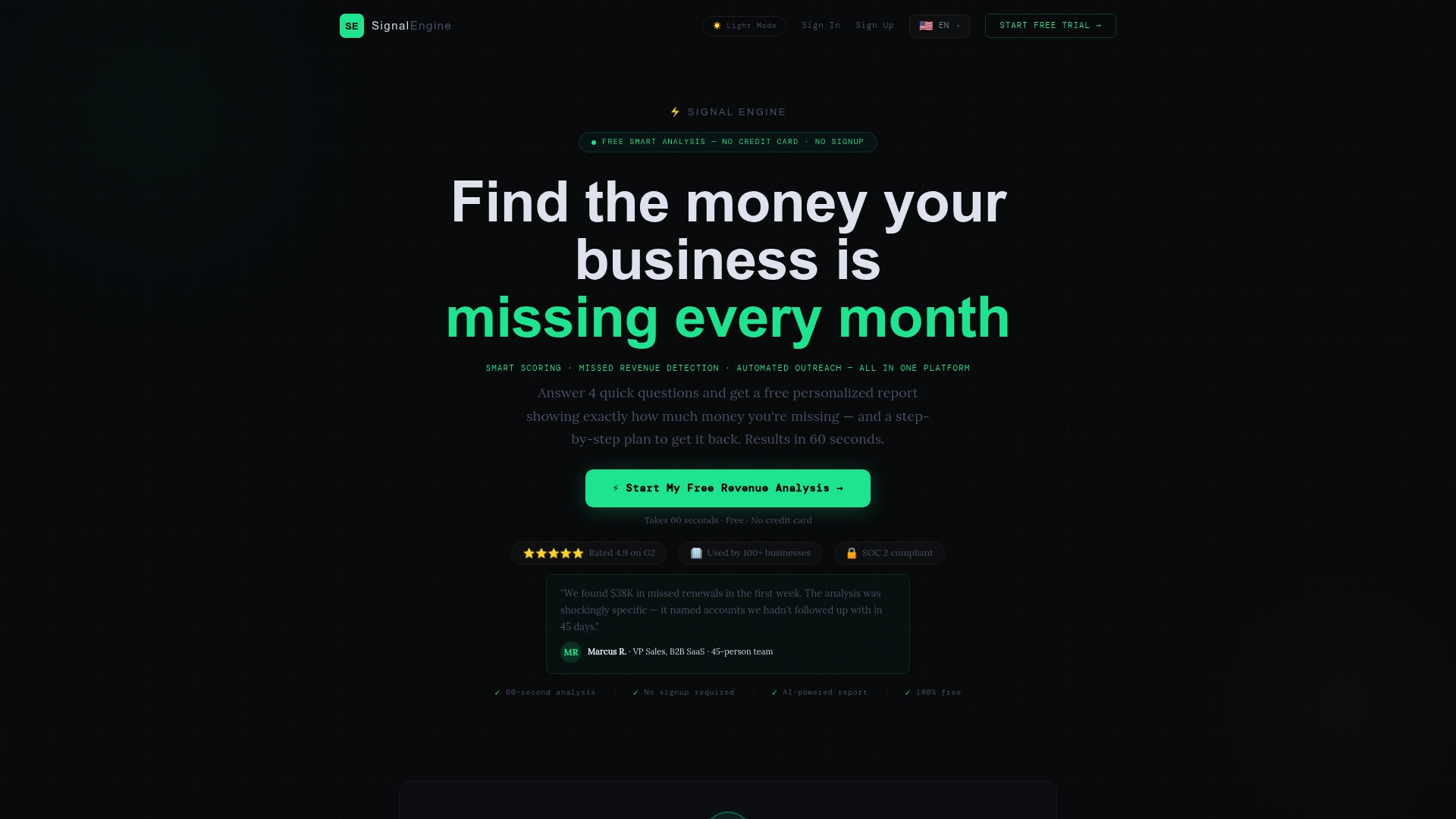
Signalengine's AI-powered platform scores leads by buying intent in real time, flags accounts showing re-engagement signals, and triggers automated sales alerts so your reps act while interest is hot. It integrates directly with CRM platforms like Salesforce and HubSpot, so your account engagement data flows into the dashboards your team already uses. For SaaS teams running ABM programs, Signalengine surfaces the revenue signals your current stack is missing. See it in action with a live demo and find out how much pipeline your program is currently leaving on the table.
FAQ
What is an account-based marketing checklist?
An account-based marketing checklist is a step-by-step framework covering account selection, ICP qualification, multi-channel campaign execution, sales alerting, and pipeline measurement. It aligns sales and marketing teams around the same target accounts and success criteria.
How long does ABM take to show results?
First qualified opportunities typically appear between weeks 8 and 12 after launch. Defensible ROI analysis requires 6 to 9 months of data, so avoid drawing conclusions from early engagement metrics alone.
What are the key ABM metrics to track?
Track email open rates (target 30 to 40%), click-through rates (8 to 12%), deal velocity (40 to 50 days to opportunity), and win rates (35 to 50%) as core ABM benchmarks. Report pipeline influence and revenue attribution to executives, not impressions or raw lead counts.
How many accounts should be in a Tier 1 ABM list?
Start with 5 to 10 Tier 1 accounts for your pilot phase. This keeps personalization quality high and gives you clean data to evaluate before scaling to broader account tiers.
What tools do B2B teams use for ABM execution?
The most common ABM tech stack includes a CRM (Salesforce or HubSpot), intent data providers (6sense or Bombora), LinkedIn Matched Audiences for paid targeting, and a marketing automation platform for email sequencing and engagement tracking.
Ready to Stop the Revenue Leak?
Signal Engine gives small and local businesses 31 AI-powered tools to score leads by buying intent, predict churn before it happens, auto-generate email and SMS campaigns, and recover missed calls automatically — all in one dashboard starting at $49/month.
Start your free 7-day trial — no credit card required. Setup takes 5 minutes.