

Choosing customer intelligence software that actually lowers churn without slow onboarding or hidden costs wastes time for most small and growing teams. Many platforms raise costs with per-seat fees or demand technical expertise for what should be daily retention workflows. This comparison makes it easy to pick tools with clear pricing, simple setup, and churn prediction tuned for your team's pace.
Table of Contents
- Signal Engine
- Ready to Stop the Revenue Leak?
- Churnkey
- Ready to Stop the Revenue Leak?
- Syncly
- ChurnZero
- Ready to Stop the Revenue Leak?
- Totango Customer Revenue Optimization Suite
- Ready to Stop the Revenue Leak?
- Comparison of alternatives
Signal Engine
At a Glance
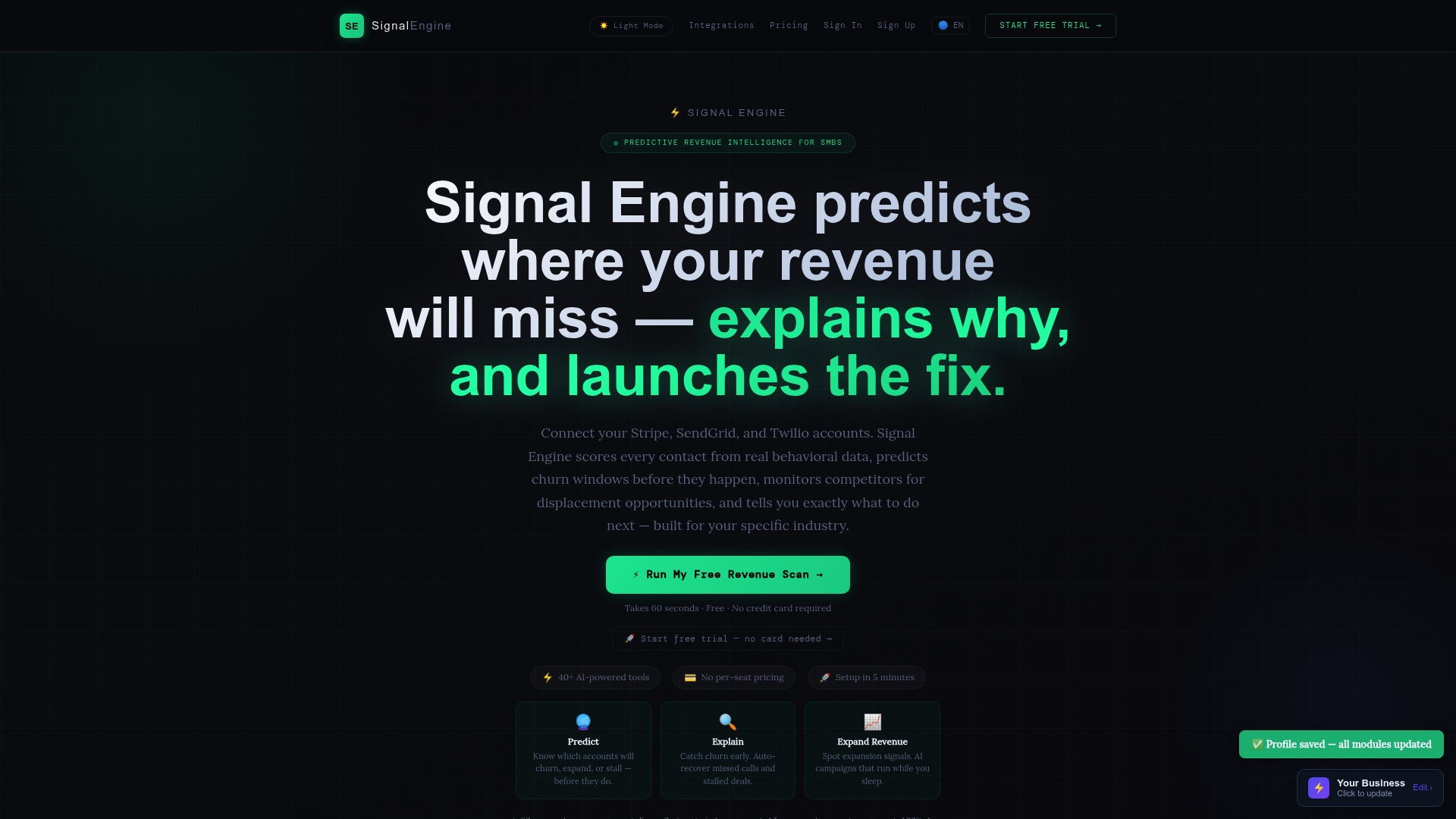
According to the company, pricing starts at $49/month with no per-seat fees. The vendor advertises setup in about five minutes. Signal Engine watches customers, scores behavior automatically, and flags accounts likely to churn. It targets small and mid-sized businesses that need quick revenue recovery tools.
Core Features
Signal Engine combines predictive account scoring, churn prediction, and missed call recovery to catch revenue leaks early. The platform also includes an AI campaign writer that generates personalized outreach and automated SMS follow ups. Revenue leakage detection and competitor monitoring tie those signals to concrete recovery actions.
Key Differentiator
Flat pricing and rapid setup let small teams run revenue recovery without long vendor onboarding. That price and speed pair with tools focused on recovery rather than general CRM tasks. The result is a compact workflow you can start using the same day.
Pros
Signal Engine watches customer behavior and turns those signals into prioritized work for sales and marketing teams. Self-serve setup and a small monthly entry price lower the cost of testing retention programs. Industry-specific configurations help field service and local businesses move faster. Automated missed call recovery and campaign generation reduce manual follow up and help recover lost revenue.
Cons
- Designed primarily for SMBs; not a full enterprise sales or dispatch suite
Notable Integrations
- Stripe for billing signals and payment recovery
- SendGrid for email delivery and campaign sending
- Twilio for SMS outreach and missed call recovery
Who It's For
Small business owners and compact sales teams who need fast outcomes without heavy IT work. Teams that lack an enterprise CRM but want to predict churn and act on hot leads will find this useful. Local services, clinics, and field technicians benefit from the missed call and SMS recovery features.
Unique Value Proposition
Signal Engine watches customer behavior and tells you which accounts to contact next, removing manual triage. That continuous scoring replaces time spent building reports and lets staff focus on revenue recovery. For SMBs with limited staffing, this shifts effort from analysis to action.
Real World Use Case
A local HVAC contractor uses Signal Engine to detect stalled invoices and at-risk accounts. The system flags likely churners and auto-sends personalized SMS and email follow ups. The team recovers missed appointments and rebooks service without adding headcount or custom CRM integrations.
Pricing
That entry price begins at $49/month and includes a 7-day free trial. The vendor presents flat pricing with no per-seat fees to keep costs predictable for small teams. Trial access lets you validate recovery flows before committing.
Website: https://signalengine.solutions
Ready to Stop the Revenue Leak?
Signal Engine gives small and local businesses 31 AI-powered tools to score leads by buying intent, predict churn before it happens, auto-generate email and SMS campaigns, and recover missed calls automatically — all in one dashboard starting at $49/month. Start your free 7-day trial — no credit card required. Setup takes 5 minutes.
Churnkey
At a Glance
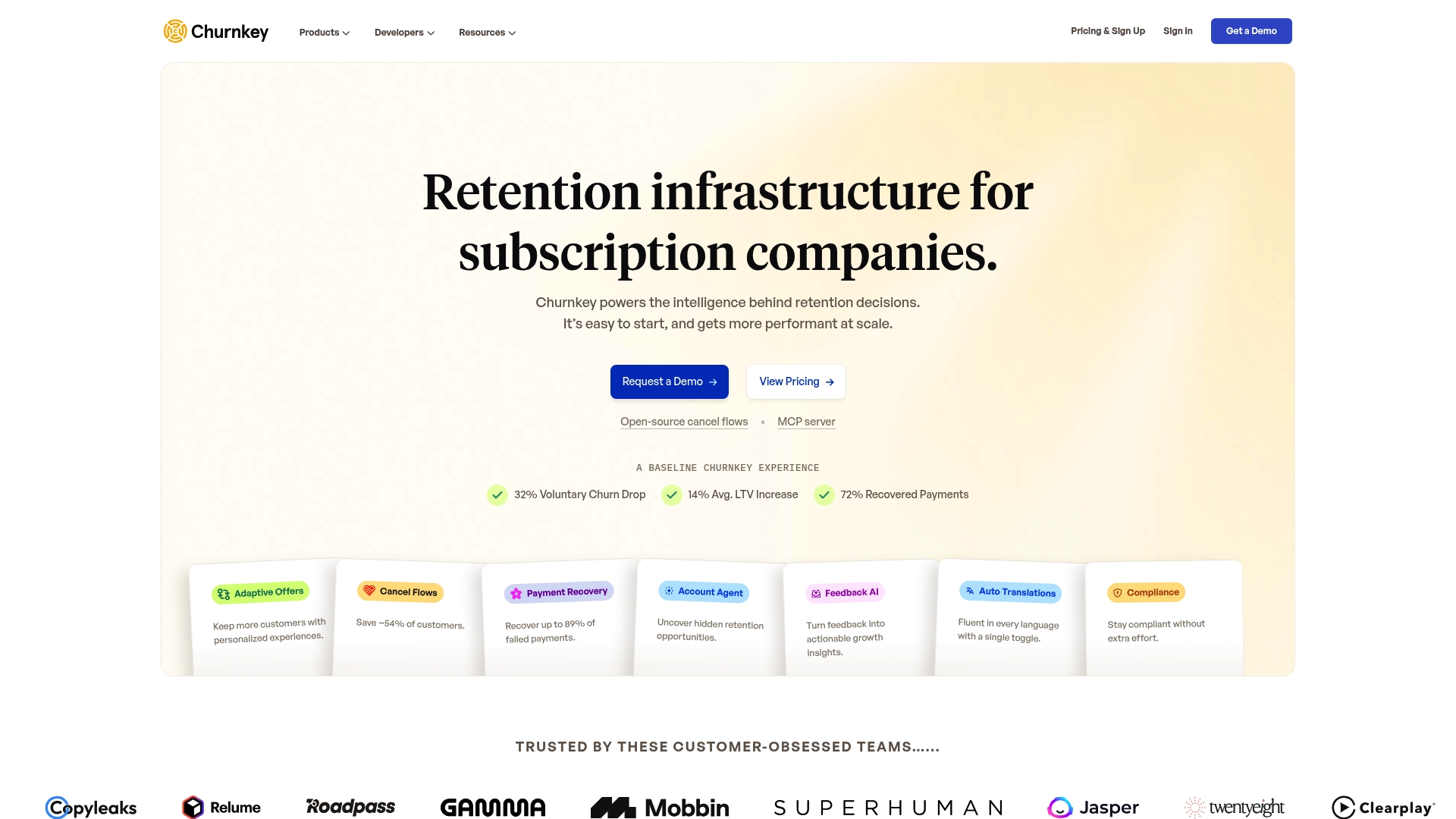
Churnkey reports recovering up to 89% of failed payments. That claim highlights its focus on payment recovery and retention workflows. The platform also emphasizes cancel-flow personalization and feedback analysis for subscription businesses.
Core Features
Churnkey delivers personalized cancel flows built with a no code editor, payment recovery logic, and customer feedback AI that extracts product insights. The platform includes a churn metrics dashboard and customer health scoring for risk prediction and real-time monitoring. These pieces work together to reduce voluntary churn and recover revenue from declined transactions.
Key Differentiator
Churnkey pairs AI-driven retention logic with open source SDKs to let engineering teams customize flows and embed recovery where they need it. The open source SDK approach lets teams own the integration while using the vendor's analytics and recommendation engines. Deep ties to major payment providers mean recovery flows can run at the transaction level instead of only at the account level.
Pros
Churnkey offers focused tools for reducing cancellations and recovering failed payments, and case studies support those claims. The vendor advertises GDPR and SOC 2 compliance, which matters when you handle payment data. Churnkey reports fast implementation times, often in 15–30 minutes, and the open source SDKs make customization possible for teams that prefer code-first control.
Cons
- Some buyers report limited customization when their retention workflows are unusually complex. This can force heavier engineering work.
- Companies with legacy or unusual billing systems may face extended integration work. That adds implementation time and cost.
- Advanced AI features expect technical familiarity to tune models and interpret feedback outputs.
When It May Not Fit
Churnkey may not fit teams without engineering bandwidth for custom integrations. It also may not suit businesses running highly bespoke billing stacks or on-premise processors. Organizations that want plug-and-play retention without any technical setup should evaluate simpler, code-free alternatives.
Notable Integrations
Churnkey integrates with major subscription and payment platforms including:
- Stripe
- Chargebee
- Paddle
- Braintree
- Maxio
- Slack
Who It's For
Subscription companies that want automated retention combined with developer control will find Churnkey appealing. Product and growth teams can use the cancel flows and feedback AI while engineering owns SDK integrations. It fits businesses that track churn metrics and want transaction-level recovery tied to payment providers.
Real World Use Case
According to the company, a SaaS customer used Churnkey to automate cancel sessions and payment recovery and saw a 32% reduction in voluntary churn and a 14% increase in lifetime value. That example shows how personalized cancel flows plus payment retry logic can move retention metrics. Teams that measure churn and lifetime value can map these levers to revenue outcomes.
Pricing
Churnkey starts at $250 per month for the base plan. The vendor offers larger plans and add‑ons for enterprise features on request.
Website: https://churnkey.co
Ready to Stop the Revenue Leak?
Signal Engine gives small and local businesses 31 AI-powered tools to score leads by buying intent, predict churn before it happens, auto-generate email and SMS campaigns, and recover missed calls automatically — all in one dashboard starting at $49/month. Start your free 7-day trial — no credit card required. Setup takes 5 minutes.
Syncly
At a Glance
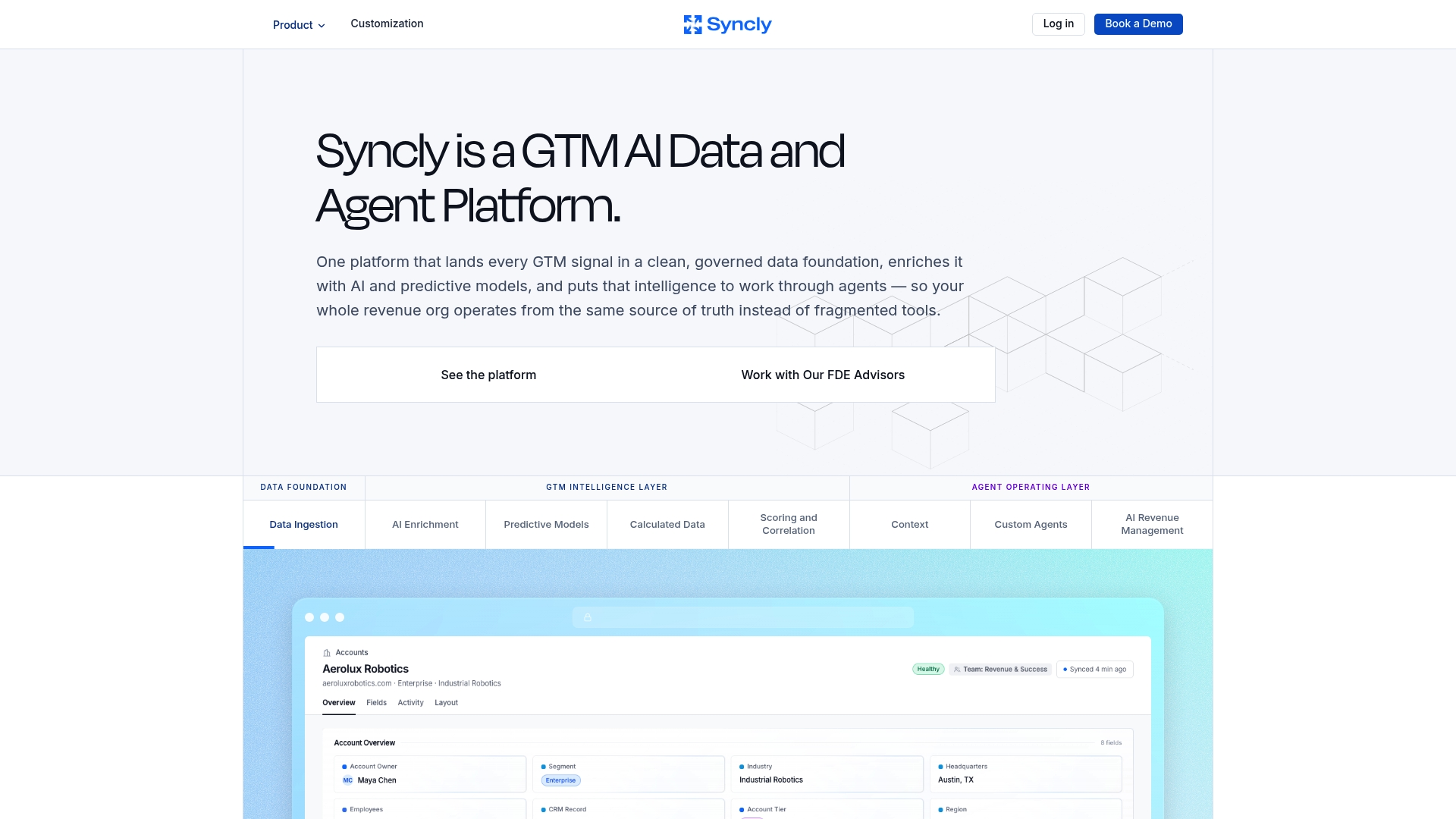
Syncly consolidates fragmented GTM signals into a single AI-enriched data foundation that teams can reuse across workflows. The platform pairs that foundation with tools to build, deploy, and monitor revenue agents. That combination aims to turn scattered sales, support, billing, and product signals into predictable account actions and policies.
Core Features
Syncly ingests data from multiple GTM systems and applies AI enrichment and predictive modeling to create a unified dataset. It builds unified customer profiles and tracks KPIs across accounts so teams share the same context. The platform also includes agent management for running and governing revenue workflows with policies and audit trails.
Key Differentiator
The single most distinct capability is the union of a governed AI data foundation and active agent management. Teams can reuse the same customer context across multiple agents and operational policies. That design shifts the focus from one-off automations to managed, auditable GTM execution.
Pros
Syncly gives revenue teams a structured way to centralize messy GTM data and make it machine ready. Its agent framework supports renewal, expansion, and onboarding flows while keeping policy and auditing built into the operational layer. Professional advisory services are available to help set the foundation and speed initial deployment for teams that lack in-house data engineering capacity.
Cons
- Implementation requires technical resources. Smaller GTM teams may need a partner or dedicated engineer to onboard the system.
- Early-stage AI and automation features depend on data quality. Messy or incomplete source systems will reduce prediction accuracy.
- The platform can feel complex for simple use cases. Basic outreach or small account tracking may be overkill compared with lighter tools.
When It May Not Fit
If your team lacks technical bandwidth or a data engineer, Syncly will likely demand outside help to set up pipelines and governance. Organizations with fragmented, low-quality source data should expect slower time to value while cleaning and aligning systems. Teams that need a quick, low-friction outreach tool rather than a governed data foundation will find the platform heavyweight.
Who It's For
Revenue, sales, marketing, and customer success teams that need a single source of truth for account behavior will get the most from Syncly. It suits teams that plan to run multiple automated workflows and require policy controls and audit trails. The platform fits organizations ready to invest in data cleanup and operational governance.
Real World Use Case
A B2B SaaS company consolidates CRM, support, billing, and activity logs into Syncly to detect renewal risk. The platform scores accounts for churn risk and exposes health signals to customer success agents. The company runs automated outreach agents that open renewal conversations and log auditable outcomes.
Pricing
Pricing is not listed publicly. The product page presents Syncly as informational only and does not include published tiers or a self-serve price. Prospective buyers must contact the vendor for quotes and engagement models.
Website: https://syncly.us
ChurnZero
At a Glance
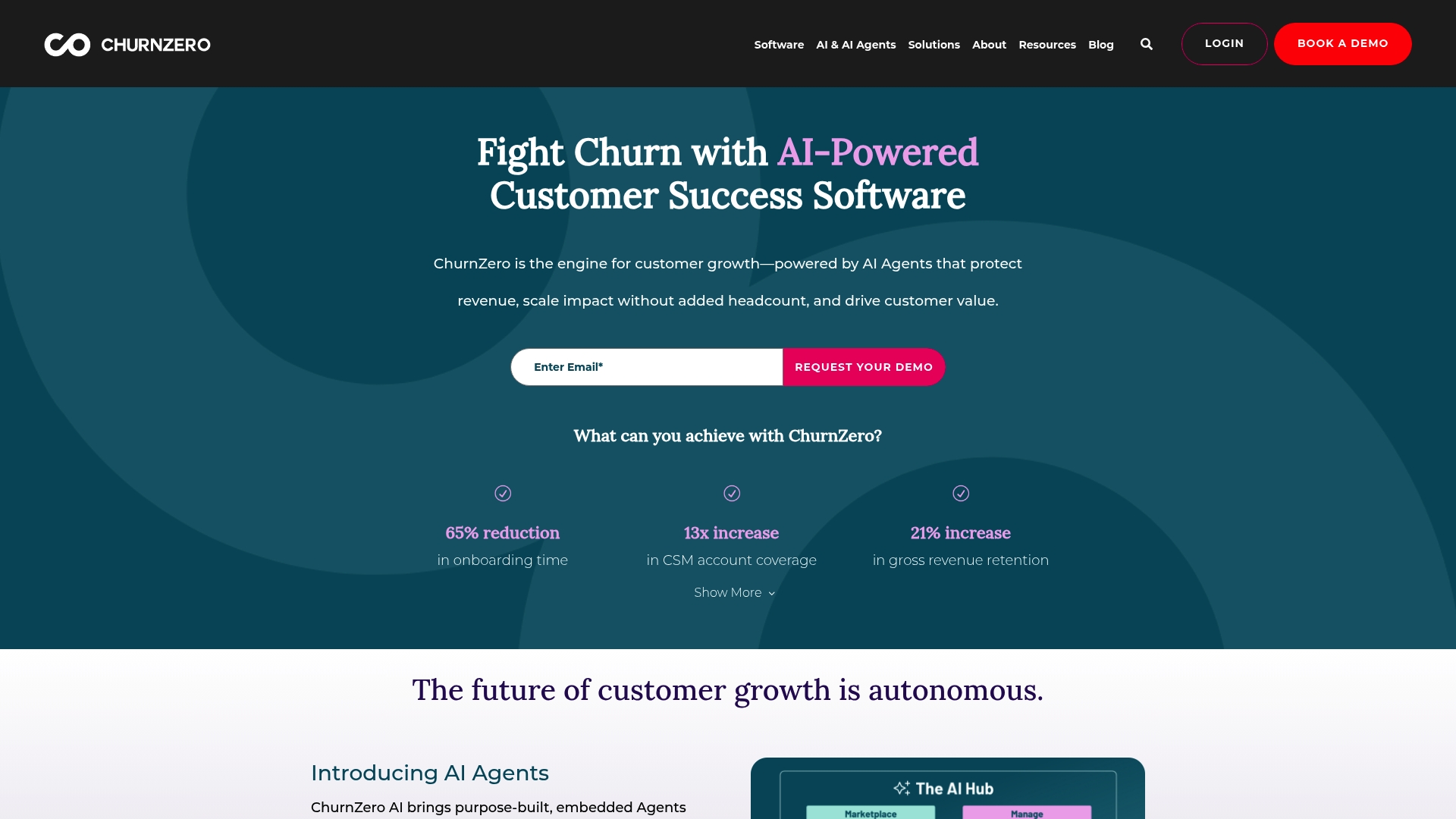
ChurnZero advertises AI agents that both analyze and act on customer signals. These agents automate outreach and playbooks so teams can respond faster to churn indicators. The platform focuses on health scoring, in-app messaging, and renewal forecasting for customer success teams.
Core Features
ChurnZero combines customer health scoring with journey management and automated playbooks to manage retention workflows. It includes in-app communications and surveys for direct customer feedback and dashboards for renewal forecasting and reporting. The platform ties those capabilities to AI agents that reduce manual work and surface priority accounts.
Key Differentiator
ChurnZero's standout feature is its embedded AI agents that move beyond alerts to take predefined actions on customer accounts. That capability lets teams trigger messages, update scores, and run playbooks without manual intervention. The result is a platform that mixes monitoring with automated responses for account risk and opportunity.
Pros
ChurnZero offers detailed health scores and dashboards that help prioritize accounts. Its automation reduces repetitive tasks and keeps outreach consistent across segments. The platform integrates with common CRM and support systems so account context stays in one place. Custom workflows let teams map different journeys for churn risk, renewals, and expansion.
Cons
- Complex onboarding for large environments can demand significant setup time and staff attention.
- The learning curve for configuring automation and AI features can slow early adoption.
- Reporting customization is more limited than some competing platforms.
- Pricing details are not listed publicly and may require vendor conversations.
When It May Not Fit
ChurnZero may not fit teams that lack internal data engineering resources for integrations and migration. Organizations with very small customer success teams may find the platform too feature rich for their needs. Firms that require bespoke report templates might prefer a tool with deeper report customization options.
Notable Integrations
- Salesforce
- HubSpot
- Zendesk
- Gmail
- Outlook 365
- Slack
- Microsoft Teams
- Recurly
Who It's For
ChurnZero suits customer success teams and managers focused on scaling retention with automation. It matches teams that need continuous health scoring and predictable renewal workflows. The platform aligns with organizations that already use mainstream CRM and support systems.
Real World Use Case
A SaaS company tracks health scores and automates in-app messages to accounts showing low engagement. The AI agents trigger a renewal outreach playbook for high-risk accounts and log activities back into the CRM. That flow keeps account owners focused on the highest value conversations.
Pricing
Pricing is not published on the website and is listed as informational only. Vendor conversations appear required to get a tailored quote based on seat counts and integration needs. Expect implementation and license costs to vary by company size and configuration.
Website: https://churnzero.com
Ready to Stop the Revenue Leak?
Signal Engine gives small and local businesses 31 AI-powered tools to score leads by buying intent, predict churn before it happens, auto-generate email and SMS campaigns, and recover missed calls automatically — all in one dashboard starting at $49/month. Start your free 7-day trial — no credit card required. Setup takes 5 minutes.
Totango Customer Revenue Optimization Suite
At a Glance
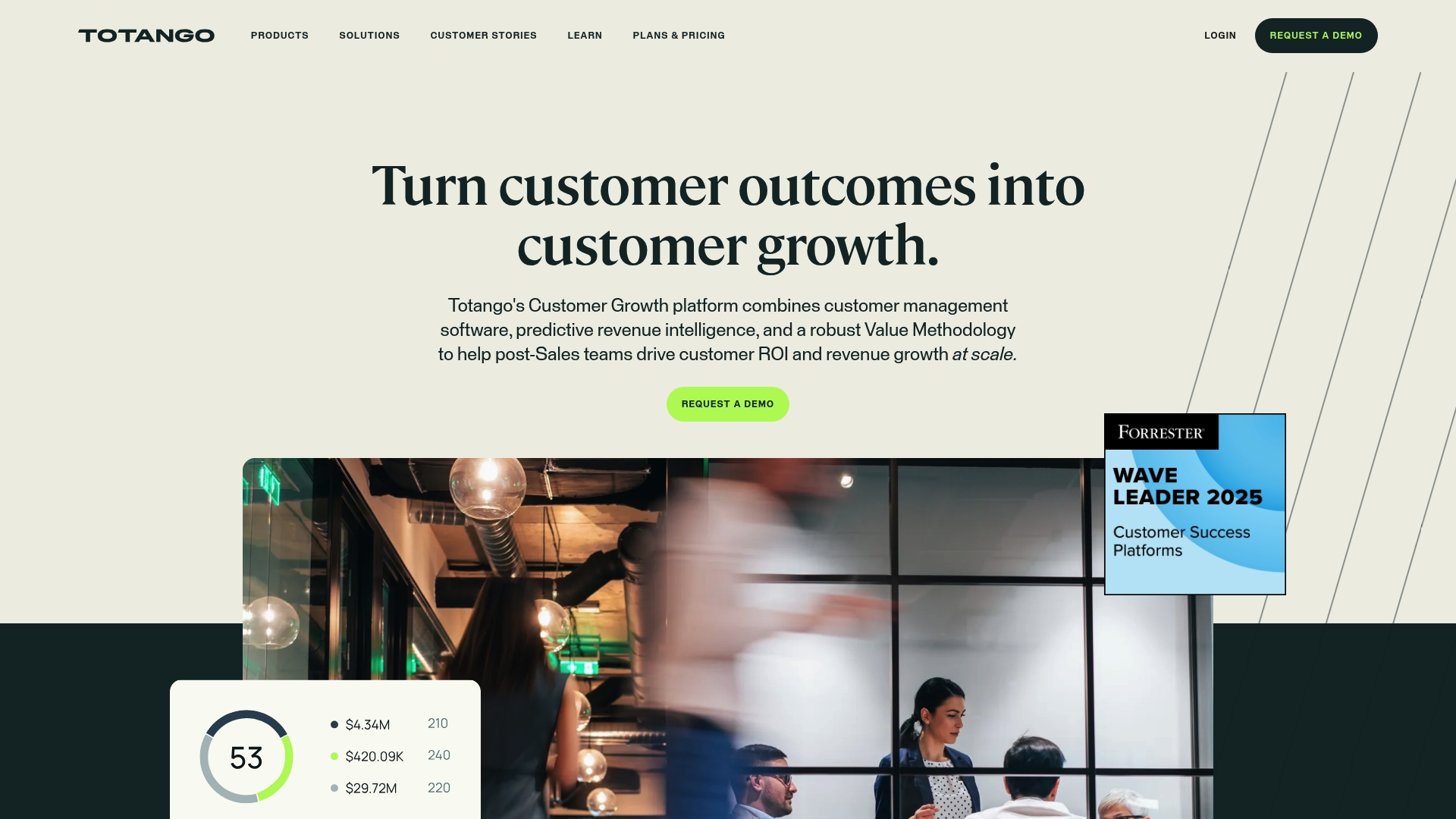
AI churn prediction via Unison pairs with the Catalyst journey automation platform. Totango layers customer segmentation and campaign tools on top of those engines. The platform targets enterprise and fast growing teams that need data rich customer success workflows.
Core Features
Totango delivers customer success management with workflows and granular segmentation, plus multidimensional health scores for detailed account analysis. It supports personalized email and in app messaging tied to customer journeys through Catalyst. The platform adds AI customer intelligence for churn prediction and signals for expansion opportunities.
Key Differentiator
The platform combines predictive customer intelligence with enterprise grade customer success tooling and broad integrations. That combo lets teams attach signals to workflows and score accounts across many data sources. The result is a unified system for scoring, engaging, and tracking customer revenue outcomes.
Pros
Totango scales to complex data environments while keeping workflows focused on retention and expansion. The vendor highlights strong AI features that surface churn risk and growth signals, which helps teams prioritize outreach. Reviews and industry recognition point to solid adoption and reliable support for enterprise customers.
Cons
-
New teams face a steep learning curve without structured onboarding or internal specialists.
-
Pricing is not listed publicly, so buyers must contact sales for tailored quotes.
-
Deep customization and many integrations can require dedicated technical resources to maintain.
When It May Not Fit
Large enterprises with dedicated data engineering staff will extract the most value from Totango. Smaller teams that lack technical resources or prefer transparent, self service pricing may find the setup cost and sales driven quoting a mismatch. Organizations wanting out of the box simplicity may prefer lighter tools with fewer integration options.
Notable Integrations
-
Salesforce
-
Zendesk
-
HubSpot
-
Slack
-
Gmail
-
Outlook
-
Gong
-
Chorus
Who It's For
Totango fits enterprise customer success, growth, and operations teams that handle many accounts and complex data flows. It matches organizations that want AI signals tied to automated journeys and role based licensing. Fast growing companies with technical support will see the most return from its features.
Real World Use Case
According to Totango, Waystar reduced churn by 20 percent after prioritizing risk management with Totango's AI insights and automation. That report shows how predictive scoring and targeted campaigns can change retention math for portfolio heavy accounts. Teams that map signals to outreach workflows replicate the same pattern at scale.
Pricing
Pricing is not published on the website and is available through sales conversations. Totango uses flexible licensing that can cover admins, operators, and view only leadership roles. Enterprise agreements, custom integrations, and professional services will affect final quotes.
Website: https://totango.com
Ready to Stop the Revenue Leak?
Signal Engine gives small and local businesses 31 AI-powered tools to score leads by buying intent, predict churn before it happens, auto-generate email and SMS campaigns, and recover missed calls automatically — all in one dashboard starting at $49/month.
Start your free 7-day trial — no credit card required. Setup takes 5 minutes.
Comparison of alternatives
Selecting the right platform for customer retention depends heavily on company size, technical capacity, and immediate priorities.
Accessibility vs. Technical Implementation
Signal Engine excels in fast adoption for small and mid-sized businesses with limited IT infrastructure, offering immediate setup and flat pricing. In contrast, Syncly targets enterprises needing centralized governance for large-scale GTM deployments, requiring dedicated resources but enabling broader data alignment and operational auditing.
Payment Recovery Focus
Churnkey specializes in transaction-focused tools like its no-code editors for custom billing workflows and payment recovery mechanisms, integrating smoothly with financial systems such as Stripe. Teams requiring tailored control over payment dynamics might prioritize this highly specific recovery design.
Best fit
- Small and local businesses seeking fast adoption without heavy IT work can leverage Signal Engine for its ease of use and AI-driven insight generation tools.
- Enterprises ready to invest in managed data governance and operational control will benefit from Syncly's powerful data foundation and workflow systems.
- Organizations focused on reducing cancellations and recovering payments should consider Churnkey for its specialized and financial-driven capabilities.
- Mid-sized growth companies seeking customer success tools with segmentation control may explore Totango for its customizable workflows and journey platforms.
Our pick
Signal Engine combines ease of access with effective revenue recovery tools tailored for SMBs. Its flat pricing and immediate setup profile make it ideal for teams looking to deploy retention solutions without waiting. Businesses with technical expertise or larger-scale requirements might explore Syncly to capitalize on its offerings but at a higher implementation cost.
Signalengine excels in AI-powered revenue recovery tools, presenting a compelling choice for businesses seeking streamlined solutions.
| Product | Key Differentiator | Best for | Pricing | Limitation |
|---|---|---|---|---|
| Signalengine | Predictive scoring and churn recovery | Small businesses and sales teams | Starting at $49/month | Primarily designed for SMBs |
| Churnkey | AI-driven cancel flow personalization | Subscription businesses | Starting at $250/month | Requires engineering for custom integrations |
| Syncly | Unified AI-enriched data foundation | Revenue and customer success teams | Price not published | Implementation demands technical expertise |
| ChurnZero | Embedded AI agents for proactive actions | Customer success teams | Price not published | Limited customization for reporting |
| Totango | Enterprise-grade customer success workflows | Enterprise teams | Price not published | High learning curve for new users |
Finding Effective Alternatives to RetainCapital.com for SMB Revenue Recovery
When looking for retaincapital.com alternatives, small and local businesses need tools that deliver fast, reliable revenue recovery without complex setup. Signalengine fits this need perfectly. It tracks customer behavior, scores accounts automatically, and highlights the urgent ones ready to churn. Plus, Signalengine generates personalized campaigns and recovers missed calls to plug those revenue leaks quickly.
With pricing starting at $49/month and a 5-minute setup, Signalengine is built specifically for SMBs across 12 verticals, including HVAC, dental, and landscaping. Explore how Signalengine can simplify your retention efforts and help you act on hot leads without guesswork.
Ready to Stop the Revenue Leak?
Signal Engine gives small and local businesses 31 AI-powered tools to score leads by buying intent, predict churn before it happens, auto-generate email and SMS campaigns, and recover missed calls automatically — all in one dashboard starting at $49/month. Start your free 7-day trial — no credit card required. Setup takes 5 minutes.
FAQ
What features make Signalengine suitable for revenue recovery?
Signalengine provides automated customer behavior scoring and churn prediction to help identify potential revenue loss. Its capabilities allow businesses to prioritize accounts that need immediate attention and implement recovery strategies effectively. Using Signalengine can lead to timely interventions that help recover lost revenue.
How does Signalengine compare to Churnkey in handling missed payments?
Churnkey specializes in recovering failed payments, boasting a claimed recovery rate of up to 89%. This makes it a strong option for businesses focused on payment recovery. In contrast, Signalengine offers a broader suite of tools for monitoring customer behavior and scoring accounts, making it a suitable choice for teams looking for comprehensive revenue recovery solutions.
What is the entry price for Signalengine?
The entry price for Signalengine starts at $49 per month, which includes a 7-day free trial. This pricing structure is appealing for small businesses looking for cost-efficient revenue recovery tools without additional per-seat fees.
Can Signalengine be set up quickly?
Yes, Signalengine claims to be set up in about five minutes. This rapid onboarding process enables businesses to start using the platform immediately without extensive technical resources or training.
What integrations does Signalengine support?
Signalengine integrates with several platforms like Stripe and Twilio, which enhance its capabilities for payment recovery and SMS outreach. These integrations help streamline workflows and improve customer engagement efforts across different channels.