

Use an automated, behaviorally triggered SMS and email sequence tied to service history to recover recurring revenue, starting with an overdue-service workflow built from last repair date or mileage. This single move catches customers before they drift to a competitor down the street. Your first task: pull every customer who's 30+ days past their last recommended service interval and build that list into a workflow today. A free tool can get that running without a big setup lift.
TL;DR:
- Automated marketing texts require prior express written consent tied to your shop; honor STOP replies immediately and keep timestamped consent records.
- A five reminder cadence spans 60 days: SMS on days 0, 10, and 60, with emails on days 3 and 30.
- Build triggers from last repair date, mileage, VIN, and preferred channel, record each customer's consent, then test a small segment and confirm STOP works.
- Track delivery, booking, paid job conversion, average ticket uplift, and repeat visits over 90 days; scale only after two stable review cycles.
Table of Contents
- Why Auto Repair Reminders Protect Your Recurring Revenue
- Legal Must-Dos Before You Text or Email Customers
- Build a Reminder Sequence That Converts
- Templates and Channel Rules You Can Use Today
- Measuring the Payoff: KPIs and the Recovered-Revenue Math
- The One Habit That Stops Revenue Leaks for Good
- How Signal Engine Fits This Playbook
- FAQ
- Sources
- Ready to Stop the Revenue Leak?
Why Auto Repair Reminders Protect Your Recurring Revenue
A customer who doesn't hear from you after an oil change doesn't forget their car needs service. They just end up booking it somewhere else, usually the shop that texted them first. Reminders keep that window open and keep your name top of mind when the check-engine light comes on.
Think of your customer base in three stages:
- New customers: the first follow-up after an initial repair sets the tone for whether they come back at all.
- Active customers: timely maintenance reminders keep the relationship going between visits.
- Lapsed customers: a structured recapture sequence is often the only thing standing between you and a permanent loss to a competing shop.
Automated reminder campaigns tied to actual service history can meaningfully lift repeat bookings, based on reminder-driven recovery results documented for similarly structured service businesses. The mechanism is simple: timing the message to real need, rather than blasting a generic discount, is what gets the phone to ring.
Legal Must-Dos Before You Text or Email Customers
Before you turn on any automated sequence, get the compliance basics locked down. This isn't optional paperwork, it's what keeps your shop out of regulatory trouble and off spam-block lists.
- Get prior express written consent before sending automated marketing texts, and keep that consent tied to your shop alone, since the FCC's text messaging order requires consent on a one-seller-at-a-time basis.
- Understand that National Do-Not-Call Registry protections now extend to text messages, a point the Federal Register's implementation summary confirms alongside the revised consent standard.
- Follow CAN-SPAM rules for commercial email, including a visible opt-out and honoring removal requests within 10 business days, per the FTC's compliance guide.
- Decide upfront whether a message is transactional (appointment confirmations, service completion notices) or promotional (coupons, seasonal offers), since CAN-SPAM treats them differently.
Capture consent language at intake, point of sale, and online booking, and store the source and timestamp of that consent alongside the customer record. Keep opt-out handling instant: a "STOP" reply should remove the customer from texts immediately, not at your next list cleanup.
Pro Tip: Log the exact wording of your consent checkbox and keep a timestamped copy. If a complaint ever comes in, that record is your proof.
Build a Reminder Sequence That Converts
A reminder sequence only works when it's built on clean data and clear triggers. Here's the framework:
- Capture the right data fields: last repair order date, mileage at last visit, vehicle VIN, preferred contact channel, and an explicit opt-in flag with its source.
- Segment your list: new customers, active maintainers, lapsed accounts past their service window, and anyone flagged for warranty or recall work.
- Set behavioral triggers: mileage crossing a service threshold, a calendar gap since last visit, or a missed appointment should each fire a different sequence.
- Build cadence templates per scenario. For overdue maintenance, a realistic pattern mirrors best-practice missed-appointment cadences: SMS on day 0, email with details and an incentive on day 3, SMS follow-up on day 10, email nurture on day 30, and a stronger-incentive SMS on day 60.
- Test before full rollout: send to a small segment first, check deliverability, and confirm opt-out links and STOP replies process correctly.
Pro Tip: Lead with SMS for overdue and missed-appointment triggers since open rates are faster, then fall back to email for detail-heavy messages like recall notices.
Skipping the data checklist is the most common failure point. A sequence built on stale mileage data or missing consent flags will misfire, annoy customers, and risk compliance exposure.

Templates and Channel Rules You Can Use Today
Match the channel to the message. Texts work for short, time-sensitive nudges. Email carries more detail. Phone calls close the loop when something needs a human voice.
SMS templates:
- Overdue maintenance: "Hi [Name], your [Vehicle] is due for service based on mileage. Reply YES to book or STOP to opt out."
- Recall or safety notice: "[Shop Name]: a safety recall affects your [Vehicle]. Please call us to schedule a free inspection. Reply STOP to opt out."
- Appointment confirmation: "Reminder: your appointment at [Shop Name] is [Date/Time]. Reply C to confirm or call to reschedule."
Email guidance: use a subject line that states the reason for the message ("Your [Vehicle] is due for service") rather than a generic promo line, and always include a visible unsubscribe link, as CAN-SPAM requires.
- Service-due email with mileage detail and a booking link.
- Lapsed-customer nurture email with a modest incentive and a direct phone number.
For missed calls, a short voicemail and immediate text-back keeps the lead warm, a workflow missed call recovery tools are built to automate. Keep transactional content (confirmations, recalls) separate from promotional content (discounts) so each stays within its own compliance lane.
Measuring the Payoff: KPIs and the Recovered-Revenue Math
Track five numbers: delivery rate, response or booking rate, conversion to a paid job, average ticket uplift, and repeat-visit lift over the following 90 days. These tell you whether a sequence is working or just generating noise.
Here's a worked example using an illustrative shop list, not market data: say your shop has 1,000 customers flagged overdue for service. At an average ticket of $220, that's $17,600 in recovered revenue from one campaign cycle. Compare that figure against your campaign cost to decide whether to scale it.
- Review KPI dashboards weekly for the first month of a new sequence, then monthly once performance stabilizes.
- Scale a campaign once booking rate and ticket size hold steady across two review cycles.
Automation-driven case tracking has shown measurable monthly revenue gains for shops that focus reminders on KPI-backed segments, according to Signal Engine's reminder campaign data. Churn scoring can flag which lapsed accounts are worth prioritizing first, so your limited outreach hours go where they recover the most revenue.
The One Habit That Stops Revenue Leaks for Good

The highest-leverage habit in this entire playbook is simple: never pause the nurture sequence, even during your busiest or slowest months, and consider marketing automation for small business to keep your campaigns consistent and effective. Shops that switch reminders on only when they remember tend to lose the exact customers a steady cadence would have caught.
One shop that moved from manual follow-up calls to a standing automated sequence saw lapsed customers start rebooking within weeks, not months, once the nurture ran without gaps. Consistency, not cleverness, made the difference.
— Bernard
How Signal Engine Fits This Playbook
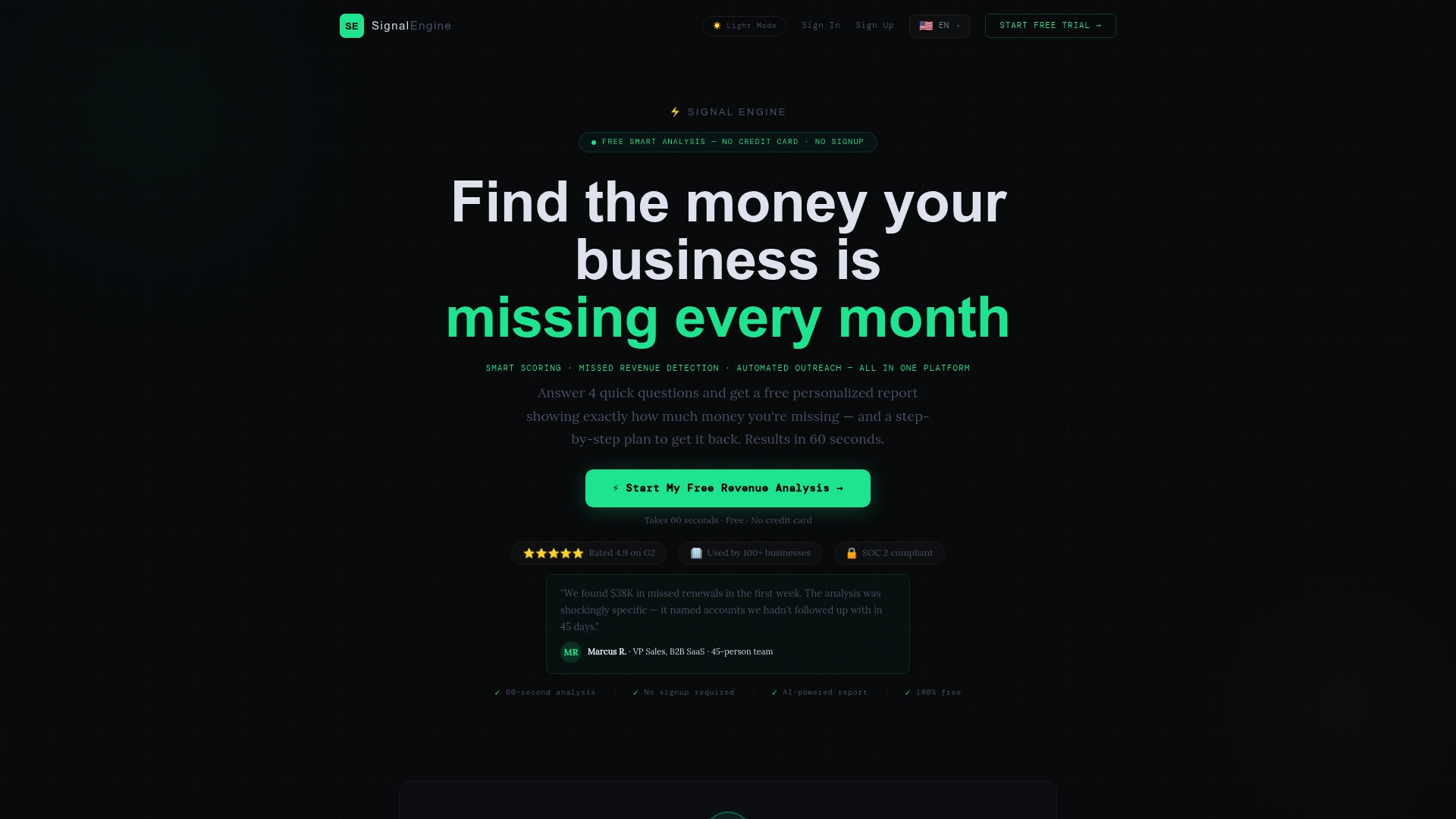
Everything in this guide, the triggers, the cadence, the segmentation, maps directly to what we built Signal Engine to automate. Our platform scores customers by how likely they are to book, flags who's drifting toward churn, and drafts SMS and email campaigns that wait for your one-click approval before anything reaches a customer.
- Automated overdue and lapsed sequences built on your actual service data.
- Churn scoring that tells you which accounts to prioritize first.
- One-click campaign approval so nothing goes out without your sign-off.
Plans run from a free starting tier up to Growth at $149 per month and Scale at $297 per month, with every feature included at each level rather than locked behind add-ons. If you want to see the dashboard before committing, a live demo walks through exactly how a reminder sequence gets built.
FAQ
Do I need written consent before texting customers about service?
Yes. The FCC's current rule requires prior express written consent for automated marketing texts, tied to your shop specifically rather than a bundled list. Capture that consent at intake or booking and store the timestamp and source.
How many reminders should an overdue sequence include?
A workable pattern runs five touches across 60 days: an initial SMS, a detailed email a few days later, a follow-up text, a nurture email, and a final stronger-incentive text, based on tested missed-appointment cadences. Fewer than that risks losing the customer's attention before they act.
What's the difference between transactional and promotional emails?
Transactional emails confirm or inform, like appointment confirmations or recall notices, while promotional emails push an offer or discount. The FTC's CAN-SPAM guide treats them differently, and every promotional email needs a visible opt-out honored within 10 business days.
Can reminder automation connect to my existing shop software?
A reminder system needs to pull last repair date, mileage, and contact preference from wherever your shop stores that data, whether a POS system or a CRM. Signal Engine's plans are built to integrate with those sources so reminders trigger off real service history rather than manual list exports.
Sources
- Targeting and Eliminating Unlawful Text Messages, Second Report and Order (FCC)
- Targeting and Eliminating Unlawful Text Messages (Federal Register)
- CAN-SPAM Act: A Compliance Guide for Business | Federal Trade Commission
Ready to Stop the Revenue Leak?
Signal Engine gives small and local businesses 31 AI-powered tools to score leads by buying intent, predict churn before it happens, auto-generate email and SMS campaigns, and recover missed calls automatically, all in one dashboard starting at $49 per month.
Start your free 7-day trial, no credit card required. Setup takes 5 minutes.