

Stack access fixes (shorter lead time and easy rescheduling) with tiered outreach (automated reminders plus predictive-model live calls), and no-show rates drop fast. One 2025 study combining an AI prediction model with a real-time dashboard cut no-shows by 50.7%. An AI-powered tool can help practices start scoring appointment risk before building a full outreach program.
TL;DR:
- Implementing tiered outreach that escalates unanswered confirmations to live calls can significantly boost no-show reductions, with some models cutting rates by over 50%.
- Shortening the interval between scheduling and the appointment, along with frictionless online self-scheduling, lowers no-shows but its effectiveness varies across practice settings.
- Combining predictive risk scoring with automated and live outreach efforts proves far more effective than reminders alone, especially in diverse patient populations.
- A phased 90-day plan focusing on auditing, piloting, and refining interventions can produce measurable improvements without requiring a lengthy rollout.
- A robust technology stack, including integrated EHR, automated messaging, predictive models, and dashboards, is key to managing and tracking no-show interventions effectively.
Table of Contents
- What Actually Reduces No-Shows: The Priority Strategies
- What the Evidence Shows About No-Show Reduction
- How to Build a 90-Day No-Show Reduction Plan
- Designing No-Show Interventions That Reduce Disparities
- The Technology Stack Behind No-Show Prevention
- Which KPIs Prove Your No-Show Reduction Efforts Are Working
- Policy Levers: Fees, Deposits, and Overbooking Trade-Offs
- How Signal Engine Fits the No-Show Reduction Playbook
- What I've Learned Building No-Show Reduction Programs
- Ready to Stop the Revenue Leak?
- Sources
- FAQ
What Actually Reduces No-Shows: The Priority Strategies
Not every tactic pulls the same weight. Some interventions move the needle by a percentage point or two. Others cut no-show rates by half. Here's the ranked list, from highest to lowest impact per hour of staff effort.
-
Automated reminders with two-way confirmation. Set a two-touch sequence, one message at 72 hours and another at 24 hours, each carrying a one-tap cancel or reschedule link. Two-way SMS beats one-way blasts because a non-response becomes a risk signal your staff can act on, not a message that vanished into a phone nobody checked.
-
Shorter lead time. MGMA's 2025 guidance treats third-next-available appointment time as a clinical quality metric, not just a scheduling stat. Run a weekly backlog scrub to find and fill the gaps between booking and visit date. The longer a patient waits between scheduling and showing up, the more life gets in the way.
-
Frictionless online self-scheduling. Booking and rescheduling need to take under a minute with frictionless online self-scheduling. Online appointment scheduling correlated with a no-show rate of 1.8% for online bookings versus 5.9% for offline bookings in one 2025 retrospective, though the effect flipped in some hospital and referral settings. Pair your booking tool with an automated waitlist so a canceled slot fills within minutes, not days.
-
Tiered outreach based on risk. Build or validate an internal risk score, then escalate unanswered confirmations to a live phone call for your highest-risk slots. This is where the biggest single gains live.
-
Telehealth as a fallback. Define which visit types are eligible for virtual conversion ahead of time, then track modality-specific no-show rates separately. Telehealth generally lowers non-attendance, though some safety-net settings see no improvement unless transportation or scheduling barriers get addressed first.
-
Waitlist, backfill, and controlled overbooking. Write a script your front desk can use to fill a canceled slot in one call. Cap overbooking at a size your no-show history actually supports, not a guess.
-
Operational fixes. Transportation assistance, same-day prep checks for procedures, and bundling multiple family members into one visit block all chip away at the no-show rate without touching your tech stack.
Pro Tip: Treat every unanswered confirmation as a live signal, not a dead end. A patient who doesn't respond to a text within 24 hours is statistically more likely to no-show than one who confirms. Route that silence straight to a callback queue instead of letting it sit.
What the Evidence Shows About No-Show Reduction
The headline number comes from a 2025 JMIR Formative Research study: integrating an AI no-show prediction model with a real-time dashboard reduced no-show rates by 50.7% (P<.001), with the model hitting 86% accuracy against historical EHR data. That's not a small pilot bump. That's a practice-changing number, and it came from pairing prediction with action, not prediction alone.
The core finding: Adding model-driven telephone outreach to standard automated reminders reduced composite no-show rates from 36.2% to 32.8% (p<0.01) in a randomized quality-improvement initiative, and the improvement for Black patients was statistically significant, narrowing a longstanding attendance gap.
Older research sets more modest expectations for reminders alone. A 2013 program evaluation found reminder calls decreased no-show rates by roughly 19% on average across implemented programs, a real gain, but nowhere near the halving seen when prediction and live outreach enter the mix.
Three context notes matter before you copy any of these numbers into a budget proposal:
- Results vary sharply between safety-net clinics and private practices, since the underlying barriers (transportation, work schedules, insurance churn) differ.
- Online scheduling helps in outpatient practice settings but showed mixed results in hospital and referral contexts, likely because those visits carry more logistical friction outside the patient's control.
- Reminders alone can fail entirely when lead time is long or access barriers go unaddressed; a 2013 review found practices that combined reminders with access improvements and risk-based outreach saw meaningfully larger gains than reminders in isolation.
The pattern across every study: technology amplifies good scheduling practices. It rarely fixes bad ones on its own.
How to Build a 90-Day No-Show Reduction Plan
You don't need a year-long rollout to see results. Here's a phased sequence built around what staff can realistically absorb without burning out on new workflows.
-
Days 0 to 30: audit and baseline. Pull your current no-show rate, third-next-available time, and reschedule-to-cancel ratio. Turn on two-way reminders with cancel and reschedule links built in. Reserve a handful of same-day slots per provider per day. Run a 30-minute training session so front-desk staff know the new escalation workflow before it goes live.
-
Days 31 to 60: segment and pilot. Split your patient population by visit type and risk factors. Pilot a predictive scoring model, even a simple one, and begin targeted live outreach for anyone scoring 15% risk or above. Turn on telehealth as an option for the visit types you pre-approved.
-
Days 61 to 90: refine and scale. Adjust your risk threshold based on what the data shows. Expand outreach capacity where it's working. Lock in standard operating procedures for the escalation workflow, and automate your weekly reporting so nobody has to build a spreadsheet by hand every Monday.
A quick staffing gut-check: a scheduler working an outreach queue can typically handle 12 to 15 calls an hour, factoring in voicemail, callbacks, and rescheduling logistics. If your risk model flags 40 high-risk appointments a week, budget roughly three hours of dedicated call time, not a full-time hire, at least at pilot scale.
Pro Tip: Don't wait for a perfect model before you start calling patients. A rough risk score based on visit type, appointment history, and lead time will outperform no targeting at all. Refine the model while the calls are already happening.
Designing No-Show Interventions That Reduce Disparities
A risk model built on flawed assumptions can quietly widen the gaps it's meant to close. Validate any scoring tool on your own patient population before rollout, checking false positive and false negative rates by subgroup, not just in aggregate.
- Set your outreach threshold deliberately. Calling every patient scoring 15% risk or higher, as tested in the randomized outreach study, gave staff a workable call volume while still catching the patients most likely to miss.
- Track show rates stratified by race and ethnicity, not just an overall average. That same study found the intervention narrowed the gap for Black patients specifically, a result that would have been invisible in a single blended number.
- Watch connection rates and cancellation patterns as leading indicators. A subgroup with low phone connection rates needs a different channel, not more calls to a number that never picks up.
- Skip overbooking in clinics serving high-disparity populations. A guessed-at overbooking cushion tends to backfire hardest where patients already face the most scheduling friction.
- Favor outreach and access fixes over punitive policy for high-risk groups. A model that flags a patient as high-risk should trigger a phone call, not a fee.
The Technology Stack Behind No-Show Prevention
Most of what's described above runs on five connected pieces: your EHR's native scheduling module, a two-way SMS or email provider, an online appointment scheduling tool, a predictive scoring pipeline, and a dashboard where staff can see who's flagged and act on it.
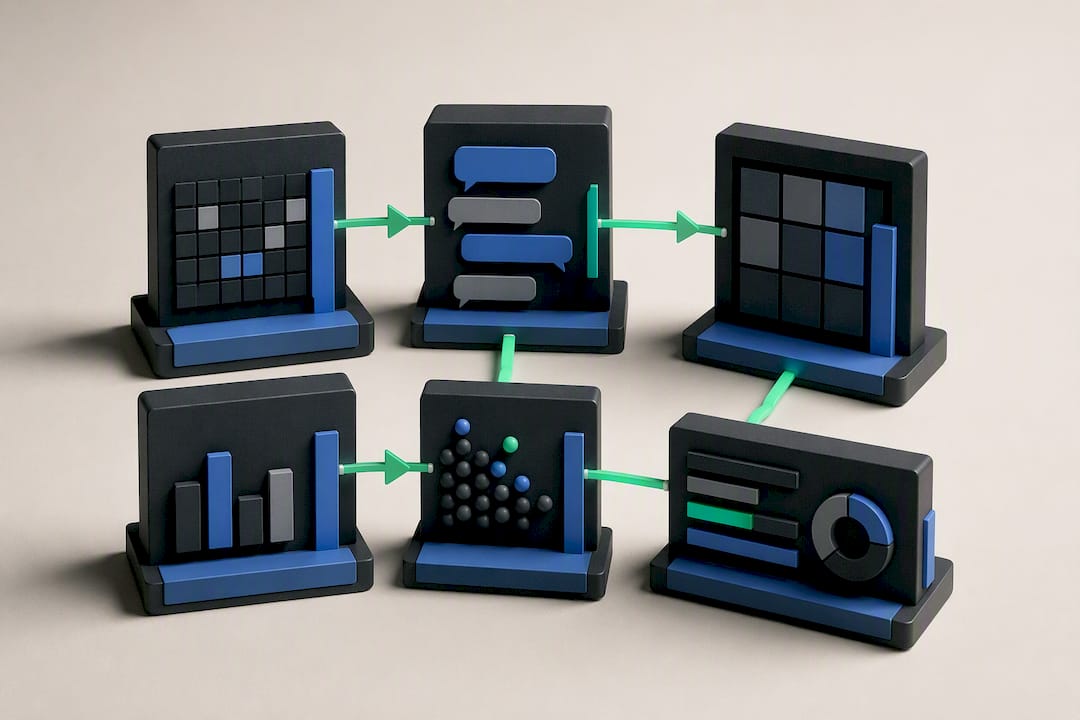
The workflow itself follows one path: a patient books, gets an automated confirmation, and if that confirmation goes unanswered, the system escalates to a live call for anyone flagged high-risk. Procedure visits get an added day-before readiness check, confirming prep steps got done, not just that the patient remembers the appointment.
A few integration details separate a smooth rollout from a messy one:
- Embed the cancel and reschedule link directly in every reminder message, not buried in a separate portal login.
- Surface the risk score inside the scheduler's existing interface so staff don't have to check a second system mid-call.
- Automate the waitlist fill so a canceled slot texts the next eligible patient within minutes.
- Capture SMS opt-in explicitly and document outreach outcomes for every flagged patient, and route sensitive visit types (behavioral health, reproductive care) to a human contact instead of an automated text thread.
Pro Tip: If your front desk is fielding missed calls from patients trying to reschedule after hours, a system built to recover missed calls automatically closes a gap that pure reminder automation leaves wide open.
Which KPIs Prove Your No-Show Reduction Efforts Are Working
Track five numbers weekly: no-show rate, late-cancel rate, reclaimed-slot rate, average days-out, and third-next-available time. These five tell you whether access is improving and whether canceled slots are actually getting refilled, not just canceled.
Two operational metrics matter just as much for day-to-day management:
- Connection rate, the share of outreach calls that actually reach a patient, tells you whether your contact information is current.
- Number-needed-to-call, how many risk-flagged calls it takes to prevent one no-show, helps you right-size your outreach team; the randomized outreach trial showed a meaningful drop in composite no-shows from a targeted call program, giving a baseline for what "working" looks like.
Run any new tactic as a phased pilot in one clinic or visit type before scaling it system-wide, and check whether the change holds up against normal week-to-week variation before declaring it a win. Report operational numbers weekly to frontline managers and roll up the strategic trend monthly for leadership.
Policy Levers: Fees, Deposits, and Overbooking Trade-Offs
Blanket no-show fees tend to punish the patients least able to absorb them, and evidence for fees actually reducing no-shows is thin at best. Refundable deposits work better for elective or self-pay visits specifically, where the financial stake is already part of the transaction.
- Reserve fees or deposits for elective and self-pay visits, not standard covered care.
- Write policy language that explains the "why" (protecting appointment access for everyone) rather than framing it as a penalty.
- Size overbooking to your clinic's actual historical no-show rate by visit type, and monitor wait times weekly for signs of overbooking gone wrong.
- Reserve discharge for genuinely chronic no-show patterns, and document every outreach attempt made before that step, since a paper trail protects the practice and gives the patient a fair chance first.
How Signal Engine Fits the No-Show Reduction Playbook
Every phase of the 90-day plan above needs software behind it, and that's where a revenue intelligence platform built for small and local businesses earns its keep.
- Predictive scoring flags which patients are most likely to miss, the same logic behind the risk-based outreach models described above.
- Automated SMS and email campaigns carry the two-touch reminder sequence with cancel and reschedule links built in, no manual sending required.
- One-click outreach approval keeps a human in the loop before any message reaches a patient, which matters for sensitive visit types.
- Dashboards track reclaimed-slot rates and connection rates in one view, so managers aren't stitching together three spreadsheets to see if the pilot is working.
For clinics already exploring predictive analytics in specialty care, Signal Engine's dental industry deployment shows how the same scoring logic applies outside general practice.
What I've Learned Building No-Show Reduction Programs
Practices that lead with a no-show fee almost always regret it. Fees punish the symptom, not the cause, and they poison the relationship with the exact patients who need the most flexibility, not less. Start with access instead: shorter lead times and one-tap rescheduling fix more no-shows than any penalty ever will.
The second trap is over-relying on reminders alone. They're necessary, not sufficient. Skip model validation, though, and you'll deploy a system that works great in aggregate and quietly discriminates in the subgroups you never checked.
One-week kickoff checklist:
- Pull last quarter's no-show rate by visit type and provider
- Turn on two-way SMS reminders with reschedule links
- Reserve two same-day slots per provider per day
- Draft a one-page escalation script for unanswered confirmations
- Set a recurring Monday report for reclaimed-slot rate
— Bernard
Ready to Stop the Revenue Leak?
Signal Engine gives small and local businesses 31 AI-powered tools to score leads by buying intent, predict churn before it happens, auto-generate email and SMS campaigns, and recover missed calls automatically — all in one dashboard starting at $49/month.
Start your free 7-day trial — no credit card required. Setup takes 5 minutes.
Sources
- JMIR Formative Research 2025 — AI-powered no-show prediction study
- Predictive model-driven live appointment reminders — PMC 2023
- Efficient patient care in the digital age: impact of online appointment scheduling — Frontiers 2025
FAQ
What Is the Process to Reduce No-Shows?
Start by auditing your current no-show rate and lead time, then layer automated two-way reminders, easy rescheduling, and risk-based live outreach on top. The 90-day playbook above walks through the exact sequence, starting with access fixes before adding predictive scoring.
Can You Charge a Patient a No-Show Fee?
Many practices legally can charge a no-show fee, but policies and enforceability vary by state, payer contract, and visit type, so check your own contracts before writing one. Evidence suggests fees work best for elective or self-pay visits and work poorly as a blanket policy across all patients.
How Do You Decrease the No-Show Rate?
The highest-impact combination pairs shorter lead times and frictionless rescheduling with tiered outreach, automated reminders for everyone and live calls for high-risk patients. One study found this combination, paired with predictive modeling, cut no-shows by 50.7%, while reminder calls alone typically produce a roughly 19% reduction.
What Is the Average No-Show Rate for Doctor Appointments?
No-show rates vary widely by specialty, setting, and payer mix, ranging from low single digits in some outpatient practices to well over 30% in certain safety-net and composite clinic settings, per the randomized outreach study. There's no single industry-wide average, which is why baselining your own clinic's rate before setting a reduction target matters more than benchmarking against a generic number.