

TL;DR:
- Referral revenue is a high-growth channel that outperforms cold outreach through faster closings and higher lifetime value.
- Structured referral programs significantly increase revenue and capture downstream referral effects often overlooked by businesses.
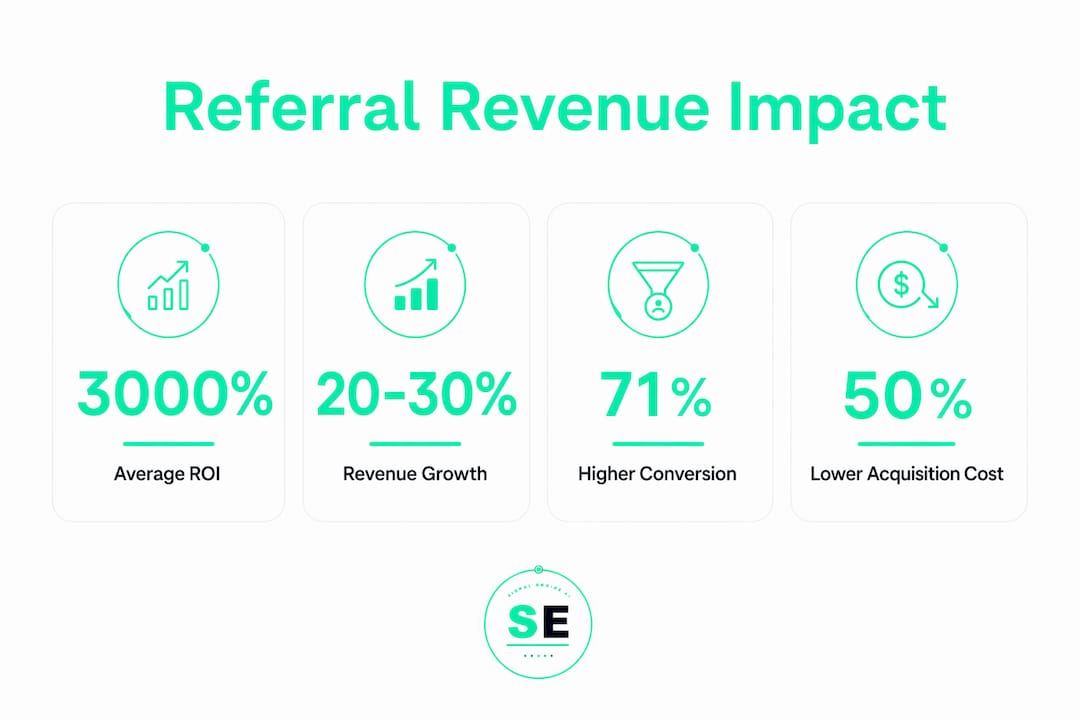
Referral revenue is defined as income generated from customers who were introduced to your business by an existing customer. It matters because referral leads convert 71% higher than cold leads, close 69% faster, and generate up to 30% more lifetime profit than non-referred customers. Those three numbers alone make referral revenue the highest-performing channel most businesses never fully activate. If you run a service business or lead a sales team, understanding the mechanics behind this channel is the difference between growing predictably and grinding through cold outreach every quarter.
Why referral revenue matters more than any other lead source
Referral leads arrive pre-sold. A prospect who hears about your business from someone they trust skips the skepticism phase entirely. That trust does real financial work: it lowers price sensitivity, reduces objections, and produces higher average contract values than leads from paid ads or cold email.

The performance gap is significant. Referral leads close 25–40% faster with 15–30% higher average contract value compared to cold outbound. That means your sales team spends less time convincing and more time closing. The unit economics of referral pipeline run 3–5x better than cold outbound, which changes how you should think about where to invest your sales resources.
Retention is the other side of this equation. Referred customers churn 18% less and carry 16% higher lifetime value than customers acquired through other channels. Lower churn means your revenue base compounds instead of leaking. For any business focused on sustainable growth, that compounding effect is the real prize.
Here is what separates referral leads from every other source:
- Pre-qualified trust: The referring customer has already done your credibility work for you.
- Faster decisions: Referred prospects spend less time in evaluation because doubt is already reduced.
- Higher deal values: Less price negotiation means contracts close closer to your asking price.
- Better retention: Referred customers stay longer, refer others, and cost less to keep.
Pro Tip: Track your average contract value separately for referred versus non-referred customers. Most business owners are shocked by the gap. That number becomes your best argument for investing in a formal referral program.
How much revenue do businesses miss without a formal referral program?
Referrals already drive the majority of B2B revenue. Referrals account for 60–70% of new B2B business closed, yet fewer than 20% of companies have a formal referral program. That gap represents an enormous amount of revenue left to chance.
Without a structured system, referrals happen randomly. There is no consistent ask, no tracking in your CRM, and no incentive that encourages customers to refer again. The result is that your best growth channel runs on luck instead of process. You cannot identify missed revenue opportunities when you have no visibility into where referrals come from or why they stop.
| Referral approach | Revenue growth rate | Program ROI |
|---|---|---|
| No referral program | Baseline | Minimal |
| Informal referrals only | Moderate, inconsistent | Untracked |
| Formal referral program | 2.7x faster growth | Up to 3,000% |
Companies with structured programs see 20–30% revenue increases in the first year. That is not a marginal improvement. It is the kind of lift that changes how a business plans headcount, marketing spend, and expansion.
Pro Tip: Start by auditing your last 12 months of closed deals. Tag every customer who came through a referral, even informally. That baseline number tells you what your referral channel is already worth before you build anything.
What is referral contagion and why does it multiply your growth?
Referral contagion is the phenomenon where referred customers are significantly more likely to refer others than customers acquired through other channels. Recent research from the American Marketing Association confirms that referred customers generate 31–57% more referrals themselves. That multiplier effect means one referred customer can produce a chain of new business that extends well beyond the original introduction.
The financial implication is direct. Businesses that ignore secondary referrals undervalue their referral program ROI by up to 36%. That is a significant miscalculation. If your program looks marginally profitable on the surface, the downstream referrals it generates may be making it one of your best investments.
Referred customers do not just buy. They recruit. Every referred customer you acquire carries a higher probability of expanding your customer base further, creating a self-reinforcing growth loop that cold outbound can never replicate.
Social psychology explains why this happens. People who were referred feel a sense of belonging to a community around your brand. They are more emotionally invested in your success and more motivated to share their experience. That emotional investment is not something you can manufacture through advertising.
To capture the full value of referral contagion:
- Tag referred customers in your CRM so you can track their downstream referral activity separately.
- Measure second-generation referrals as a distinct metric in your pipeline reporting.
- Reward referrers when their referrals also refer. A tiered incentive structure reinforces the behavior at every level.
- Use customer satisfaction signals to identify which referred customers are most likely to refer again, then prioritize outreach to them.
How to operationalize referral revenue as a core sales system
Referral revenue grows when you treat it as an operating system, not a one-time campaign. The businesses that generate consistent referral income build the ask into their standard sales and customer success workflow. They do not wait for customers to volunteer referrals. They create the conditions where referring feels natural and rewarding.
Timing is the most underrated factor in referral success. Referral asks work best when they follow a moment of genuine customer satisfaction. Post-onboarding, post-renewal, and post-positive-review are the three highest-conversion moments for a referral ask. At those points, the customer is emotionally primed to say yes, and the request feels like a service extension rather than a sales tactic.
Here is how to build referral asking into your process:
- Map your customer satisfaction moments. Identify the three to five points in your customer lifecycle where satisfaction peaks. These become your referral trigger points.
- Write a referral ask script for each trigger. The script should acknowledge the customer's success, make the ask specific, and explain exactly what the referral process looks like.
- Tag referral sources in your CRM. Every referred lead needs a source tag from day one. Without this, you cannot measure program performance or use AI-driven revenue analysis to optimize it.
- Set incentive tiers. Offer rewards worth 5–10% of the job or contract value. Most programs achieve payback within three months at this incentive level.
- Automate follow-up. Use email or SMS sequences to remind referrers when their referral converts and to thank them with their reward.
The cost comparison between referral programs and cold outbound is not close. Referral customer acquisition costs run approximately 50% lower than paid channels. When you factor in higher contract values, lower churn, and the compounding effect of referral contagion, the ROI gap widens further with every passing quarter.
Pro Tip: Build a referral ask into your renewal email sequence. Customers who just renewed are at peak satisfaction and already thinking about the value you deliver. That is the easiest referral ask you will ever make.
What measurable results do referral programs actually deliver?
The ROI case for referral programs is concrete. Referral programs deliver approximately 3,000% ROI on average, driven by lower acquisition costs, higher deal values, and better retention. That figure reflects the full program economics when referral contagion and lifetime value are properly accounted for.
Pipeline contribution is equally strong. Referral leads represent up to 40% of total pipeline volume for businesses with active programs, while driving 60–70% of closed revenue. That ratio reveals a critical insight: referral leads close at a dramatically higher rate than other lead types. Putting more referral leads into your pipeline does not just add volume. It improves your overall close rate.
| Metric | Referral channel | Cold outbound |
|---|---|---|
| Conversion rate | 71% higher | Baseline |
| Sales cycle length | 25–40% shorter | Baseline |
| Customer acquisition cost | ~50% lower | Baseline |
| Customer lifetime value | 16% higher | Baseline |
Formal programs also accelerate overall revenue growth. Businesses with structured referral systems grow revenue 86% faster than those relying on informal or no referral activity. That acceleration compounds over time because each new referred customer enters the referral contagion cycle and generates additional downstream business.
Key Takeaways
Referral revenue is the highest-ROI growth channel available to most businesses, delivering faster closes, lower acquisition costs, and compounding customer lifetime value that cold outbound cannot match.
| Point | Details |
|---|---|
| Referral leads outperform cold leads | Referral leads convert 71% better and close 69% faster than cold outreach. |
| Formal programs multiply results | Structured referral programs grow revenue 2.7x faster and deliver up to 3,000% ROI. |
| Referral contagion compounds growth | Referred customers generate 31–57% more referrals, amplifying program value over time. |
| Timing the ask is critical | Referral requests made after satisfaction moments convert at the highest rates. |
| CRM tracking is non-negotiable | Without source tagging and attribution, referral program ROI remains invisible and underinvested. |
The referral channel most businesses are sitting on without knowing it
I have worked with enough business owners to know that referral revenue is almost always the most undervalued line in the growth plan. Not because owners do not believe in it, but because they treat it as something that happens to them rather than something they build.
The mistake I see most often is waiting for happy customers to volunteer referrals. They rarely do, not because they would not refer, but because no one ever asked them at the right moment. The ask itself is the system. Without it, you are leaving your best growth lever untouched.
What separates businesses that generate consistent referral income from those that do not is process discipline. The ask is scripted. The timing is mapped to satisfaction signals. The incentive is clear. The CRM tag is set before the lead even enters the pipeline. None of that is complicated. All of it requires intentional setup.
The compounding effect of referral contagion is the part most sales leaders miss entirely. When you account for the referrals that your referred customers generate, the true ROI of your program is often 20–36% higher than your current measurement shows. That gap represents real revenue you are already generating but not crediting to the right channel. Fix the attribution first, and the investment case for building a formal program becomes obvious.
Referral programs are also one of the few growth levers that get stronger as your customer base grows. Every satisfied customer is a potential referral source. The larger your base, the more referral surface area you have. That is a compounding moat that paid advertising cannot replicate.
— Bernard
How Signalengine turns referral signals into revenue
Your referral program is only as good as your ability to act on the right signals at the right time. Signalengine watches your customer behavior automatically, scores satisfaction signals, and flags the exact moments when a referral ask will land best.
With AI sales tools for service businesses, Signalengine automates the timing of referral asks through email and SMS, tracks referral attribution directly in your pipeline, and scores every lead by buying intent so your team focuses on the contacts most likely to close. The platform serves 12 verticals including HVAC, logistics, dental, and real estate. Pricing starts at $49/month, built for SMBs that need results without a dedicated data team. You get 31 AI-powered tools in one dashboard, ready in five minutes.
FAQ
What is referral revenue?
Referral revenue is income generated from customers introduced to your business by an existing customer. It consistently outperforms other lead sources on conversion rate, deal size, and customer lifetime value.
Why do referral leads close faster?
Referred leads arrive with built-in trust from the person who recommended your business. That trust removes the skepticism phase, shortening the sales cycle by 25–40% compared to cold outbound.
How much ROI do referral programs deliver?
Referral programs deliver approximately 3,000% ROI on average, with customer acquisition costs running about 50% lower than paid channels and most programs achieving payback within three months.
What is referral contagion?
Referral contagion is the multiplier effect where referred customers generate 31–57% more referrals themselves. Ignoring this downstream activity undervalues your referral program ROI by up to 36%.
When is the best time to ask for a referral?
The best time to ask is immediately after a positive customer experience, such as post-onboarding or post-renewal. Referral asks made at satisfaction peaks feel natural and convert at the highest rates.
Ready to Stop the Revenue Leak?
Signal Engine gives small and local businesses 31 AI-powered tools to score leads by buying intent, predict churn before it happens, auto-generate email and SMS campaigns, and recover missed calls automatically — all in one dashboard starting at $49/month.
Start your free 7-day trial — no credit card required. Setup takes 5 minutes.