

Automated customer outreach gives small and local businesses a measurable edge: higher engagement, fewer missed follow-ups, and revenue intelligence that actually tells you who's ready to buy. The core benefits of automated customer outreach aren't theoretical. They show up in your open rates, your pipeline, and your weekly calendar.
Here's what you gain when you run AI-driven, multi-channel outreach:
- Higher engagement through personalized timing and behavior-triggered messages
- Time back by eliminating manual follow-ups, data entry, and list management
- Consistent touchpoints across email, SMS, and LinkedIn without extra headcount
- Smarter targeting using AI-driven customer behavior scoring to reach the right people
- Better decisions from integrated CRM data and real-time pipeline visibility
What are the real benefits of automated customer outreach?
The numbers make the case fast. Automated email sequences achieve up to 86% higher open rates and 196% higher click-through rates compared to manual campaigns. For a local HVAC company or dental practice sending weekly follow-ups by hand, that gap is the difference between a full schedule and an empty one.
Stat to know: Professionals using automation tools save over 6 hours per week on manual outreach tasks like data entry and follow-ups.
Beyond open rates, the automated outreach advantages compound over time:
- Lead scoring filters out low-intent contacts so your team works hot prospects first
- Multi-channel sequencing (email + SMS + LinkedIn) keeps your brand visible without repetitive manual effort
- Automated follow-ups based on engagement triggers catch replies you'd otherwise miss
- Pipeline reporting shows which sequences convert, so you stop guessing
A two-person team running multi-channel outreach sequences can match the output of a much larger sales operation, without burning anyone out.
How a hybrid human-AI approach multiplies your pipeline
Automation alone doesn't close deals. The teams that win combine AI-driven scale with human judgment on the leads that matter most. A hybrid approach yields 3–5x more pipeline than using either automation or human outreach alone.
The model works like this: AI handles volume, timing, and segmentation. Your team handles conversations, objections, and closes. Behavioral triggers, such as a site visit or a content download, fire off personalized one-to-few messages that match where the buyer actually is in their journey. When a prospect replies or hits a high-intent score, the sequence pauses and routes the lead to a human rep automatically.
To keep this running cleanly:
- Sync your outreach tool bidirectionally with your CRM so context never gets lost between touches
- Use reply classification to separate hot leads from out-of-office responses
- Set engagement stop conditions so sequences pause when a prospect goes cold
Pro Tip: New sending domains need a 30-day warm-up period before you scale volume. Skip this and your emails land in spam, not inboxes. Pair warm-up with regular list cleaning to protect deliverability long-term.
How automated outreach powers SMB revenue intelligence
For small and local businesses, automated outreach isn't just a time-saver. It's the engine behind AI-driven lead scoring and churn prediction that keeps your pipeline predictable. Every interaction, open, click, or non-response feeds a scoring model that flags who's ready to buy and who's about to leave.
This matters most for businesses in high-churn verticals like landscaping, dental, or logistics. When a customer goes quiet, automated scoring detects the pattern early. You can learn more about detecting at-risk customers before they cancel, not after. The result is better retention, fewer revenue leaks, and a clearer picture of where your next dollar is coming from.
Operational gains show up fast:
- Real-time scoring identifies buying intent without manual review
- Churn signals trigger re-engagement sequences automatically
- CRM integration gives your whole team a shared, current view of every customer
Compliance and data privacy for US small businesses
Automated outreach in the US operates under real legal guardrails. The CAN-SPAM Act governs commercial email and requires a clear unsubscribe mechanism in every message. The Telephone Consumer Protection Act (TCPA) covers SMS and automated calls, requiring prior written consent before texting customers for marketing purposes. Violating TCPA carries fines per message, which adds up fast at scale.
For local businesses collecting customer data through web forms or behavior tracking, understanding website visitor intelligence practices helps you stay on the right side of state-level privacy laws like the California Consumer Privacy Act (CCPA). Keep your opt-in records, honor unsubscribes within 10 business days, and never purchase lists without verifying consent status.
How to segment customers effectively in AI-driven outreach
Segmentation is where AI-driven outreach separates itself from mass blasting. Instead of one message to everyone, you build tight segments of 200–500 contacts based on behavior, purchase history, or engagement level. A landscaping company might segment by service type, last contact date, and seasonal timing. A dental practice might separate new patients from lapsed ones.
Effective segmentation strategies for SMBs:
- Behavioral triggers: segment by site visits, email clicks, or form fills
- Purchase recency: separate active customers from those who haven't bought in 90 days
- Intent signals: use AI scoring to identify contacts showing buying behavior right now
- Geographic or vertical filters: tailor messages to local context or industry-specific pain points
Tight segments produce higher reply rates because the message fits the moment. Broad lists produce noise and damage your sender reputation.
SMB efficiency gains from automation in practice
A real estate agency that automates its follow-up sequences stops losing leads to slow response times. An HVAC company that triggers SMS reminders after a service call sees more repeat bookings without a single manual touchpoint. These aren't edge cases. They're what happens when you replace ad hoc outreach with a system that runs on signals.

The automated outreach strategy guide for 2026 points to the same pattern across verticals: businesses that treat outreach as managed infrastructure, not a one-off campaign, compound their results every quarter. Time saved on follow-ups gets reinvested in closing. Churn caught early becomes retention revenue.
Signalengine puts revenue intelligence on autopilot for SMBs
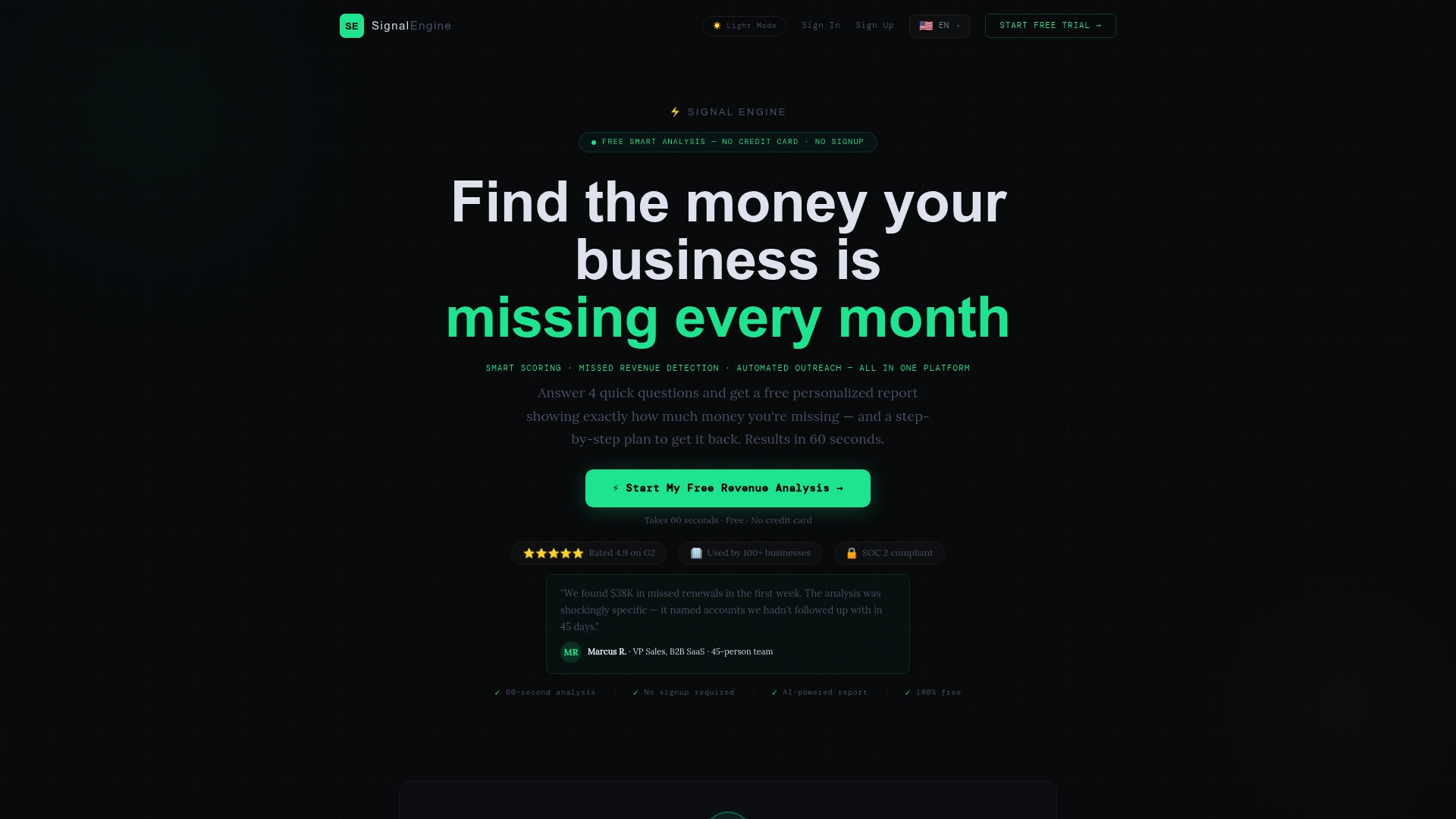
Most small businesses don't have a dedicated sales ops team. Signalengine was built for exactly that gap. For $49/month, you get 31 AI-powered tools that score leads by buying intent, predict churn before it happens, auto-generate email and SMS campaigns, and recover missed calls without lifting a finger. Setup takes five minutes. No agency retainer. No six-month contract.
Whether you run HVAC routes, a dental practice, or a local logistics operation, Signalengine watches your customers, scores their behavior, and tells you exactly what to do next. Book a live demo to see it in action, or start your free trial today.
Key Takeaways
Automated customer outreach delivers measurable pipeline growth, time savings, and churn protection when built on AI-driven scoring, multi-channel sequencing, and clean list hygiene.
| Point | Details |
|---|---|
| Open and click rates | Automated emails achieve up to 86% higher open rates and 196% higher click-through rates than manual campaigns. |
| Weekly time savings | Automation saves professionals over 6 hours per week on manual outreach and data entry tasks. |
| Hybrid pipeline growth | Combining AI automation with human follow-up yields 3–5x more pipeline than either approach alone. |
| Compliance requirements | US businesses must follow CAN-SPAM for email and TCPA for SMS, including opt-in consent and unsubscribe options. |
| Signalengine for SMBs | Signalengine provides 31 AI-powered tools for lead scoring, churn prediction, and automated campaigns starting at $49/month. |
FAQ
What are the top benefits of automated customer outreach for small businesses?
Automated outreach saves over 6 hours per week, increases email open rates by up to 86%, and keeps follow-ups consistent without manual effort, freeing your team to focus on closing.
How does AI-driven customer behavior scoring improve outreach?
AI scoring ranks contacts by buying intent and churn risk in real time, so your outreach reaches the right people at the right moment instead of blasting your entire list equally.
What compliance rules apply to automated outreach in the US?
CAN-SPAM governs commercial email and requires unsubscribe options; TCPA requires prior written consent before sending automated SMS marketing messages to customers.
How many channels should a small business use for automated outreach?
Use email and LinkedIn channels for scalable, relevant engagement while protecting sender reputation. Add other channels such as SMS for specific use cases once your core sequences are performing well.
How does Signalengine support automated outreach for SMBs?
Signalengine provides 31 AI-powered tools including lead scoring, churn prediction, and auto-generated email and SMS campaigns, all in one dashboard starting at $49/month with a free 7-day trial.
Ready to Stop the Revenue Leak?
Signal Engine gives small and local businesses 31 AI-powered tools to score leads by buying intent, predict churn before it happens, auto-generate email and SMS campaigns, and recover missed calls automatically — all in one dashboard starting at $49/month.
Start your free 7-day trial — no credit card required. Setup takes 5 minutes.