

Real estate follow up automation works when it closes two gaps at once: the minutes between a lead's first click and your first reply, and the weeks of silence that kill deals after that. The single best first step is enforcing real-time lead ingestion into your CRM and turning on an automated first response that fires within minutes, not hours. Platforms designed for automated follow-up run that first step and the nurture sequences behind it, freeing agents to spend their time on showings and negotiations instead of chasing forms.
TL;DR:
- Automating immediate lead responses increases reply rates by referencing the specific property and asking one qualifying question.
- Setting up multi-channel sequences within the first hour, including SMS, calls, voicemails, and emails, significantly improves conversion chances.
- Connecting all lead sources via webhook or API ensures no lead is missed, and regular testing confirms timely delivery and data accuracy.
- Behavior-triggered automations that adapt based on lead actions create more personalized follow-up, while escalation routes handle sensitive replies immediately.
- Compliance with consent and quiet-hour rules is essential to legally automate texting and calling, requiring detailed lead tracking and immediate opt-out processing.
Table of Contents
- What Core Automations Should You Set Up First for Real Estate Follow Up?
- How Do You Guarantee Instant First Responses Every Time?
- What Makes Automated Follow-Up Feel Personal Instead of Robotic?
- Is Automated Texting and Calling Legal for Real Estate Follow Up?
- What Does a Realistic Rollout Timeline Look Like?
- Automation Augments Agents. It Doesn't Replace Them.
- Get the Speed-to-Lead Checklist Running with Signal Engine Growth
- Sources
- FAQ
- Ready to Stop the Revenue Leak?
What Core Automations Should You Set Up First for Real Estate Follow Up?
Five automations account for most of the lift agents see when they move from manual to automated follow-up. Build them in this order, because each one depends on the plumbing of the one before it.
Instant acknowledgment. The first message a lead gets should never be generic. It needs the lead's name, a direct reference to the property or search they engaged with, and exactly one qualifying question, such as "Are you looking to see this place this week, or just starting to browse?" Automated first responses that reference the specific listing and ask a single question show meaningfully higher reply rates than generic "thanks for your interest" auto texts, according to response-time research from Pinova.
The first-hour sequence. One message is not enough. A structured sequence across the first 60 minutes, an SMS at minute one, a call attempt at minute three, a voicemail if unanswered, and a follow-up email by minute thirty, catches leads while they are still on your website or app. This is the sequence most likely to convert a cold form-fill into a live conversation.
Listing and search alerts. Once a lead's preferences are captured (price band, beds, ZIP codes), automated alerts tied to new inventory keep you top of mind without a single manual email. This is also where a CRM built to ingest brokerage data automatically earns its keep, since it can trigger alerts off MLS changes without you touching a spreadsheet.
Open-house and post-showing follow-up. Automate a same-day thank-you, a next-day check-in, and a review request timed for seven to ten days after closing, when the experience is still fresh but the stress of moving has settled.
Re-engagement drips for your sphere. Past clients and cold leads need a slower cadence: quarterly market updates, birthday and home-anniversary touches, and occasional "thinking of selling?" nudges.
- Instant acknowledgment with name, property reference, one question
- First-hour multi-channel sequence (SMS, call, voicemail, email)
- Listing/search alerts tied to saved preferences
- Post-showing and review-request automations
- Long-cycle re-engagement drips for sphere and cold leads
Pro Tip: Write your instant-acknowledgment template so it reads like a text from a person, not a bot: short sentences, one emoji at most, and a question mark at the end. Leads reply to questions, not statements.
How Do You Guarantee Instant First Responses Every Time?
Speed-to-lead automation only works if the technical plumbing behind it never drops a lead. Here is the checklist to run before you trust the system with real buyers and sellers.
- Connect every lead source by webhook or API. Zillow, Realtor.com, your website forms, and paid ad campaigns should all push leads into your CRM the instant they're submitted. Manual CSV imports or end-of-day batch uploads defeat the entire point of automation and are the single most common reason "automated" follow-up still takes hours.
- Turn on duplicate detection and source attribution. The same lead often submits three different forms across three portals in one afternoon. Your system needs to merge those into one record and tag the original source, or your agents will call the same person three times and look disorganized doing it.
- Sync every conversation into the CRM before handoff. SMS threads, call recordings, and email replies all need to land in the lead's record automatically, so the agent who picks up the phone already knows what was said.
- Define the handoff content and the SLA. A good handoff notification is one line: name, timeline, pre-approval status, and a transcript link. Pair that with a business-hours SLA of five minutes for the agent to make contact once a lead engages.
- Run a test-lead protocol on every source, monthly. Submit a fake lead through each portal and confirm the CRM record and full transcript appear within 30 to 60 seconds. Portal payloads change without warning, and integration issues typically surface only when a specific source updates its webhook format, so a lead can go silently missing for weeks if nobody checks.
Faster first response correlates directly with higher contact and conversion rates in analysis of 10,000 real estate leads, which is exactly why steps one through four exist: they remove every point where a lead could sit unanswered.
What Makes Automated Follow-Up Feel Personal Instead of Robotic?
Rigid, calendar-based drips (day 1, day 3, day 7) miss what the lead is actually doing right now. Behavior-triggered sequencing reacts to real signals instead: an email open restarts a warmer follow-up, a repeat click on the same listing triggers a same-day call attempt, and a missed call from your team gets an immediate text instead of silence.
Source-specific scripts matter more than most agents assume. A lead from a Facebook ad responds to a different first message than one who filled out a form on your own site after months of browsing. Keep every first-contact template short: reference the specific property, ask one question, and stop. Nobody replies to a paragraph.

Persistence is where most agents give up too early. The data supports a minimum of five meaningful touches spread across 30 days, mixing calls, texts, and emails rather than repeating the same channel. A lead who ignores three texts might pick up a call on attempt four.
Not every lead belongs in a pure automation lane. Build escalation triggers for anything sensitive: a distressed seller mentioning a divorce or job loss, a buyer asking about a specific legal issue, or any reply that reads frustrated. Route those straight to a human with the full transcript attached, don't let the sequence keep firing.
- Trigger on behavior (opens, clicks, missed calls), not just elapsed time
- Keep first-contact scripts to one property reference and one question
- Hit at least five touches across 30 days, mixing channels
- Escalate sensitive or complex replies to a human immediately with transcript context
- Track reply rate, appointment rate, and conversion at 30 and 90 days to tune the sequence
Pro Tip: Review your reply rate by channel every two weeks. If texts are converting at triple the rate of emails for a given lead source, shift more of that sequence's early touches to SMS.
Is Automated Texting and Calling Legal for Real Estate Follow Up?
Yes, but only with proper consent, and the rules tightened. The FCC's Second Report and Order now requires that prior express written consent apply one-to-one, meaning a lead's consent covers your brokerage specifically, not a batch of sellers under one blanket opt-in from a lead-gen site. Carriers are also required to block illegal texts at the network level, and Do Not Call protections now explicitly extend to text messages.
Practically, that means a few non-negotiables for any automated sequence:
- Store the exact consent language and timestamp tied to each lead source, not just a generic "opted in" flag
- Respect quiet hours in the lead's own time zone, not yours, typically before 8 AM or after 9 PM
- Process opt-outs and STOP requests immediately, well within any required revocation window
- Use tooling with built-in quiet-hour enforcement, STOP detection, DNC scrubbing, and reassigned-number checks, since compliance guides for real estate texting flag reassigned numbers as one of the most common silent violations
- When leads span multiple states, apply the strictest recipient-state rule rather than guessing which jurisdiction governs a given text
One rule beats guesswork: if your automation platform can't tell you, per lead, exactly when consent was captured and what language it used, you have a liability sitting in your pipeline, not a nurture sequence.
What Does a Realistic Rollout Timeline Look Like?
Most teams get a basic AI-response and CRM integration live in 48 to 72 hours, according to deployment case data. Test every lead source in that window with a real submission and confirm the transcript lands in the CRM. The first 30 days are for tuning scripts and triggers off actual reply data; months two and three shift to monitoring KPIs and adjusting routing rules.
Aim for first response under 5 to 10 minutes, five or more touches within 30 days, and a measurable lift in contact and conversion rates. NAR's 2025 technology survey found that 66% of REALTORS® adopt technology primarily to save time, and CRM tools remain a top lead-generating asset. Lead scoring, automated next-action drafting, and missed-call recovery technologies map directly onto that checklist.

Automation Augments Agents. It Doesn't Replace Them.
Automation's job is to increase first contact and pre-qualify leads, not to close deals or replace the empathy a nervous first-time buyer needs on the phone. The adoption mistakes I see most: teams turn on sequences before they've instrumented response-time tracking, so nobody can prove the automation is working or where it's failing. Fix that order. Measure first, automate second, and set a weekly review of reply rates in month one before you expand to more sequences. Training and a clear SLA owner matter more than any feature list, including cadence and scripts Signal Engine has published for teams building their first sequence.
— Bernard
Get the Speed-to-Lead Checklist Running with Signal Engine Growth
Everything in this playbook, real-time lead ingestion, instant first response, behavior-triggered nurture, and missed-call recovery, is what platforms like this are built to run without you hiring a second admin. Such platforms score every lead by buy-readiness the moment it lands, draft the next message for one-click approval, and catch the calls a team misses so a hot buyer never goes cold overnight.
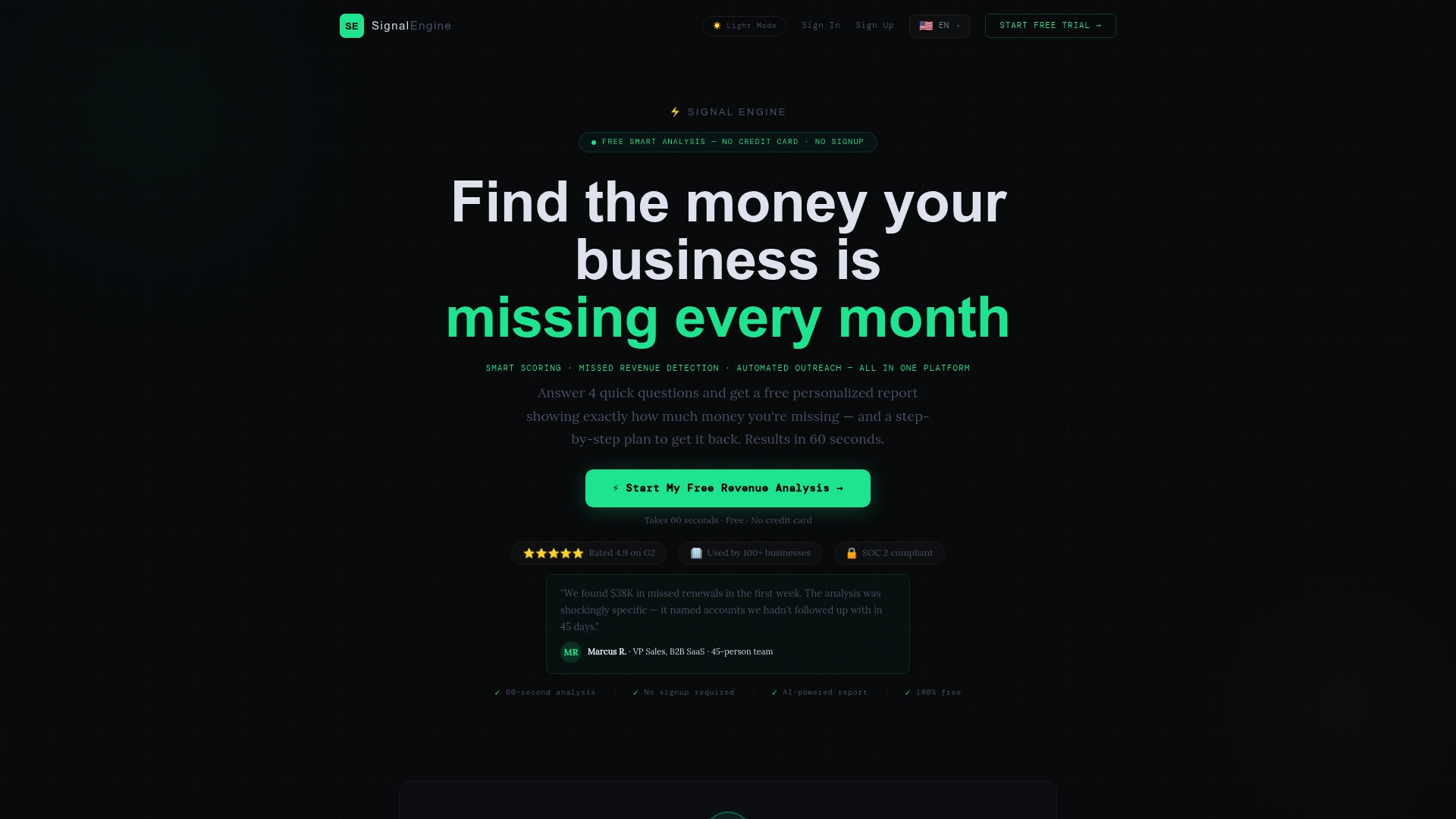
Setup connects to your existing lead sources through webhook and API integration, the same real-time ingestion this article recommends, so you're not waiting weeks to see whether it works. For teams weighing this against building sequences manually inside a basic CRM, the difference shows up fastest in response time: automation that fires in seconds instead of whenever an agent checks their phone. You can review plan details, including Signal Engine Growth pricing, or compare the full lineup of plans before deciding which tier fits your lead volume. If you want a fuller view of what the platform covers for brokerages specifically, the real estate revenue intelligence overview walks through lead scoring and campaign automation side by side. Start a trial this week and have your first-response sequence live inside the same 48 to 72 hour window this article recommends.
Sources
Key references: the FCC's texting and robocall order, NAR's 2025 technology survey, and Pinova's speed-to-lead data, plus lead nurturing strategy background and Signal Engine's own benchmark guide.
- 2025 REALTORS® Technology Survey
- FCC Second Report and Order (targeting illegal robocalls and robotexts)
- We analysed 10,000 real estate leads. Here's what response time does to conversion. | Pinova
- Speed-to-lead for Real Estate: The Complete 2026 Guide with Data
FAQ
What Does Follow-Up Mean in Real Estate?
Follow-up means every contact attempt after a lead's first inquiry, from the initial text to months of nurture touches until they buy, sell, or opt out. Real estate follow up automation handles the repetitive parts of that, instant acknowledgment, scheduled check-ins, listing alerts, so agents can focus on the calls that need a human voice.
What Is the 3-3-3 Rule in Real Estate?
Definitions vary across brokerages, but the version most agents use calls for three touches in the first three hours, then three more meaningful attempts across the following three days, before shifting a lead into a longer nurture cadence. It's a rough framework, not a formal industry standard, so treat it as a starting cadence to adapt with your own reply-rate data.
What Are the Top CRMs for Real Estate Agents?
CRM remains one of the top lead-generating technologies agents use, according to NAR's 2025 survey, though the survey doesn't rank specific platforms. Look for one with webhook-based lead ingestion, built-in TCPA-compliant messaging, and native lead scoring, which is where a revenue intelligence layer like Signal Engine's real estate software extends a standard CRM rather than replacing it.
How Many Homes Does an Agent Need to Sell to Earn $200,000 a Year?
That figure depends entirely on average commission per deal, split structure, and local price points, so there's no single sourced number that applies everywhere. What consistently moves the math is response time: agents who cut speed-to-lead see measurably higher contact and conversion rates per lead, according to Pinova's analysis, which means fewer leads wasted and more closings per hour of prospecting.
Ready to Stop the Revenue Leak?
Signal Engine gives small and local businesses 31 AI-powered tools to score leads by buying intent, predict churn before it happens, auto-generate email and SMS campaigns, and recover missed calls automatically, all in one dashboard starting at $49/month.
Start your free 7-day trial — no credit card required. Setup takes 5 minutes.