

TL;DR:
- Automated follow-up sequences deliver timely, personalized messages that prevent leads from going cold. They improve sales conversion rates by ensuring consistent and relevant outreach without manual effort. Businesses should monitor and optimize these sequences regularly for maximum effectiveness.
An automated follow-up sequence is a planned series of personalized messages sent to prospects or customers at set intervals without manual effort. The industry term for this practice is "drip automation" or "sales sequence automation," and it sits at the core of every high-performing follow-up email strategy today. Most leads are lost within the first 24 hours due to slow or inconsistent follow-up. For business owners and sales professionals, that single fact makes automated follow-up sequences one of the highest-return tools available. This guide breaks down how they work, why they convert, and how to build one that actually runs your outreach for you.
What is an automated follow-up sequence and how does it work?
An automated follow-up sequence is a trigger-based messaging system that sends emails, SMS messages, or both to a contact based on their behavior or a time delay. You set the rules once. The system executes them every time, for every lead, without you lifting a finger.
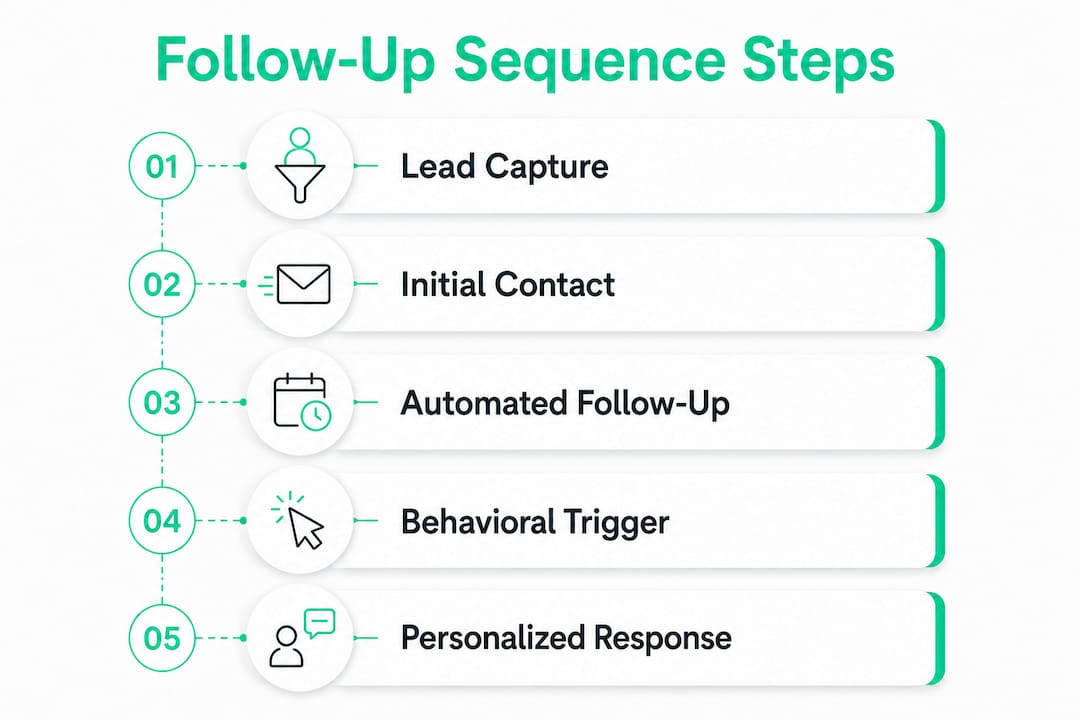
The core structure of a sequence typically includes four message types:
- Instant response: Sent within minutes of a lead inquiry. Initial responses triggered within 1 hour of a lead inquiry produce the best retention rates. Speed signals professionalism and keeps your brand top of mind.
- Value-add follow-ups: Messages 2 and 3 deliver something useful. A case study, a short video, a relevant tip. These build trust before you ask for anything.
- Reminder or check-in: A soft nudge for contacts who have gone quiet. This is not a push. It is a genuine "still here if you need us" message.
- Break-up email: The final message in the sequence. It tells the prospect you will stop reaching out unless they want to continue. This message often yields the highest reply rates because it gives people a guilt-free way to re-engage or opt out.
Triggers fall into two categories: time-based and behavioral. Time-based triggers fire after a set delay, such as 24 hours or 7 days. Behavioral triggers fire when a contact opens an email, clicks a link, or visits a pricing page. Mixing time-based and behavioral triggers keeps sequences relevant and prevents you from sending the same message to an engaged lead and a cold one.
Pro Tip: Space your messages at least 2 days apart for the first three steps, then extend to weekly intervals. Contacts who feel bombarded unsubscribe fast.

How do automated follow-up sequences improve sales conversion?
Sequences of 3–5 messages can increase conversion rates by up to 32% compared to manual outreach. That gap exists because manual follow-up is inconsistent. Sales professionals forget, get busy, or simply deprioritize leads that have not responded yet.
Automation removes that inconsistency. Every lead gets the same quality of follow-up, on time, every time. That consistency compounds across your entire pipeline.
"Automation does not replace the salesperson. It replaces the forgetting. The best sequences handle the repetitive middle of the funnel so your team can focus on the conversations that actually require a human."
The sales funnel benefit is real and measurable. Automated sequences keep leads warm during the consideration phase, when buyers are comparing options and most likely to go silent. A well-timed value-add email at day 3 can be the difference between a closed deal and a lost one.
Manual follow-up also creates a data blind spot. You cannot easily track who received what, when, or whether they opened it. Automation logs every interaction, giving you a clear picture of where leads stall. That data is what lets you improve your process over time.
What are best practices for designing follow-up sequences?
The most effective sequences mirror actual buying psychology. Sequences structured around qualification, pricing, and demos outperform generic reminder chains. Your messages should match where the buyer is in their decision process, not just where you are in your calendar.
Build your sequence in this order:
- Map your sales stages first. Identify the 3–5 moments where leads typically go quiet. Those are your sequence trigger points.
- Write one message per stage. Each message should address the specific concern a buyer has at that stage. Pricing objections belong in the pricing stage, not the intro email.
- Add fallback logic. Most automated systems fail because they lack fallback logic to escalate leads or switch contact channels when no response occurs. If email gets no reply after 3 attempts, escalate to SMS or flag the lead for a personal call.
- Use no-code tools to build fast. No-code platforms allow you to build effective sequences in under an hour using templates for instant response, 24-hour check-in, and one-week nurture. You do not need a developer.
- Integrate with your CRM. Successful automation integrates tightly with your existing sales process rather than running as a separate tool. Disconnected systems create duplicate outreach and missed handoffs.
The most common mistake is message fatigue. Each message must add value at every step. Repetition kills sequences. If your third email says the same thing as your first, you are training leads to ignore you.
Pro Tip: Build a "human escalation" rule into every sequence. When a lead opens 3 emails but never replies, that is a hot signal. Flag them automatically for a personal call from your sales team.
You can also explore automated prospect outreach steps for workflow templates that apply these principles across different industries.
How do you measure and optimize your follow-up sequence performance?
Measurement is what separates a sequence that runs from a sequence that grows. Track these four metrics for every sequence you run:
| Metric | What it tells you | Target benchmark |
|---|---|---|
| Open rate | Whether your subject lines work | 25–40% for cold outreach |
| Reply rate | Whether your message resonates | 5–15% for cold sequences |
| Click-through rate | Whether your content drives action | 2–5% for nurture sequences |
| Conversion rate | Whether the sequence closes deals | Varies by sales cycle length |
Tracking open, click, and reply behaviors allows you to adjust follow-up timing and sequence flow dynamically. A lead who opens every email but never clicks is telling you the subject line works but the body copy does not. That is a specific, fixable problem.
A/B testing is the fastest way to improve. Test one variable at a time: subject line, send time, message length, or call to action. Run each test for at least 30 contacts before drawing conclusions. Small sample sizes produce misleading results.
Monitoring systems should include SLA timers, engagement tracking, and delivery logs to catch breakdowns early. If your emails are landing in spam, your open rate will drop suddenly. If a trigger misfires, leads skip steps. Delivery logs catch both problems before they cost you deals.
For SaaS teams and service businesses, behavioral triggers for follow-up also apply directly to churn prevention, not just new lead conversion.
Key Takeaways
Automated follow-up sequences work because they deliver consistent, timed, personalized outreach at every stage of the sales funnel without relying on human memory.
| Point | Details |
|---|---|
| Respond within 1 hour | Most leads go cold within 24 hours; instant triggers protect your pipeline. |
| Use 3–5 messages per sequence | Structured sequences of this length produce the strongest conversion lift. |
| Mix trigger types | Combine time-based and behavioral triggers to keep messages relevant to each lead. |
| Add fallback logic | Escalate to SMS or human outreach when email gets no response after 3 attempts. |
| Track and test continuously | Monitor open rates, reply rates, and delivery logs to find and fix weak points. |
What I've learned after years of watching follow-up sequences succeed and fail
The biggest mistake I see business owners make is treating automation as a "set it and forget it" solution. They build a sequence, turn it on, and never look at it again. Six months later, they wonder why their reply rates have dropped.
Automation handles the repetition. Machines cannot replace human intuition and complex decision-making in sales. The sequence gets the lead to the door. A real person still has to open it. The businesses that win are the ones where the sales team actually reviews the engagement data weekly and adjusts their personal outreach based on what the sequence reveals.
The other thing I have seen derail good sequences is poor sales team buy-in. If your team does not trust the automation, they will manually override it, send duplicate messages, and confuse leads. Train your team on what the sequence does and when they should step in. That handoff moment, when automation flags a hot lead for human follow-up, is where most deals actually close.
The technology has gotten genuinely easy to use. Simple conditional logic and well-designed templates are all you need to build a sequence that outperforms most manual outreach. The barrier is not technical anymore. It is discipline: writing good messages, testing them honestly, and acting on what the data shows.
— Bernard
How Signalengine fits into your follow-up automation workflow
Building a follow-up sequence is one thing. Knowing which leads deserve your best sequence is another. Signalengine scores every lead by buying intent automatically, so your sequences fire on the contacts most likely to convert.
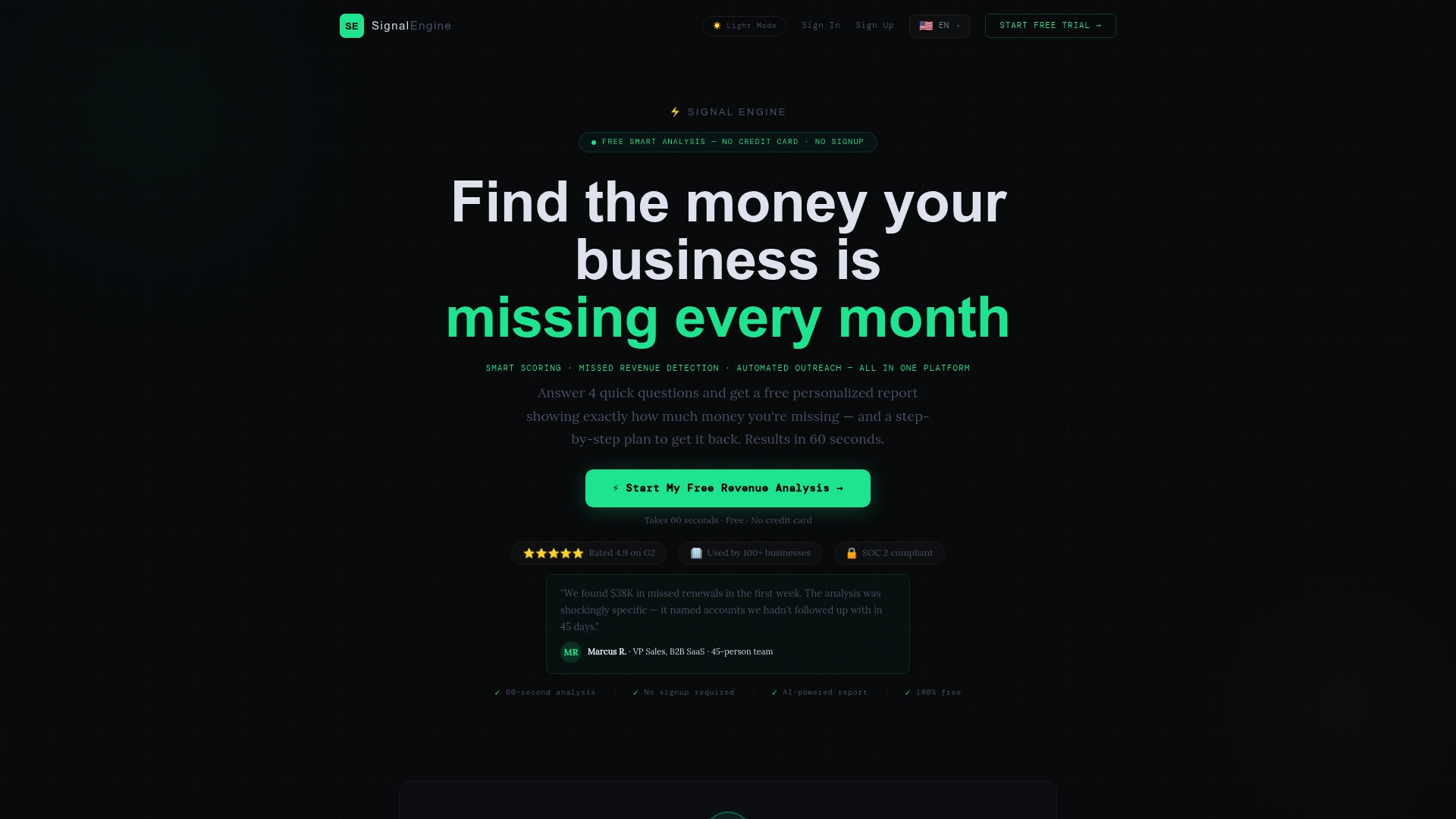
Signalengine's AI-powered revenue tools connect lead scoring, automated email and SMS campaigns, and churn prediction in one dashboard. You can see who is engaging, who is going cold, and who needs a human call, all without digging through spreadsheets. Setup takes minutes, not weeks. Pricing starts at $49/month, built for small and mid-sized businesses that need enterprise-level automation without the enterprise price tag. You can also book a live demo to see the full workflow before you commit.
FAQ
What is an automated follow-up sequence?
An automated follow-up sequence is a series of pre-written messages sent to prospects or customers at set intervals or based on their behavior, without manual effort from your sales team.
How many emails should a follow-up sequence include?
Sequences of 3–5 messages produce the strongest results. More than 5 messages without a response typically signals the lead is not ready, and continuing risks damaging your sender reputation.
What triggers an automated follow-up sequence?
Sequences are triggered by time delays (such as 24 hours after a form submission) or by behavioral signals like email opens, link clicks, or website visits.
What is the best time to send the first follow-up?
The first message should fire within 1 hour of a lead inquiry. Response rates drop significantly after the first 24 hours, making speed the single most important variable in early-stage follow-up.
How do I know if my follow-up sequence is working?
Track open rates, reply rates, and conversion rates for each step in the sequence. If open rates are strong but replies are low, the message content needs work. If open rates are low, start with the subject line.
Ready to Stop the Revenue Leak?
Signal Engine gives small and local businesses 31 AI-powered tools to score leads by buying intent, predict churn before it happens, auto-generate email and SMS campaigns, and recover missed calls automatically — all in one dashboard starting at $49/month.
Start your free 7-day trial — no credit card required. Setup takes 5 minutes.