

A real estate drip campaign is a set of automated emails and texts that go out on a schedule or in response to what a lead does, so you stay in front of people until they are ready to buy or sell. The agents who win with them do four things: split leads by situation, teach before they pitch, stop the sequence the moment someone replies, and keep every message compliant. Below is the full playbook, from welcome sequences to past-client reactivation. ⚡
TL;DR
- Segment first, write second. Buyer vs. seller, timeline, source and behavior each get their own track.
- Educate early, ask late. A proven welcome flow runs about 21 days and ends with a soft call to action, not a hard pitch.
- Never stop at the end of the sequence. Move leads into a monthly update and run a yearly past-client touch plan.
- Consent is not optional. Email needs CAN-SPAM basics; automated texts need prior express written consent.
- Measure monthly. Watch open rate, reply rate and appointments booked, then fix the weakest number.
Table of Contents
- What a real estate drip campaign actually does
- Segment before you write a single email
- The campaigns worth building
- How to write messages people actually read
- Past client reactivation: your cheapest lead source
- Cadence: how often is too often?
- Stay legal: CAN-SPAM, TCPA and consent
- Measure it and fix the weakest link
- Our perspective: drip is the floor, not the ceiling
- Put your drip campaigns on a smarter engine
- FAQ
- Sources
- Ready to Stop the Revenue Leak?
What a real estate drip campaign actually does
A drip campaign moves a lead from "just looking" to "let's talk" without you typing every message. One nurture sequence guide describes it as a series of emails sent over time to stay in touch, give free value and build trust, so the lead may work with you later.
The word "drip" can mislead. Good sequences are not a fixed stream of identical blasts. Rework's drip strategy guide describes nurture messages that are triggered by schedule or behavior, educate first, and adapt when a lead does something telling, like clicking listings in one neighborhood.
That gives you two kinds of drip:
- Time-based: Day 1, day 4, day 10. Simple, predictable, easy to build.
- Behavior-based: A lead clicks a condo listing, so the next message is about condo ownership costs. Harder to build, far more relevant.
The best setups combine both. The calendar keeps you consistent; the behavior triggers keep you human.
Segment before you write a single email
Most drip campaigns fail before the first send, because everyone lands in the same list. The REALTOR® Store's drip campaign guide advises grouping contacts by status (buyer or seller), timeline, source and behavior before writing anything, because generic, irrelevant content drives unsubscribes.
A practical segmentation grid:
| Segment | What they need | Tone | Primary channel |
|---|---|---|---|
| New buyer lead (0–3 months out) | Process, budget, preapproval | Educational | Email, then text after opt-in |
| Active buyer | Fresh listings, showing logistics | Fast, specific | Text and email |
| Seller lead, valuation request | Pricing, prep, timeline | Consultative | Email plus a call |
| Open house guest | Recap, similar homes | Friendly | Email within 24 hours |
| Expired or FSBO | Marketing plan, proof | Direct, respectful | Call, mail, email |
| Past client | Home value, local news, thank-you | Personal | Email, handwritten notes |
| Cold or nonresponsive | A reason to reply | Short, low pressure |
If your CRM lets you tag leads by source (portal, website form, open house, referral), do it. A portal lead who clicked "contact agent" at 10 p.m. is in a different mindset than a neighbor who downloaded your market report.
The campaigns worth building
You do not need 19 sequences on day one. Rework's guide lists the core types agents use: welcome, buyer education, seller education, market update, property alert, open house follow-up, and expired-listing or FSBO campaigns. Start with three and add as you go.
1. The welcome sequence
This is the first one to build, because every new lead enters it. The Carrot guide recommends that the first message welcome the lead and set expectations. Rework gives a clear seven-email example over 21 days:
| Day | Message | Goal |
|---|---|---|
| 0 | Immediate welcome | Confirm you got their request |
| 2 | Who you are | Put a face and a story to the name |
| 4 | Market context | Show you know their area |
| 7 | How the process works | Remove fear of the unknown |
| 10 | Relevant proof | A recent sale or client result |
| 14 | Resources | Guides, checklists, neighborhood info |
| 21 | Soft consultation invite | Offer a no-pressure conversation |
That timeline is a sensible default, not a law. If your market moves in days, compress it. If your leads are mostly early-stage renters, stretch it.
2. The buyer education sequence
For buyers who are not ready, a longer education track keeps you relevant. Rework's example runs 12 to 16 emails over three to four months, covering readiness, budget, preapproval, neighborhoods, showings, offers, inspection, appraisal, closing costs and common mistakes.

Each email answers one question the buyer is probably asking right now. Keep one idea per message and one clear next step.
3. The seller sequence
Sellers want to know three things: what is my home worth, what should I fix, and how long will this take? Build a track around those. Include a local market snapshot, a prep checklist, a "what buyers actually notice" email, and an invitation to a home value conversation. Expired and FSBO leads get their own shorter, more direct track because their situation is more urgent.
4. Open house follow-up
Send a recap within a day, include the property details, and link to two or three similar listings. If the guest said they are working with another agent, move them to the monthly update instead of the buyer sequence.
5. The long-term monthly update
When a lead finishes the automated sequence, don't drop them. Carrot recommends a continuing monthly newsletter with market updates and general advice, which keeps long-term prospects in contact without the intensity of the main workflow.
How to write messages people actually read
Content matters more than the automation. Carrot's advice is to lean on value-add education, personal stories and periodic direct check-ins, such as asking whether the person is still looking.
A few rules we like:
- Lead with the reader's question, not your credentials. "What does a 6.5% rate do to your monthly payment?" beats "Hello from your local expert."
- Use real local detail: school boundaries, a new transit stop, what homes in a specific ZIP actually sold for.
- One call to action per email. Reply, click or book. Not all three.
- Write like a person. Short sentences, first name, a real signature with your phone number.
- Make the check-in plain. "Are you still looking in the Eastside area? A quick yes or no helps me send the right things."
A sample check-in email
Subject: Still looking in [neighborhood]?
Hi [First name], it's [Agent] from [Brokerage]. A few weeks ago you asked about homes in [neighborhood]. Prices there moved this month, so I wanted to check: are you still looking, or did your plans change? Either answer is fine. If you reply with a budget range, I'll send you only what fits.
That message is short, easy to answer and gives the lead an out. It also tends to be the best candidate for your reply-rate test.
A sample text after opt-in
Hi [First name], [Agent] here. Two new listings just hit [neighborhood] under your budget. Want me to send them? Reply STOP anytime to opt out.
Only send that after the lead has given written consent to texts (more on that below).
Past client reactivation: your cheapest lead source
The people who already know you are the easiest to win again. In a recap of the National Association of Realtors' 2025 Profile of Home Buyers and Sellers, 66% of sellers used a referred agent or one they had worked with before. The same summary notes the typical seller had lived in their home 11 years, a record high. That means your touch plan has to run for years, not weeks.
A simple past-client plan:
- Quarterly: A short personal email with one local update. No ask.
- Annually: A home value update on the anniversary of closing, plus a thank-you.
- Seasonally: A maintenance checklist in spring and fall, which is useful for everyone.
- Occasionally: A direct referral request, worded lightly: "If a friend or coworker mentions a move, I'd love to help."
- Reactivation: For clients you have not contacted in 12 months or more, send a personal "checking in" email, not a marketing blast. Offer a fast home value check as a reason to reply.
For nonresponsive leads, the rule is fewer, better messages. Send the direct check-in, then move them to the monthly update. If they still do not engage after several months, reduce frequency rather than push harder. Our real estate follow-up cadence guide covers the timing and scripts in detail.
Cadence: how often is too often?
There is no single magic number, but these patterns hold up:
- New inquiry: Reply within minutes. Our lead response benchmarks show why speed is the first thing to fix.
- First 3 weeks: Every 2 to 4 days, dropping to weekly, as in the welcome flow above.
- Months 2 to 4: Weekly to every other week, educational.
- Month 4 onward: Monthly.
- Past clients: Quarterly, with one yearly milestone.
Always pause a sequence when a lead replies, books or says they are working with someone else. The REALTOR® Store guide points to reply detection as the safeguard against robotic follow-up, and we agree: nothing kills trust faster than an automated "just checking in!" after the lead already answered you.
Stay legal: CAN-SPAM, TCPA and consent
Automation multiplies mistakes. Build compliance into the workflow.
Email. Under the FTC's CAN-SPAM compliance guide, commercial emails must avoid deceptive subject lines, identify themselves as ads, include a valid physical mailing address and offer a clear, easy opt-out. Opt-out requests must be honored within 10 business days, and you cannot charge a fee or demand extra information to process one.
Text and calls. The FCC says robocalls and robotexts that carry an advertisement or count as telemarketing need prior express written consent. Under newer FCC rules, a person can revoke consent for calls or texts in any reasonable manner, and you must honor it within 10 business days. So "stop," "unsubscribe" or "don't text me" all count.
Practical steps:
- Add a consent checkbox, unchecked by default, on every form that feeds a text sequence, and store the timestamp.
- Put opt-out language in every text and a one-click unsubscribe in every email.
- Sync opt-outs across every tool you use, so a "stop" in one place stops everything.
- Ask your broker or a real estate attorney how these rules apply to your lead sources, especially purchased or portal-generated leads.
If you want a tested path, our TCPA-safe follow-up automation guide walks through a 48 to 72 hour deployment.
Measure it and fix the weakest link
The REALTOR® Store guide suggests reviewing open rates, reply rates and appointment conversions monthly. If open rates dip below 25%, test subject lines; if replies are low, add question-based emails.
Here is a simple monthly review:
| Metric | What it tells you | First fix |
|---|---|---|
| Open rate | Are subject lines and sender name working? | Test two subject lines per send |
| Reply rate | Are messages inviting a response? | Add a direct question |
| Click rate | Is the content relevant? | Tighten segments |
| Appointments booked | Is the sequence converting? | Move the call to action earlier |
| Unsubscribes and complaints | Are you too frequent or too generic? | Cut frequency, resegment |
Tie each sequence to a revenue event, not a vague goal. Prose Media's lifecycle playbook argues that nurture should connect to events like a tour booking rather than "more engagement." Ask of every sequence: what booked appointment or signed agreement is this supposed to produce? Setting those conversion goals inside your CRM also helps, and solid lead nurturing strategies start with the same step. For deeper analysis, see how to analyze prospect engagement.
Our perspective: drip is the floor, not the ceiling
We build revenue intelligence for small service businesses, and real estate agents keep running into the same wall. A drip campaign tells every lead the same story on the same clock. But your database is not uniform: some leads are hot this week, some are quietly drifting away, and some past clients are about to list.
So we think of drip as the baseline and signals as the upgrade. Score each contact on buy-readiness. Flag the ones going cold before they vanish. Let the system draft the next message, then hold it for your approval, so nothing reaches a real person until you say go. That keeps the personal touch that earns referrals while removing the hours of list-digging that agents never have.
The agents we see getting the most from automation do not send more. They send fewer, better-timed messages to the right people, and they spend the saved time on phone calls.
— Bernard
Put your drip campaigns on a smarter engine
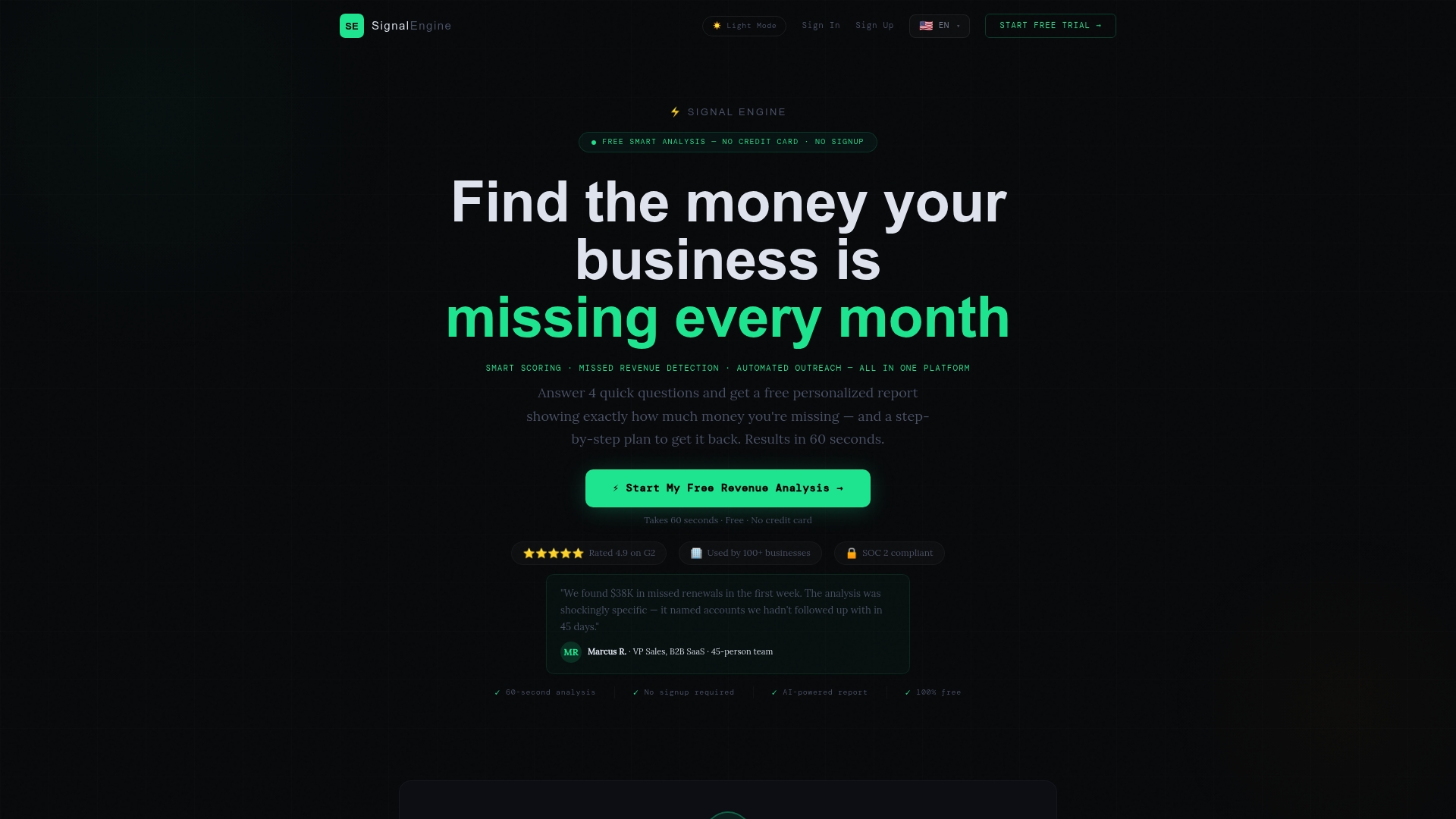
Signal Engine scores every contact on buy-readiness, flags churn risk, drafts email and SMS follow-up, and holds it for one-click approval before anything goes out. Every feature is included in every plan, with no per-seat pricing. Growth is $149 per month and Scale is $297 per month; see all options on the pricing page.
See how it fits your workflow on our revenue intelligence for real estate page, or browse the real estate business software overview.
FAQ
How long should a real estate drip campaign run?
It depends on the segment. A welcome sequence often runs about 21 days, while a buyer education track can run three to four months. After that, move leads to a monthly update rather than stopping, so you stay visible when their timeline firms up.
How many emails should I send per week?
In the first three weeks, one email every two to four days is common, then weekly or biweekly during the education phase. Drop to monthly for long-term leads. If unsubscribes or complaints rise, cut frequency and tighten your segments.
Can I text leads as part of a drip campaign?
Yes, but only with prior express written consent for marketing texts. Include opt-out instructions, honor any reasonable revocation within 10 business days, and keep a record of consent. Check specifics with your broker or a real estate attorney.
What is the best way to reactivate past clients?
Start with a personal, low-pressure check-in and a useful reason to reply, like a home value update. Keep a light quarterly rhythm with one yearly milestone, and ask for referrals occasionally rather than in every message.
Sources
- 5 Steps to Create a Real Estate Lead Nurturing Sequence (Carrot)
- Drip Campaign Strategy: Nurturing Real Estate Leads (Rework)
- Real Estate Drip Campaigns: Your 2026 Agent Guide (REALTOR® Store)
- Real estate lifecycle marketing playbook (Prose Media)
- Past Client and Sphere Marketing for Real Estate Teams
- CAN-SPAM Act: A Compliance Guide for Business (FTC)
- FCC robocall and robotext consent guidance
- FCC rules on revoking consent
Ready to Stop the Revenue Leak?
Signal Engine gives small and local businesses 31 AI-powered tools to score leads by buying intent, predict churn before it happens, auto-generate email and SMS campaigns, and recover missed calls automatically — all in one dashboard starting at $49/month. Start your free 7-day trial — no credit card required. Setup takes 5 minutes.