

Win loss analysis is a structured review of every closed deal, won, lost, or stalled into no-decision, built to uncover why buyers actually chose what they chose. Not what your CRM's dropdown says. Not what the rep guesses. The real reason.
Done right, it produces intelligence that changes rep behavior on the very next call. A practical win-loss framework pulls from four signal layers working together, and teams that skip straight to software before nailing the process usually end up with a dashboard nobody trusts.
Here's what you'll walk away with:
- A clear definition of what separates a real win-loss program from a one-off "why did we lose that deal" Slack thread
- A step-by-step process you can run this quarter, not "someday"
- The exact cadence, sample sizes, and interview tactics that keep the data honest
- How to turn findings into updated battlecards instead of a PDF nobody opens
Key Takeaways
Win loss analysis works when continuous deal-level capture, neutral buyer interviews, and quarterly pattern reviews feed directly into updated battlecards and discovery scripts.
| Point | Details |
|---|---|
| Define discrete loss reasons | Replace vague CRM fields like "lost on price" with a mandatory, specific taxonomy at deal close. |
| Use neutral interviewers | Have a third party or AI moderation run buyer interviews to avoid the Candor Problem. |
| Combine three signal sources | Pair rep self-reports on every deal with 10 to 15 quarterly interviews and call mining for full coverage. |
| Ship one artifact change per cycle | Update a battlecard, discovery question, or objection line within two weeks of every review. |
| Automate capture with Signal Engine | Signal Engine continuously flags competitor moves and churn risk, removing the manual data-collection bottleneck. |
Table of Contents
- What Is Win Loss Analysis, Really?
- How Often Should You Run Win Loss Analysis?
- How Do You Actually Run a Win Loss Analysis?
- What's the Best Way to Collect Win Loss Interview Data?
- What Mistakes Kill a Win Loss Program?
- How Do You Turn Win Loss Insights Into Sales Action?
- How Signal Engine Keeps Win Loss Signal Flowing
- Why Cadence Beats a Perfect Report
- Turn Findings Into a Working Pipeline, Not a Slide Deck
- Ready to Stop the Revenue Leak?
- Sources
- FAQ
What Is Win Loss Analysis, Really?
A win-loss program is not a single deal post-mortem. It's an ongoing operation with a specific job: answer why buyers pick you, pick a competitor, or pick nobody, then feed that answer back into how your team sells.
Three questions every mature program answers on repeat:
- What actually drove the buyer's decision, separate from what the rep believes drove it?
- Which patterns repeat across deal size, segment, and competitor, versus which are noise from one bad call?
- What should change in messaging, pricing conversations, or discovery this quarter because of what we just learned?
A single post-mortem answers question one, maybe, for one deal. A program answers all three, continuously, and that's the difference that matters when you're trying to move a win rate rather than explain a single loss to your VP.
CRM loss-reason fields are where most of this breaks down before it even starts. "Lost on price" gets logged for deals that actually died because of a missed integration requirement discovered in week six, or a competitor's faster implementation timeline. Reps default to price because it's the easiest box to check, not because it's true. That single mislabeled field can quietly corrupt an entire quarter's worth of pattern analysis.
Pro Tip: Ban "lost on price" as a standalone reason in your CRM. Require a second, more specific field, like "price relative to perceived value" or "price versus a specific competitor's bundled offer", before the deal can be closed out.
How Often Should You Run Win Loss Analysis?
Most B2B teams get the best signal-to-effort ratio running formal pattern reviews quarterly, with deal-level capture happening continuously in the background. Monthly cadence only makes sense for high-volume teams closing dozens of deals a week, where a quarter's wait means missing a competitive shift while it's still happening.
Timing on the ground matters just as much as calendar cadence:
- Log the rep's self-report within 48 hours of the deal closing, while details are fresh
- Schedule buyer interviews within two to three weeks of close, before memory fades or a new vendor relationship reshapes how they remember the decision
- Run the aggregated pattern review quarterly, pulling from everything logged that period
Certain events justify breaking cadence and running an ad-hoc pass immediately: a competitor drops a new pricing tier, your loss rate against one named competitor spikes in a single month, or a product launch shifts how deals get positioned. Waiting for the next scheduled quarter in those moments means acting on stale intelligence.
How Do You Actually Run a Win Loss Analysis?
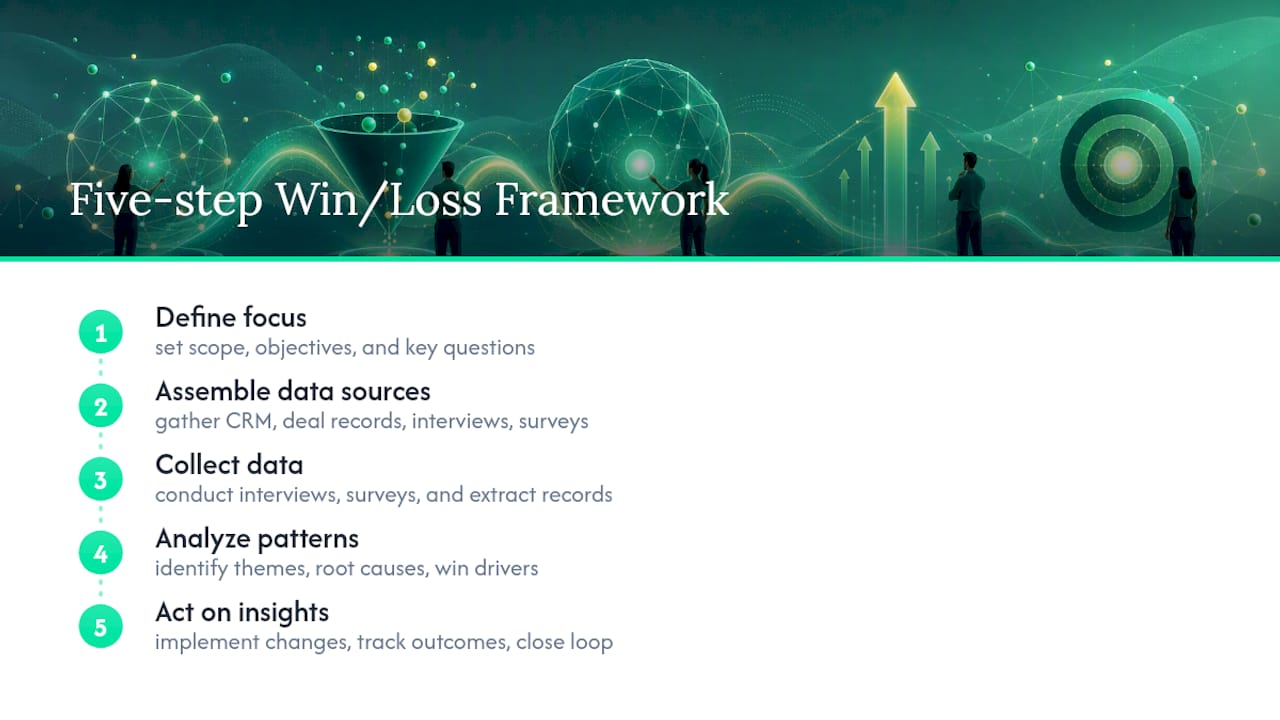
The five-step framework Hanover Research outlines, define focus, assemble your data sources, collect, analyze, act, holds up well as a backbone. Here's how to execute each stage without it stalling out at step two.
1. Define focus and objectives
Decide upfront which segments, deal sizes, and named competitors matter most this cycle. A program trying to analyze every deal against every competitor produces mush. A program focused on "mid-market deals lost to Competitor X in the last 90 days" produces a battlecard update by Friday.
2. Standardize CRM capture
Replace vague, free-text loss reasons with a discrete taxonomy: lost to competitor (named), lost to status quo, lost on implementation timeline, lost on missing feature, no-decision due to budget freeze, and so on. Make at least one specific field mandatory before a deal can close. Vague fields produce vague analysis, no matter how many interviews you run on top of them.
4. Code, count, and weigh
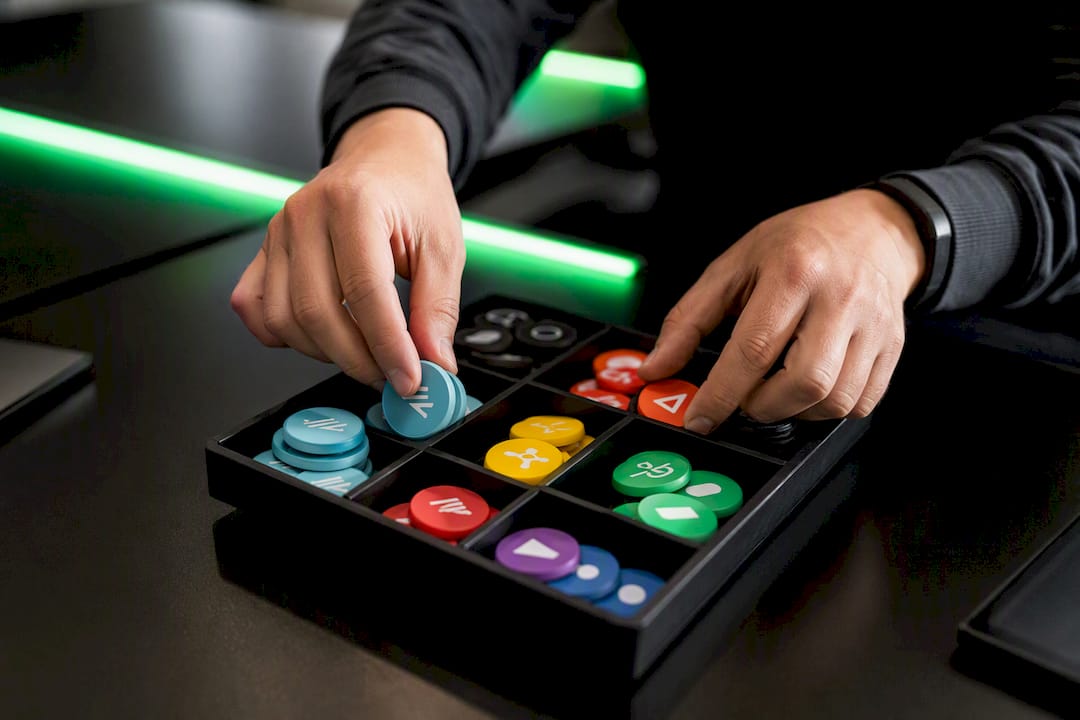
Tag every self-report and transcript against your taxonomy, then count frequency. But don't stop at raw counts. A theme that shows up in five small deals matters less than one that shows up in two deals worth $200,000 each. Weight patterns by deal size before you declare a trend.
5. Translate themes into artifacts
The output of this stage is never a report. It's an updated battlecard section, a new discovery question inserted into the standard call script, or a rewritten objection-handling line for a specific competitor claim. If a finding doesn't change a document a rep will actually open before their next call, it hasn't been operationalized yet.
6. Assign owners and deadlines
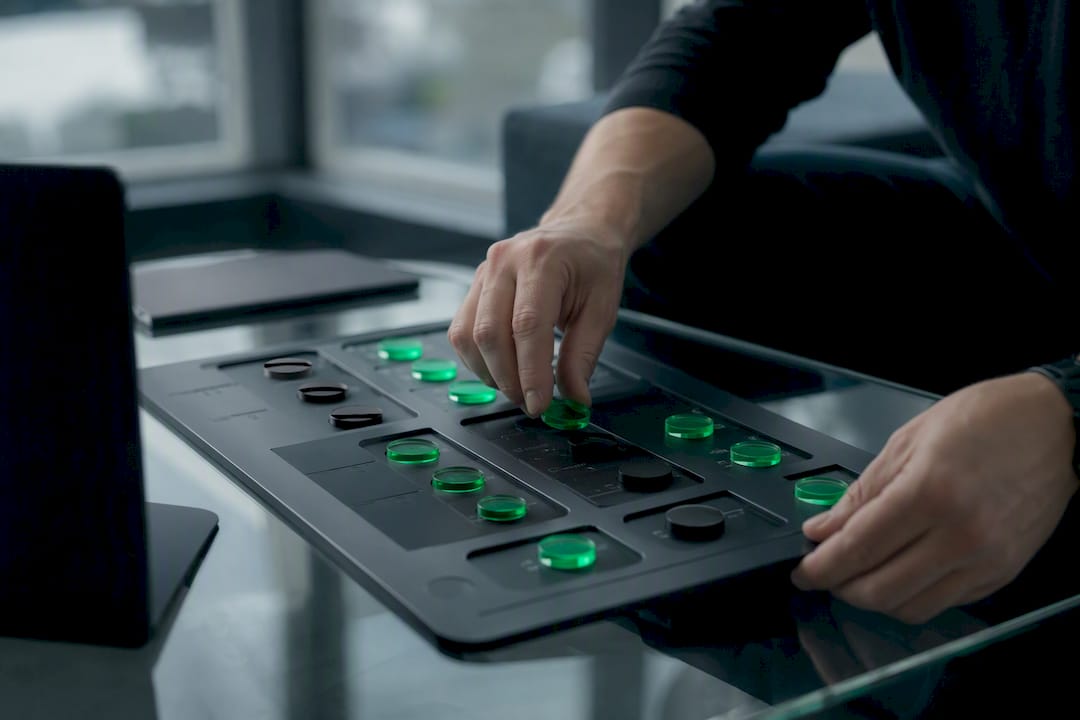
Every theme gets a name and a date attached. "Update the pricing objection script by next Friday, owned by the enablement lead" is a task. "We should probably look at pricing messaging" is a wish.
Pro Tip: Set a hard rule that every quarterly win-loss review must produce at least one changed artifact within two weeks. If nothing changes, the review didn't happen, it just got discussed.
What's the Best Way to Collect Win Loss Interview Data?
Getting honest answers is harder than getting answers. The method matters as much as the questions themselves.
- Use a neutral interviewer or AI moderation for every buyer conversation instead of the rep who ran the deal
- Interview 10 to 15 buyers per quarter for a workable depth-to-effort ratio, per the Oscom win-loss framework
- Offer a small incentive (a gift card, a donation to a cause the buyer names) to lift response rates on lost deals specifically, where buyers have the least incentive to spend time helping you
- Use laddering questions that push past the first answer: "You said price was the issue, what would the value have needed to look like for price to stop mattering?"
- Keep rep self-report forms under five fields so completion doesn't become the bottleneck
Sellers who interview their own lost buyers routinely get softened, polite feedback, "it just wasn't the right timing", instead of the real answer. This is often called the Candor Problem, and it's the single biggest reason otherwise well-designed programs produce useless data.
A program analyzing only 8 to 12 interviews a quarter risks mistaking noise for trend, which is exactly why rep self-reports on every deal matter as a backstop. The interviews add depth. The self-reports add volume. Neither alone is enough.
What Mistakes Kill a Win Loss Program?
Five failure modes show up again and again, and each one has a specific, fixable cause.
- Sample too small to trust: Five interviews in a quarter feels like data but reads like anecdote. Fix it by requiring the mandatory self-report on every deal as a floor, with interviews layered on top.
- One-off reporting instead of a program: A single "deep dive" after a big loss, never repeated, tells you nothing about whether that loss was a pattern or a fluke. Fix it with a fixed quarterly cadence that runs regardless of how busy the team is.
- Findings live in a deck nobody reopens: Insights that don't touch a battlecard or a script disappear within a month. Fix it by assigning an owner and a deadline to every finding before the review meeting ends.
- CRM fields too vague to code: "Lost on price" tells you nothing actionable. Fix it with a mandatory discrete taxonomy at deal close.
- Reps interviewing their own lost buyers: This produces the Candor Problem every time. Fix it with a neutral interviewer or AI moderation for every buyer conversation.
Pro Tip: If you can only fix one thing this quarter, fix the interviewer. Swapping a rep-led debrief for a neutral third party is the single highest-leverage change most programs can make without touching headcount or budget.
How Do You Turn Win Loss Insights Into Sales Action?
Insight without a deadline is just trivia. Three artifacts should get touched every single cycle:
- Battlecards get updated with the specific language buyers used to describe why a competitor won, not the sanitized version a rep remembers.
- Discovery scripts get a new question inserted wherever the analysis revealed a gap the team wasn't probing early enough to catch before it became a deal killer.
- Objection frameworks get rewritten around the exact phrasing buyers pushed back with, since the biggest signal often lives in the gap between what reps report and what buyers actually said.
The quarterly review itself should run tight: headline metrics (win rate shift, no-decision rate, average deal cycle), the top three themes ranked by weighted deal value, one or two direct buyer quotes per theme, and a named owner with a deadline for each action item.
ROI shows up in three places over the following quarter: a lower no-decision rate as discovery catches budget and timeline issues earlier, a measurable win-rate lift against the competitor named most often in losses, and shorter deal cycles once reps stop fumbling objections they've now seen coded and explained a dozen times.
How Signal Engine Keeps Win Loss Signal Flowing
Running this manually every quarter works, until the team doubles and nobody has time to chase down call transcripts anymore. Signal Engine's revenue intelligence platform automates the parts that usually stall: capturing deal signals continuously, flagging churn risk before renewal conversations even start, and surfacing competitor mentions pulled straight from calls and emails.
- Automated signal capture removes the "did the rep fill out the form" bottleneck entirely
- Competitor opportunity alerts flag the exact moment a rival's pricing or service quality slips
- Pipeline analytics show deal-size-weighted patterns without a spreadsheet
Signal Engine covers 12 verticals, from HVAC to dental to logistics, at pricing built for SMB budgets, not enterprise procurement cycles.
Pro Tip: Automating capture works best after your team has already agreed on the taxonomy. Software can't fix a loss-reason field nobody standardized first.
Why Cadence Beats a Perfect Report
Most teams chase the perfect win-loss report and ship nothing for two quarters while they build it. A rougher program that runs every 90 days without fail beats a beautiful one that runs once a year. I've watched a single rewritten objection line, added after buyers kept citing the same competitor claim, shift how reps handled that objection within a week, long before any formal report existed to justify it.
The lesson isn't subtle: the artifact update matters more than the analysis that produced it. Build the habit of shipping small changes constantly, using tools like a structured client feedback loop to keep that habit from quietly dying in month three.
— Bernard
Turn Findings Into a Working Pipeline, Not a Slide Deck
There are other ways to get here, a consulting firm running your interviews, a spreadsheet template you maintain by hand, but both demand ongoing manual effort that competes with everything else on a revenue leader's plate.
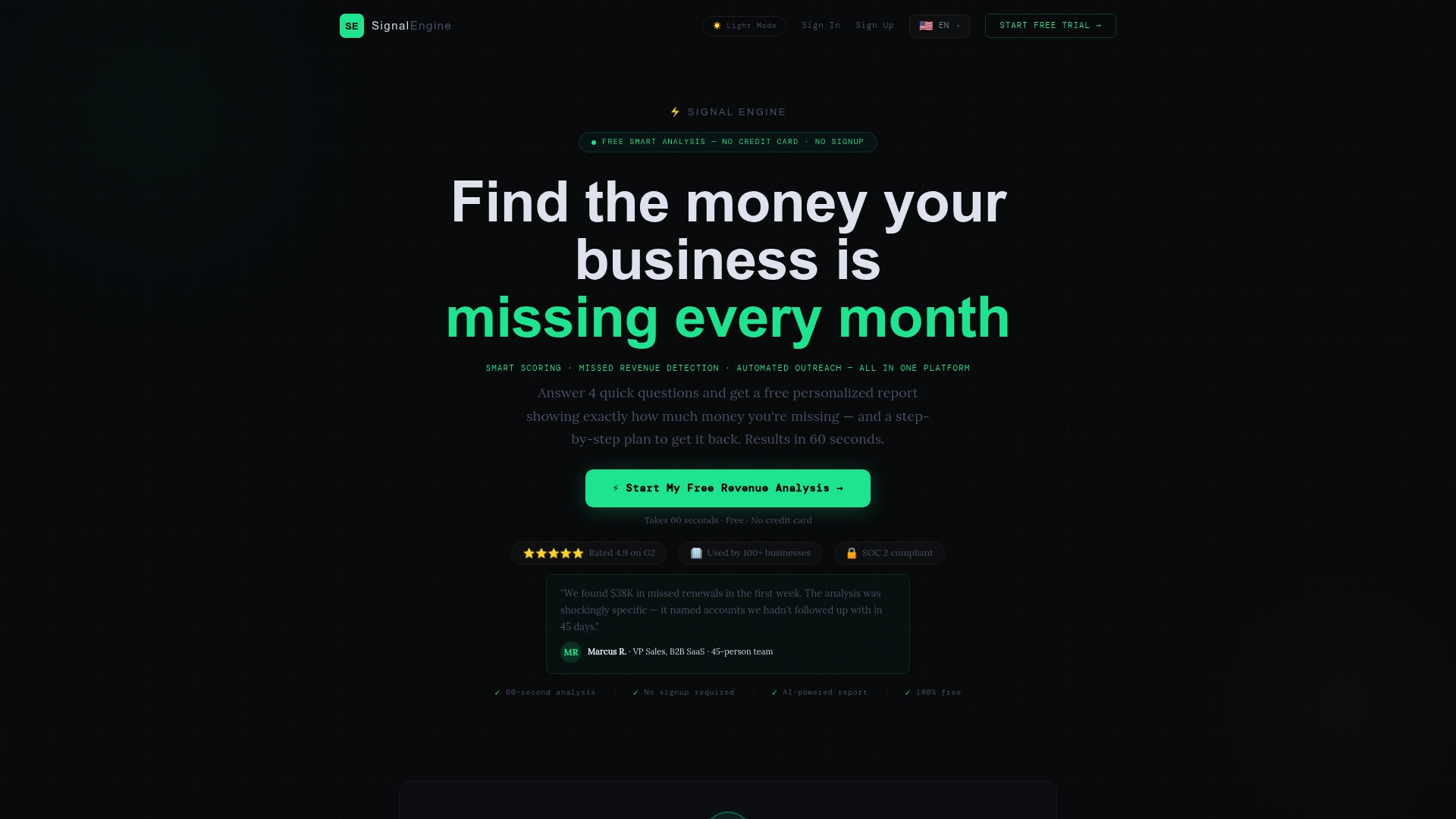
Signal Engine takes a different route: it automates the continuous signal capture that a manual win-loss program depends on, so competitor mentions, churn risk, and pipeline shifts surface without someone remembering to run the quarterly pull. That means the insight your team needs to update a battlecard shows up the week it happens, not three months later at the next scheduled review.
For a deeper look at how continuous signal prevents the revenue leaks a slow-moving win-loss cadence misses entirely, Signal Engine's guide to lost revenue recovery breaks down the workflow. If you'd rather see it running against your own pipeline first, Signal Engine's free tier is the fastest way to find out whether automated signal capture fits your process before committing to anything bigger.
Ready to Stop the Revenue Leak?
Signal Engine gives small and local businesses 31 AI-powered tools to score leads by buying intent, predict churn before it happens, auto-generate email and SMS campaigns, and recover missed calls automatically, all in one dashboard starting at $49/month.
Start your free 7-day trial, no credit card required. Setup takes 5 minutes.
Sources
Require a short, coded rep self-report on every single closed deal, no exceptions, no matter how busy the rep is that week. Layer in buyer interviews for depth on the deals that matter most. Mine call recordings and email threads for competitor mentions, objection language, and tone shifts the rep might not have flagged with the help of AI workflow automation that boosts ROI. Triangulating buyer interviews, rep reports, and call data is what separates a reliable program from anecdote collection.
- Win-Loss Analysis: A Practical Guide for Revenue Teams
- Win-loss analysis best practices — Pragmatic Institute
- 5 Steps of a Win Loss Analysis — Hanover Research
FAQ
How Do You Interpret a Win Loss Ratio?
A win-loss ratio compares closed-won deals to closed-lost deals over a given period, with tracking alongside deal-size weighting showing whether wins come from your most valuable segments or your smallest ones.
What Does a 2.0 Win Loss Ratio Mean?
A higher ratio means you're winning more deals than you're losing in that period, which is a healthy signal on its own but should always be checked against no-decision rates and competitor-specific patterns before declaring the pipeline healthy.
How Many Buyer Interviews Do You Need Per Quarter?
Most programs get reliable signal from 10 to 15 buyer interviews per quarter, layered on top of a mandatory rep self-report for every closed deal to avoid mistaking a small sample for a real trend.
Who Should Own a Win Loss Program?
Ownership typically sits with RevOps, sales enablement, or product marketing, whichever team already owns the battlecards and discovery scripts the findings need to update.
Can Software Replace Manual Win Loss Interviews?
Software like Signal Engine automates continuous signal capture and competitor alerts, but structured buyer interviews still add a depth that automated tools alone can't fully replicate.