

A best-practice win-back campaign has one job: bring back inactive customers who still have real value, not everyone who ever lapsed. Three actions separate the campaigns that work from the ones that just clutter inboxes.
- Segment by churn reason first. Voluntary churn (price, poor fit, missing features) needs persuasion. Involuntary churn (a failed card) needs a billing fix, not a discount.
- Run a short, reason-matched sequence. Two to four touches, each one referencing why the customer likely left, beats a generic "we miss you" blast.
- Measure second-churn rate, not just reactivations. A customer who comes back and cancels again in 60 days isn't a win. It's a delayed loss with extra email volume attached.
Get those three right and everything else in this guide is refinement. Get them wrong, and no subject-line trick or discount code will save the campaign. Later sections cover segmentation windows, sequence templates, offer logic, and the measurement math, including where a tool like Signal Engine Free can automate the scoring and delivery so this doesn't become a spreadsheet project.
Key Takeaways
Durable win-back results come from matching the offer to the actual churn reason and measuring second-churn rate, not from broader discounts or louder sequences.
| Point | Details |
|---|---|
| Segment before sending | Split by churn reason (voluntary vs. involuntary) and value before building any sequence. |
| Match cadence to product use | Use 30, 60, or 90-day inactivity windows depending on how often customers normally engage. |
| Reserve discounts for price churn | Offer migration help, onboarding, or feature access when the reason wasn't price. |
| Track second-churn rate | Measure re-cancellations 90 to 180 days after reactivation to judge real program quality. |
| Automate scoring and routing | Signal Engine Free automates churn scoring, reason-based routing, and sequence delivery for lapsed accounts. |
Table of Contents
- Why Win-Back Campaigns Matter More Than Most Marketing Budgets Admit
- Who to Target: Segmentation Rules and Eligibility Windows
- Timing and Sequence Templates for Every Value Tier
- What Should a Win-Back Message Actually Say?
- Which Channels Should Carry a Win-Back Sequence?
- How Do You Measure a Win-Back Campaign's Real Impact?
- Where Win-Back Campaigns Go Wrong
- Four Copy-Ready Win-Back Sequences You Can Adapt Today
- How Signal Engine Runs Win-Back at Scale
- Making Personalization Work Beyond Basic Segmentation
- Bernard's Take: Why Most Win-Back Advice Undersells Measurement
- Ready to Stop the Revenue Leak?
- Sources
- FAQ
Why Win-Back Campaigns Matter More Than Most Marketing Budgets Admit
Reactivating a customer who already knows your product almost always costs less than acquiring a stranger who's never heard of you. The trust groundwork is already laid. They've seen the value once, even if something knocked them off track.
The math favors reactivation over acquisition. A lapsed customer has already been through onboarding, already integrated your product into a workflow, and already decided once that you were worth paying for. New acquisition requires rebuilding all of that from zero. That's why the smartest revenue teams treat their churned list as a warm pipeline instead of a dead one.
Three metrics matter here, and they're not interchangeable:
- Win-back rate: the percentage of targeted inactive customers who reactivate.
- Reactivated MRR: the actual recurring revenue that comes back, which matters more than raw headcount if you're comparing a batch of $20/month accounts against a handful of $2,000/month ones.
- Second-churn rate: how many of those reactivated customers cancel again within a set window. This is the metric most teams skip, and it's the one that tells you whether your campaign fixed anything or just delayed the goodbye.
One distinction that trips up a lot of teams: win-back is not the same thing as billing recovery or preemptive retention. Billing recovery targets customers who never intended to leave, they just had a card decline or an expired payment method. That's a dunning and payment-retry problem, not a persuasion problem. Preemptive retention targets customers who are still active but showing risk signals. A true win-back campaign only engages people who have already left. Mixing these three into one generic "at-risk" flow is how otherwise smart teams waste a budget on the wrong message for the wrong problem.
Who to Target: Segmentation Rules and Eligibility Windows
Not every lapsed customer deserves the same attention, and not every lapsed customer deserves attention at all. Building the target list correctly is where most win-back campaigns either earn their budget or waste it.
1. Set inactivity thresholds based on your product's natural cadence. A daily-use app and a monthly subscription box don't share the same definition of "gone quiet." A common framework: flag inactivity after 30 days for high-frequency products, 60 days for moderate-use tools, and 90 days for low-frequency purchases or annual-cycle services. Timing should follow how often the customer would normally engage, a weekly user who goes silent for a month is a much stronger signal than a monthly user doing the same.
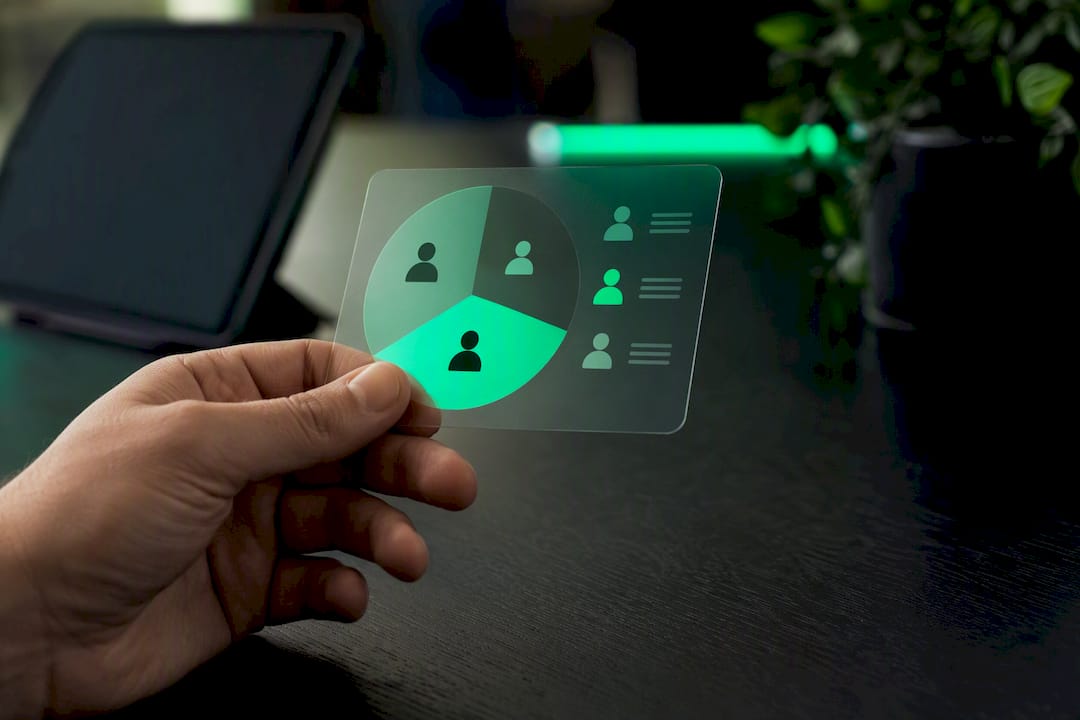
2. Split by churn reason before anything else. Voluntary churn (canceled on purpose) and involuntary churn (payment failure) need entirely different flows. Sending a "come back and save 20%" email to someone whose card simply expired is a wasted touch. Involuntary churn belongs in a payment-retry sequence, not a persuasive one.
3. Layer in value. Rank the remaining voluntary-churn list by lifetime value, annual contract value, or purchase history. A $50,000 ARR account that churned deserves a phone call. A $15/month account that churned deserves an automated sequence.
4. Build a simple prioritization matrix. High-value accounts with a known churn reason go first, with personal outreach. High-value accounts with an unknown reason go second, paired with a short survey to find out why before you pitch anything. Low-value accounts go into a passive, fully automated sequence regardless of reason, the economics don't support a human touch there.
5. Set a sunset date before you start. Contacts who haven't engaged in 90 to 180 days, or who've ignored three to four win-back attempts, should come off your active list entirely.
Pro Tip: Pull your churn reason data from cancellation surveys or support tickets before building segments. Guessing the reason and matching the wrong offer is worse than sending no offer at all.
Timing and Sequence Templates for Every Value Tier
The right cadence depends entirely on who you're talking to. A high-value account can absorb a longer, more personal sequence. A low-value account needs something lean enough that automation covers the whole thing.
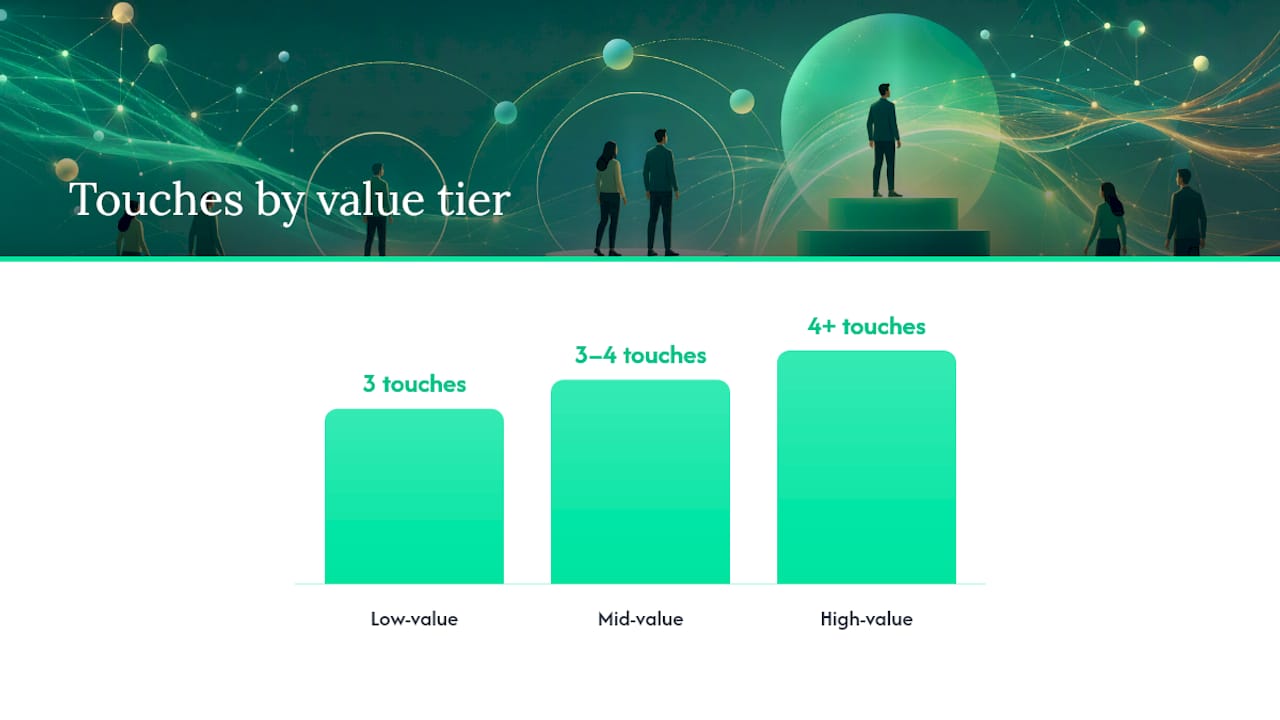
1. Low-value sequence (3 touches, automated). Day 1: a simple "we noticed you've been away" email with a value reminder. Day 7: a product update or feature highlight relevant to why they might have left. Day 21: a final-chance email with a clear unsubscribe option.
2. Mid-value sequence (3 to 4 touches, semi-personalized). Day 1: a personalized note referencing their usage history. Day 5: social proof plus a modest incentive, tied to the churn reason if known. Day 12: a check-in offering help or a quick call. Day 25: last call before sunsetting.
3. High-value sequence (4+ touches, human-involved). Day 1: a personal email or call from an account manager, not a marketing address. Day 3 to 5: migration help or onboarding support if the product changed since they left. Day 10: a tailored offer based on their specific churn reason. Ongoing: continued relationship management until they either reactivate or explicitly opt out.
Space touches at least a week apart within any tier. Crowding a lapsed customer's inbox reads as desperation, not care.
Two triggers should pause or restart a sequence regardless of tier:
- A cooling-off period after cancellation. Wait at least a week before the first touch. Reaching out the same day someone cancels feels tone-deaf, even when the intent is good.
- A meaningful product change. If pricing shifted, a feature they wanted shipped, or the product underwent a real overhaul since they left, that event should trigger an outreach cycle on its own, separate from the standard calendar.
For high-value accounts specifically, add a human layer the moment the account crosses your value threshold. A customer success manager reaching out personally, paired with migration assistance if anything changed technically, does more to prevent a second churn than any automated sequence alone. Signal Engine customers often route this escalation automatically once a lapsed account's score crosses a value threshold, so the right rep gets a task instead of the account sitting in a general queue. For structured guidance on building these flows, see this breakdown of automated outreach sequencing.
What Should a Win-Back Message Actually Say?
The subject line decides whether the email gets opened. Everything after that decides whether it gets acted on.
- Direct value callouts ("Here's what changed since you left")
- Curiosity without gimmick ("You're missing this one thing")
- Personalization tokens: first name, product name, last-used feature, or time since last activity
- Urgency only when it's true (an actual sunset date, not a fake countdown)
Personalized subject lines and concise messaging tend to lift open-to-action rates more reliably than clever wordplay. A subject line referencing the customer's actual usage history will usually outperform a generic "we miss you" every time you test it.
Message structure that works:
- Acknowledge the gap. Skip the guilt trip. A simple "it's been a while" works better than an apology-laden opener.
- Show what's changed. If you shipped the feature they asked for, fixed the bug that frustrated them, or changed pricing, lead with it.
- Add social proof. A short stat, a customer quote, or a usage milestone reassures a skeptical reader that other people are still finding value.
- Close with one low-friction CTA. One button, one action. "See what's new" or "Reactivate your account" beats a paragraph of options.
The strongest re-engagement emails don't ask the customer to relearn the product. They remind the customer what they already knew, show what's new, and make the next step obvious. Adding a second or third CTA usually drops conversion rather than raising it.
The offer decision tree matters as much as the copy. Reach for a discount only when price was the actual, confirmed reason someone left. Applying a blanket 20% off to everyone regardless of why they churned trains your base to wait for coupons instead of valuing the product.
For every other reason, a discount is the wrong tool:
- Left because a feature was missing? Offer a personal walkthrough of that feature now that it exists, or an early-access invite to something in beta.
- Left because onboarding was rough? Offer free, guided onboarding this time, with a real person attached.
- Left because of a support issue? Acknowledge it directly and offer a dedicated contact for their return.
- Left for an unclear reason? Ask before you offer anything. A two-question survey beats guessing.
Routing tailored offers based on the actual cancellation reason consistently outperforms blanket coupon campaigns, and it protects your margin from customers who would have come back for free.
Which Channels Should Carry a Win-Back Sequence?
Email should almost always lead a win-back sequence. It's low-cost, easy to personalize at scale, and doesn't carry the same fatigue risk or regulatory sensitivity as text messages. SMS and push notifications work best as an escalation, not a starting point, reserved for high-value accounts or for customers who've gone unresponsive on email but opted into text at signup.
A practical channel fallback sequence:
- Start with email. It's the default channel for the first two touches in almost every tier.
- If an email goes unopened after 5 to 7 days, escalate to SMS for customers who opted in, or a retargeting ad for those who didn't.
- Reserve push notifications for customers with your app still installed, since an uninstalled app makes the channel worthless.
- Use paid retargeting as a background layer, not a primary tactic. It reinforces the message; it doesn't replace it.
- Cap total touches across all channels combined. Five to six touches over a month across every channel is a reasonable ceiling before you sunset.
Consent matters as much as timing. Anyone flagged for SMS outreach needs a documented opt-in specific to text messaging, separate from their original email consent. Running SMS win-back on a list that only agreed to email is one of the fastest ways to generate spam complaints and, depending on your market, real regulatory exposure under CAN-SPAM rules in the US or GDPR-style consent requirements elsewhere.
Make the unsubscribe or opt-out link visible and functional in every single touch, not buried in footer text nobody can read. A frustrated ex-customer who can't easily opt out is far more likely to mark the email as spam, which hurts deliverability for every other campaign you run afterward. For teams building this cross-channel logic manually, this playbook on email automation and retention cadence walks through the sequencing logic in more depth.
How Do You Measure a Win-Back Campaign's Real Impact?
Three numbers tell you whether a win-back campaign is working, and only one of them gets checked consistently across most teams.
Win-back rate = (number of reactivated customers) ÷ (number of targeted inactive customers). If you targeted 500 lapsed accounts and 40 came back, that's an 8% win-back rate.
Reactivated MRR = the sum of recurring revenue from every account that came back. This number matters more than raw win-back rate when your segments carry different account values, ten reactivated $500/month accounts beat forty reactivated $10/month ones even though the win-back rate looks worse on paper.
Campaign ROI = (reactivated MRR over a set period, minus incentive and outreach costs) ÷ (total campaign cost). Include the discount value, the CSM hours on high-value calls, and any tooling cost in that denominator, teams that skip incentive costs consistently overstate their own results.
| Metric | Formula | What it tells you |
|---|---|---|
| Win-back rate | Reactivated ÷ targeted inactive customers | How well the campaign converts the list you built |
| Reactivated MRR | Sum of recurring revenue from returned accounts | The real revenue impact, weighted by account value |
| Second-churn rate | Re-canceled ÷ reactivated (within window) | Whether the win was durable or temporary |
| Campaign ROI | (Reactivated MRR minus incentive/outreach cost) ÷ total cost | Whether the campaign paid for itself |
The metric most teams ignore is second-churn rate, and it's the one that actually separates a good win-back program from a leaky one. Measuring cancellations after reactivation over a 90 to 180-day window tells you whether the customer's underlying reason for leaving got fixed or just papered over with a discount. A campaign that shows a strong win-back rate but a high second-churn rate isn't succeeding, it's running the same customer through the cancellation funnel twice and calling the middle part a win. Report all four numbers together on a standing monthly or quarterly cadence, never win-back rate alone. For teams building this into a broader renewal workflow, this renewal rate workflow guide covers the measurement infrastructure in more detail.
Where Win-Back Campaigns Go Wrong
Most win-back programs don't fail because the copy was weak. They fail because of operational shortcuts that quietly undermine the whole effort.
Sunsetting gets skipped, and it costs more than it saves. Holding onto unengaged contacts indefinitely feels safe, "what if they come back?", but it actively harms deliverability. Removing contacts after 90 to 180 days of inactivity, or after three to four unsuccessful attempts, protects your sender reputation for every other campaign you run, including the ones going to still-active customers.
Blanket discounts and one-size-fits-all blasts underperform quietly. They generate a small bump in opens and a real cost in margin, without addressing why anyone actually left. Teams that skip segmentation almost always report a lower win-back rate and a higher second-churn rate than teams that match the offer to the reason.
Deliverability hygiene gets treated as a one-time setup instead of ongoing maintenance. A quick checklist to run before every win-back push:
- Confirm SPF, DKIM, and DMARC records are correctly configured and not expired.
- Monitor spam complaint rates weekly during an active win-back push, not just after a problem appears.
- Track unsubscribe rate as a leading indicator, a spike usually means the offer or frequency is off, not just the list quality.
- Warm up a new sending domain gradually if you're separating win-back traffic from transactional email.
Pro Tip: If your spam complaint rate climbs above 0.1% during a win-back push, pause the campaign immediately and review both the list quality and the message frequency before resuming.
Four Copy-Ready Win-Back Sequences You Can Adapt Today
Each of these templates assumes you've already segmented by value and, where possible, by churn reason. Swap in your own product details and tone.
1. Low-value, fully automated sequence.
- Email 1 (Day 1): "Here's what you missed" with a short feature roundup.
- Email 2 (Day 10): a single testimonial or usage stat plus a "come back" button.
- Email 3 (Day 25): final notice with an unsubscribe option front and center.
2. Mid-value, personalized-plus-incentive sequence.
- Email 1 (Day 1): reference their specific past usage ("You used to run 15 reports a month").
- Email 2 (Day 7): a modest, reason-matched incentive, free month, waived fee, or feature unlock, not a generic discount.
- Email 3 (Day 18): social proof from a similar customer segment.
- Email 4 (Day 30): last-chance email with a clear sunset date.
3. High-value, human-led sequence.
- Touch 1 (Day 1): personal email or call from an account manager, referencing their account history directly.
- Touch 2 (Day 5): migration or re-onboarding help if the product changed since they left.
- Touch 3 (Day 12): a tailored proposal addressing their specific stated reason for leaving.
- Ongoing: continued check-ins until resolution, either reactivation or a respectful close.
4. Final-chance template, for any tier heading toward sunset. "It's been a while, and we don't want to keep filling your inbox if this isn't useful anymore. If you'd like to come back, [reactivate here]. If not, no hard feelings, just [click to unsubscribe] and we'll stop reaching out." This template does double duty: it gives a genuinely interested lapsed customer a clean path back, and it gives an uninterested one a graceful exit that protects your list hygiene.
Rotate subject lines and incentive types across at least two variants per tier, and let the data pick the winner before scaling any sequence to your full lapsed list.
How Signal Engine Runs Win-Back at Scale
Building these sequences by hand works for a small list. It falls apart once you're managing hundreds of lapsed accounts across multiple value tiers and churn reasons at the same time.
Signal Engine's churn scoring watches behavioral signals, like login frequency, feature usage, and support ticket patterns, and flags accounts before and after they lapse, then routes each one into a reason-based segment automatically. High-value accounts with a clear churn reason get flagged for a rep with a suggested next action already attached. Low-value accounts drop into an automated sequence without anyone having to build it manually each time.
- Automated scoring replaces manual list-building, so segmentation by value and churn reason happens continuously, not once a quarter.
- Sequence delivery runs on autopilot for lower-value tiers, freeing your team's time for the high-value accounts that actually need a human.
- Second-churn tracking happens automatically in the background, surfacing which reactivation offers are producing durable wins versus temporary ones.
Pro Tip: If you're currently tracking win-back performance in a spreadsheet, the biggest time cost usually isn't building the campaign, it's manually re-checking who reactivated and who churned again a few months later. Automating that tracking alone often saves more hours than automating the emails.
For teams managing churn intervention across a broader retention motion, this overview of automating churn intervention outreach covers how the routing logic extends beyond win-back into proactive retention.
Making Personalization Work Beyond Basic Segmentation
Segmentation gets a lapsed customer into the right bucket. Personalization decides whether the message inside that bucket actually lands.
Dynamic content should reflect actual behavior, not just a name field. Referencing the specific feature someone used most, the date of their last login, or the plan tier they were on turns a generic template into something that reads like it was written for one person. Most email platforms support this kind of merge-field personalization without requiring a developer.
Behavioral triggers matter more than calendar dates. Instead of sending touch two on a fixed day regardless of activity, trigger it off a real signal: did they click the first email but not convert? Did they visit the pricing page after receiving it? A customer who clicked but didn't reactivate deserves a different message than one who never opened the email at all, even if both are technically on "day 7" of the sequence.
Product-change triggers outperform static calendars for win-back timing. If someone left because a feature was missing and you shipped it, that event should fire an outreach immediately, not wait for the next scheduled touch. Routing churned users to relevant update notifications when their specific blocker gets resolved converts noticeably better than a generic quarterly newsletter mention.
Test personalization elements the same way you test subject lines. Vary the merge fields, the behavioral trigger points, and the specificity of the "what changed" section, then let performance data decide which level of personalization is actually worth the setup effort for each tier.
Bernard's Take: Why Most Win-Back Advice Undersells Measurement
Most win-back content obsesses over subject lines and discount codes. That's the easy part. The advice that actually separates a durable program from a vanity metric machine is the measurement discipline, specifically, tracking second-churn rate as seriously as the initial reactivation number.
Conventional wisdom treats a reactivation as a finish line. It isn't. It's a hypothesis: the customer's original reason for leaving got addressed. If that hypothesis is wrong, you'll find out in 90 to 180 days when they churn again, often more disillusioned than the first time because now they feel like they gave you a second chance for nothing.
Prioritize the diagnosis before you write a single line of copy. A campaign built on an accurate churn reason, even a plain, unglamorous one, will outperform a beautifully written campaign built on a guess. Reason-matched beats clever, every time the data gets checked honestly.
Ready to Stop the Revenue Leak?
Running this playbook by hand, tracking churn reasons in a spreadsheet, building sequences manually, checking second-churn rates in a separate report, eats hours every week that most marketing teams and business owners don't have. Signal Engine Free automates the parts that don't need a human: it scores accounts by churn risk and reason, routes high-value lapsed customers to the right person, and generates the email and SMS sequences described in this guide without you building each one from scratch.
Signal Engine gives small and local businesses 31 AI-powered tools to score leads by buying intent, predict churn before it happens, auto-generate email and SMS campaigns, and recover missed calls automatically, all in one dashboard starting at $49/month.
Start your free 7-day trial, no credit card required. Setup takes 5 minutes.
Sources
These sources back the benchmarks and frameworks used throughout this guide, worth a closer read if you're building your program's measurement plan or sunsetting policy.
- Winback Campaigns: Strategies and Examples
- Re-engagement emails (Mailchimp)
- Customer Win-Back Strategy: Reactivating Churned SaaS Accounts
FAQ
What are some creative ideas for a win-back campaign?
Beyond a standard discount, try early access to a requested feature, a personal video message from a founder or account manager, or a short survey that turns into a tailored offer based on the answer.
What is a good win-back rate?
Win-back rate varies heavily by industry and list quality, but the number matters less than the second-churn rate that follows it. A high win-back rate paired with a high second-churn rate signals a leaky program, not a successful one.
What is a win-back strategy?
A win-back strategy is a structured plan to re-engage customers who have already canceled or gone inactive, using segmentation by churn reason and value, a timed multi-touch sequence, and a reason-matched offer rather than a blanket discount.
What is the 80/20 rule in email marketing?
The 80/20 rule generally suggests focusing 80% of your effort on the segments and messages that drive the most measurable results, in win-back terms, that means prioritizing high-value accounts with a known churn reason over broad, unsegmented blasts to the entire lapsed list.
How is second-churn rate different from win-back rate?
Win-back rate measures how many lapsed customers you reactivated; second-churn rate measures how many of those reactivated customers canceled again within a 90 to 180-day window, which tells you whether the win was durable.